By MV VacationUpdated 08 Oct, 202612 mins read 233 views
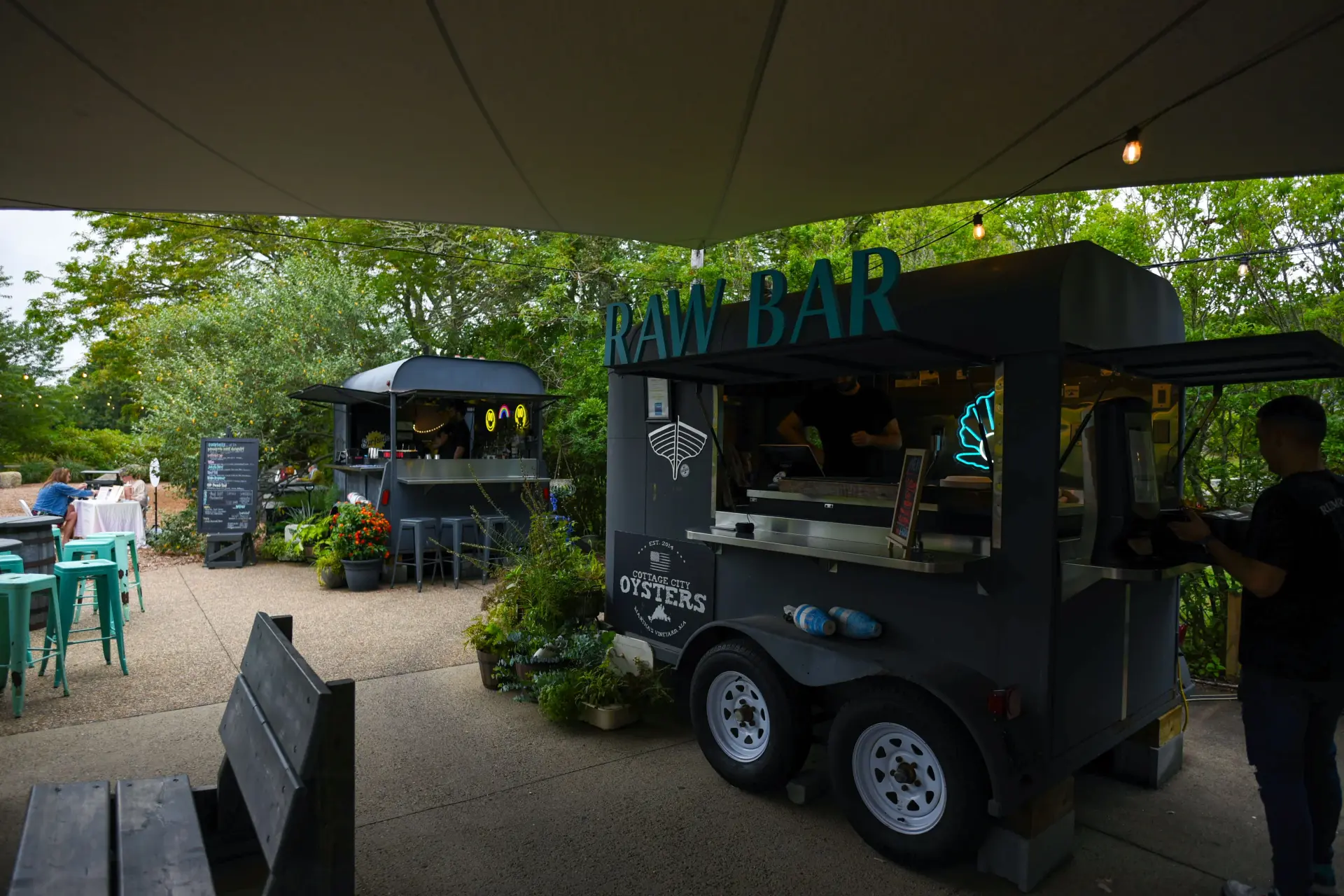
Oak Bluffs · a raw bar on a trailerPhoto by MV Vacation
A raw-bar trailer under the tent at Nomans in Oak Bluffs, island oysters shucked to order. The oysters on the ice were in the water that morning or the one before.
Where Martha's Vineyard's oysters, bay scallops and quahogs come from: the public solar hatchery on Lagoon Pond that turned fifty in 2026, the dozen oyster farms in Katama Bay, Menemsha Pond and Vineyard Sound, the wild beds in the great ponds, the autumn scallop season and its limits, visitor shellfish permits by town, why rain closes a pond, and where to eat them.
The oyster on the ice in front of you at an Edgartown raw bar has a short, local biography. It was very likely spawned in a solar-heated hatchery on the shore of Lagoon Pond, set out as seed in a town pond or a bag in Katama Bay, tended for two or three years by one of about a dozen island farmers, and shucked within a day of coming out of the water. This guide is the whole chain: the fifty-year-old public hatchery that made the island's shellfish possible, the ponds where oysters, quahogs and bay scallops grow, the farms and their tours, what the seasons and the permits are if you want to dig your own, why a summer rainstorm closes a pond, and where to eat the result. For the permit itself, town by town, see our shellfishing permits guide.
Almost every shellfish story on the island runs through the Martha's Vineyard Shellfish Group, a public non-profit that turned fifty in 2026. It was founded in 1976 when the six towns hired a young biologist, Rick Karney, to help their shellfish constables rebuild stocks that fishing and disease had thinned; he built the first pilot hatchery on Lagoon Pond the following year out of materials salvaged from the dump, and in 1980 the group opened the solar hatchery that still stands on the Tisbury shore of the Lagoon, the first public solar shellfish hatchery in the United States. It spawns bay scallops, quahogs and oysters and sets the seed out in the towns' ponds, on the order of twenty to thirty million animals a year and more than half a billion over its life. Two side projects changed the island's food: a selective-breeding program that produced orange-shelled and striped scallops as living tags, and, in the 1990s, a federally funded training course that taught island fishermen to farm oysters and launched the industry the raw bars now depend on. The group is run today by a director who came up through it, funded by the towns and by donations, and it will teach your children to shuck at its touch tank if you ask. Our Lagoon Pond walk passes the hatchery.
The tidal bay behind South Beach, between Edgartown and Chappaquiddick, holds most of the island’s oyster leases: bags and cages on the bottom or floating, tended from skiffs. Sweet Neck, Signature and Spearpoint are among the names on the menus. The opening at Norton Point, which broke through again in January 2026, sets the bay’s salinity and the oysters’ flavor.
The second oyster-farm pond, colder and saltier, with leases below the Chilmark and Aquinnah shores; Spearpoint farms here as well as in Katama. The pond is split between Chilmark and Aquinnah, and each town's permit covers only its own side.
The one open-water farm, off Oak Bluffs since 2014, growing oysters and sugar kelp in the Sound and selling only on the island, at the farmers market and by the box. In 2022 it became the first American farm to complete the European Union’s organic certification for shellfish. Farm tours by boat run in season; book on the farm’s site.
The hatchery’s home water, a working oyster farm of a couple of hundred cages, and a well-known bay-scallop pond: on the recreational opening each autumn hundreds of scallopers wade in with dip nets and push rakes.
Tisbury Great Pond and Edgartown Great Pond hold the island’s wild oyster beds, opened to the sea by dredging a cut through the barrier beach a few times a year. Commercial harvesters work them in winter under town limits (Chilmark allowed 800 to 1,000 oysters a person a day, three days a week, in the 2026 season).
The pond behind State Beach: bay scallops in autumn, quahogs year-round for permit holders, and a rain rule from May through September, when more than 0.2 inch of rain closes it to shellfishing for five days. July is the month to kayak it, October the month to dig.
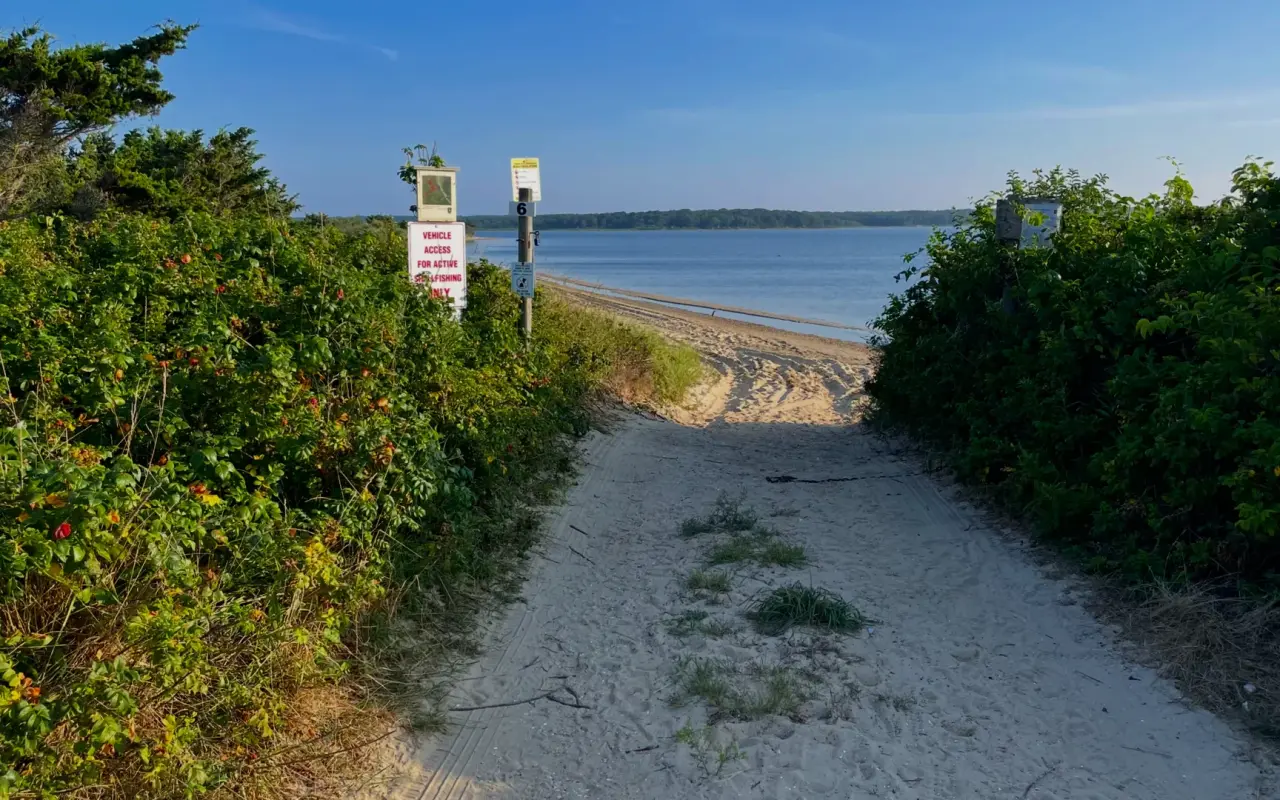
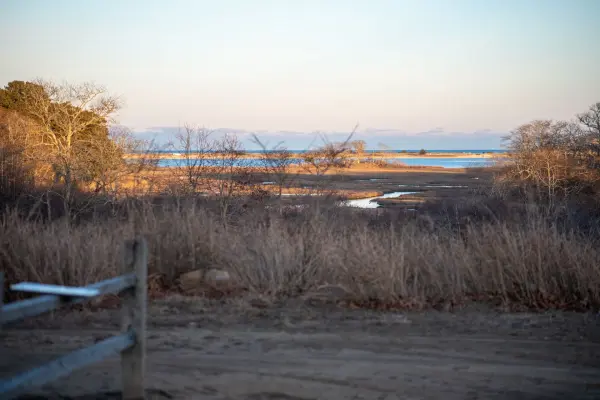
Oak Bluffs · a shore pathPhoto by MV Vacation
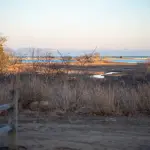
A sandy path to the pond shore past a shellfishing sign. Sengekontacket is the pond that gives Oak Bluffs and Edgartown their scallops; in summer a heavy rain closes it to shellfishing for days at a time, so check the town’s notice before you dig.
For a fall trip
The Vineyard in the Fall, free
The Derby, the beaches that open to everyone and what closes when, date by date. Free with the island letter, together with our other three island guides.
One-click unsubscribe, and we never share your email.
The winter that helped
Oyster farming is the crop most aquaculture start-ups in the Northeast chose, and by the mid-2020s there were more oysters than buyers. The hard winter of 2025 to 2026 changed that in the island's favor, the Vineyard Gazette reported in April 2026: the ice that froze the great ponds and damaged farms on the mainland mostly spared the island's cages, killed off the barnacles and mussels that foul the gear, and sent the oysters into a plumping spring while off-island distributors rang the farmers looking for supply. Chilmark extended its wild season to May 9 to let harvesters catch up.
Bay scallops: the island's autumn
The bay scallop is the island's most loved shellfish and the one visitors miss, because its season begins the month the visitors leave. It lives one to two years in the eelgrass of the ponds, and the town rules allow only adults with a raised growth ring to be taken. Many families wade with a dip net or push rake, and each town decides where dragging is allowed and where it is dip net only; Edgartown, for one, opened Cape Poge to family dragging on October 24 last season. State law keeps bay scalloping closed from April 1 to October 1, and each town then sets its own dates. For 2026 to 2027, Chilmark opens recreational scalloping on October 7 (half a bushel a week) and commercial on November 2; Tisbury's shellfish constable has recommended October 31 for the Lagoon and the harbor, pending a Select Board vote; Edgartown's family season runs from October 1 under its regulations, with one ten-gallon basket a week, shells included; Oak Bluffs and Aquinnah had not posted their dates by early October. Last season Edgartown's commercial boats started on October 27. The harvest swings wildly with the eelgrass and the weather: Edgartown landed about 3,000 bushels in the 2025 to 2026 season against more than 10,000 the year before. Dates can move with the water temperature and the storms, so check the town's notice or call the shellfish department before you go (Edgartown: 508-627-7570); our fall guide has the permit details town by town. A bay scallop eaten the day it is opened, seared for a minute in butter, is hard to beat, and it shows up on the year-round restaurants' menus from late October.
Digging your own: permits and rules
Every town sells visitors some kind of shellfish permit, but the terms differ a lot, and each permit covers only that town's waters. Edgartown's fee schedule lists $100 a week or $350 a year for non-residents (its shellfish department is at 135 Meetinghouse Way, 508-627-7570); Oak Bluffs sells a $400 annual permit, and short permits ($30 a week, $55 for two weeks, $80 a month) only from May 1 to September 30; Tisbury sells $400 a year for all species, or $25 a week, $50 for two weeks and $75 a month for quahogs and steamers only; West Tisbury's regulations list $125 for non-residents, not valid for scallops; Chilmark charges $50, plus a $100 endorsement to take scallops; and Aquinnah's family week permit is $45, for May to September and not for scallops or oysters. Fees change with town votes, so confirm at the town office. A permit comes with a map of open and closed areas, the weekly limits, and the state minimum sizes (an oyster must be three inches, a quahog an inch thick across the hinge, a bay scallop must carry its growth ring), and the constables check baskets on the landings. Quahogs are the visitor's shellfish: year-round, in the sound-side ponds and harbors, by rake from a beach you can walk to. Ask the department which flats are open that week and read our rules and etiquette guide for the manners on a flat where the person next to you is filling the family freezer.
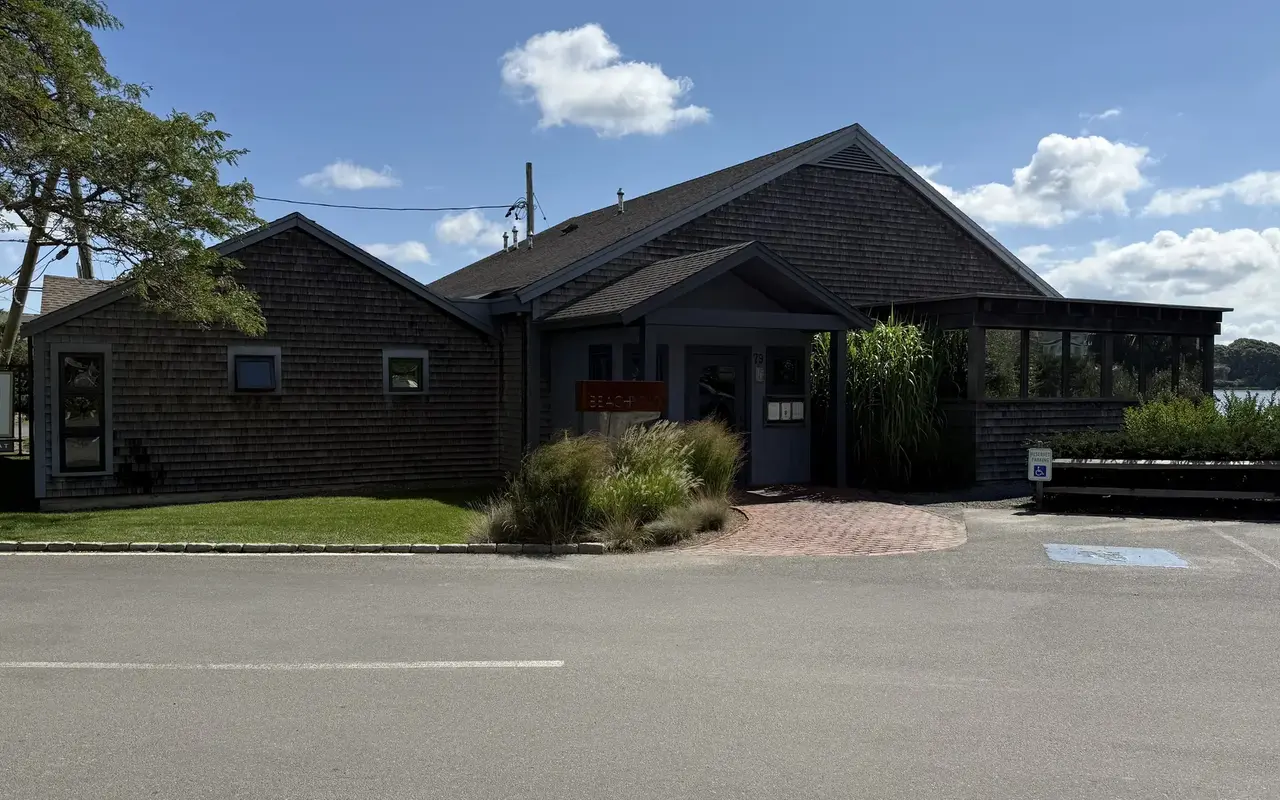
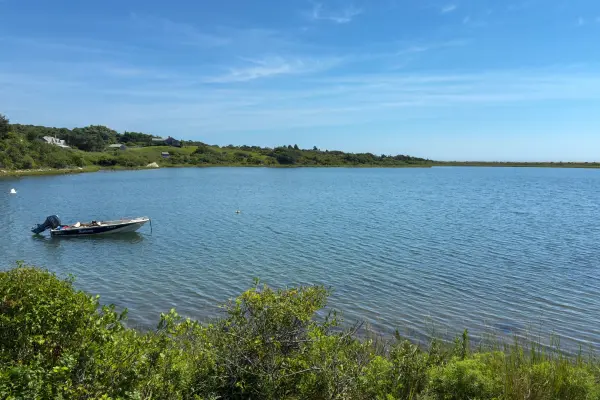
Vineyard Haven · the Lagoon shorePhoto by MV Vacation
A restaurant on the Lagoon shore at Beach Road, the hatchery a short way along the same water. The Lagoon is the island’s working shellfish pond: seed goes in from the hatchery, scallops come out in November.
Why a rainstorm closes the pond
Shellfish filter the water they sit in, which is good for the pond and a risk for whoever eats them. After heavy rain, runoff pushes bacteria counts in the sheltered ponds past the state's limits, and the affected growing areas close to harvest until tests come back clean: the Division of Marine Fisheries orders the storm closures, and the towns close their rain-sensitive ponds under their conditional-area management plans. Sengekontacket was closed from early July to late August 2026 after the summer's storms, and from May through September it closes for five days after any rain of more than 0.2 inch. A closed pond is closed for eating, not for swimming or paddling, though the same bacteria drive the beach advisories our beach safety guide explains. The oysters at the raw bar in July come from the open waters, the Sound, Katama Bay and the farms, which is one more reason the island's growers moved there. The ponds themselves, the cuts and the blooms, have their own guide.
A raw-bar trailer under the tent at Nomans, and the harbor-side bars shucking in season. Cottage City’s oysters are at the West Tisbury farmers market on Saturdays and by the box from the farm.
Oysters and clams shucked at the counter, eaten on the dock with your own bottle; the lobster guide covers the rest of the dock. Chilmark is dry, so the bottle comes from down-island.
Cottage City Oysters runs an hour-long farm tour by boat in season, with oysters shucked on the farm, and Signature Oysters lists 90-minute Katama Bay tours on its site as coming soon; book through the farms.
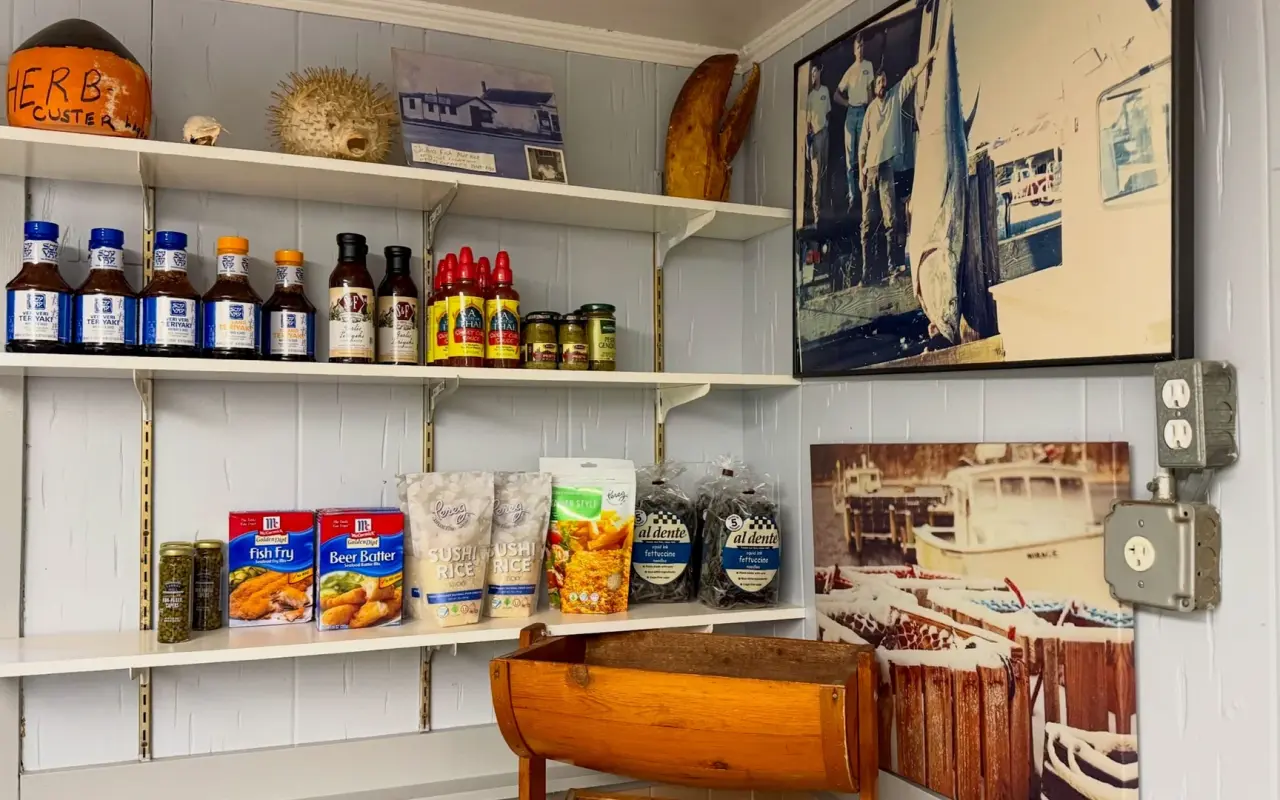
Vineyard Haven · John’s Fish MarketPhoto by MV Vacation
Inside John’s Fish Market in Vineyard Haven: sauces and fry mix on the shelf, old fishing photos on the wall.
At a glance
The hatchery
MV Shellfish Group, founded 1976; solar hatchery on Lagoon Pond since 1980; bay scallops, quahogs, oysters
Oyster farms
About a dozen: Katama Bay, Menemsha Pond, Lagoon Pond, Vineyard Sound off Oak Bluffs
Wild oysters
Tisbury and Edgartown Great Ponds, winter harvest under town limits
Bay scallops
Recreational from October; commercial from late October or early November to March; gear and dragging areas set by each town
Quahogs
Year-round with a town permit, in open areas
Visitor permits
Edgartown $100 a week or $350 a year; Oak Bluffs $400 a year (week and month permits May to September only); Tisbury $400 a year, or $25 a week for quahogs and steamers only; Chilmark $50, plus $100 to take scallops; Aquinnah $45 a week (May to September, not scallops or oysters); West Tisbury $125, not scallops
Closures
Sengekontacket closes for five days after more than 0.2 inch of rain from May 1 to September 30; other ponds close after heavy rain and storms (after the September 26, 2026 nor’easter the state closed every area and reopened them in stages)
How we checked this
The Shellfish Group’s history and programs are from the Vineyard Gazette’s fiftieth-anniversary report of June 11, 2026 and the group’s own history; the seed numbers from the group’s reporting over the years and our Lagoon Pond walk. The farms, the 2026 winter and the Chilmark wild-oyster limits are from the Gazette of April 26, 2026; Cottage City’s certification and sales from the farm’s site. Scallop season dates, limits and permit fees are from the towns’ own notices, regulations and fee schedules, checked on October 2, 2026, and the 2025 to 2026 landings from the Times of June 18, 2026; the towns set new dates each fall. Permit fees change with town votes; the shellfish department is the only reliable source on the day. State size limits are the Massachusetts minimums. The photographs are ours.
Frequently Asked Questions
Where do the island’s oysters come from?
Very likely from the Martha’s Vineyard Shellfish Group’s solar hatchery on Lagoon Pond, the first public solar shellfish hatchery in the United States, opened in 1980. It spawns bay scallops, quahogs and oysters and sets out twenty to thirty million animals a year, more than half a billion over its life.
Where are the oyster farms?
Mostly in Katama Bay, the tidal bay behind South Beach between Edgartown and Chappaquiddick, where about a dozen island farmers tend bags and cages from skiffs for two or three years before the oysters reach the raw bar.
Can I dig my own?
Yes, with a town permit and in season. Each town sells its own permit, which covers only that town’s waters, and the fees, limits and seasons differ; the town’s shellfish department has the current rules.
Why does rain close a pond?
After heavy rain, runoff pushes bacteria counts in the sheltered ponds past the state’s limits, and those areas close to harvest until tests come back clean. Sengekontacket, for one, closes for five days after more than 0.2 inch of rain from May through September, so check the town’s notice before you dig.
Can children see the hatchery?
The Shellfish Group will teach your children to shuck at its touch tank if you ask, and our Lagoon Pond walk passes the building.
Island tip of the dayShoppingNo. 31 of 86New tip at midnight, island time
The Chappy Ferry costs $5/person round-trip and $17 for a car with driver. Cards work at the Edgartown-side kiosk; bring cash for the boat itself.
Useful?
More on
Four free downloads · 2026 editions
Four island guides, in your inbox
The Beach Guide (all 20 beaches decoded), The Vineyard in the Fall, the season date by date, Where to Stay, every town and price band, and What It Really Costs, the 2026 budget line by line. All four PDFs free, plus a short island letter when there is something worth telling. No schedule, no spam.
No spam, unsubscribe in one click. Want a look first? See what you get.
First email ever from us? Give it a minute, and peek in spam once.
Disclaimer: The information in this article is provided for general guidance only and was accurate at the time of writing. Beach conditions, hours, prices, lifeguard schedules, ferry fares, and business operations change frequently and without notice. Ocean swimming carries inherent risks including rip currents, undertow, and cold water shock. Always verify current conditions with official local sources before your visit. MV Vacation assumes no responsibility for any loss, injury, or inconvenience resulting from the use of this information. Swim only where lifeguards are on duty, supervise children at all times near water, and follow all posted safety signs.
A guide to Martha's Vineyard, written on the island: beaches, dining, events and island living. We write down what we know about the island so your trip goes the way you hoped.
Shellfishing on Martha's Vineyard town by town: what each of the six towns charges a visitor for a permit and what it covers, where to buy it, weekly limits and sizes, the 2026 to 2027 bay scallop dates published so far, how to check storm and rain closures, and keeping the catch safe to eat.
Martha's Vineyard's ponds explained: the great ponds sealed behind the south-shore beach and cut open to the sea by an excavator, the salt ponds with tides and scallops, the freshwater kettle ponds, why cyanobacteria blooms turn some of them green in August and what MV Cyano's colors mean, the nitrogen under the houses, and where a visitor can swim, paddle and watch the cut.
Lobster on Martha's Vineyard from trap to paper plate: how the small Menemsha fleet fishes, the Massachusetts rules on size, egg-bearing females and whale-safe gear, where to buy lobster off the boat (Larsen's, Menemsha Fish Market, The Net Result), how to eat it on the dock with your own bottle, and how a visitor can get a permit and catch a few.
Mytoi, the Japanese garden on Chappaquiddick: how to get there on the Chappy ferry, the 15-car lot, hours and admission by season, the pond and bridge, birch walk and camellia dell, the story of Hugh Jones, Mary Wakeman and the rebuild after Hurricane Bob, rules, accessibility and when to go.
Felix Neck Wildlife Sanctuary in Edgartown: the four easy trails and what each passes, the ospreys, the butterfly garden, hours and admission, Mass Audubon's kayak tours and prices, accessibility, the Wampanoag and Smith-farm history, and when to go.
Every supermarket and market on Martha's Vineyard with posted hours: Stop and Shop, Cronig's, Reliable Market, Alley's, the meat and fish markets, the Falmouth Stop and Shop before the ferry, Instacart and pre-stocking delivery, and an honest word on island prices.
Subscribe
The free island library · 2026
One short island letter, and all four guides to start
Beach reports, events worth a day, ferry heads-ups. Sent when there is something worth telling. The Beach Guide, The Vineyard in the Fall, Where to Stay and What It Really Costs arrive with your welcome email.
The Beach Guide, The Vineyard in the Fall, Where to Stay and What It Really Costs. No spam, one-click unsubscribe.
We use cookies for trip planning, site stats and ads, including ads based on your browsing. To opt out, turn on Global Privacy Control in your browser. Cookie policy
These cookies are essential for the website to function properly.
These cookies help us understand how visitors interact with the website.
These cookies are used to deliver personalized advertisements.