By MV VacationUpdated 08 Oct, 20267 mins read 216 views
Mytoi, the Japanese garden on Chappaquiddick: how to get there on the Chappy ferry, the 15-car lot, hours and admission by season, the pond and bridge, birch walk and camellia dell, the story of Hugh Jones, Mary Wakeman and the rebuild after Hurricane Bob, rules, accessibility and when to go.
Mytoi is fourteen acres of Japanese-inspired garden in a pine wood on Chappaquiddick, a pond with an island you reach by an arched bridge, a birch walk, a camellia dell and a stone garden, kept by the Trustees of Reservations and reached by a three-car ferry with no timetable. It is the quietest place we know on the island, and one of the few that is as good in November as in June.
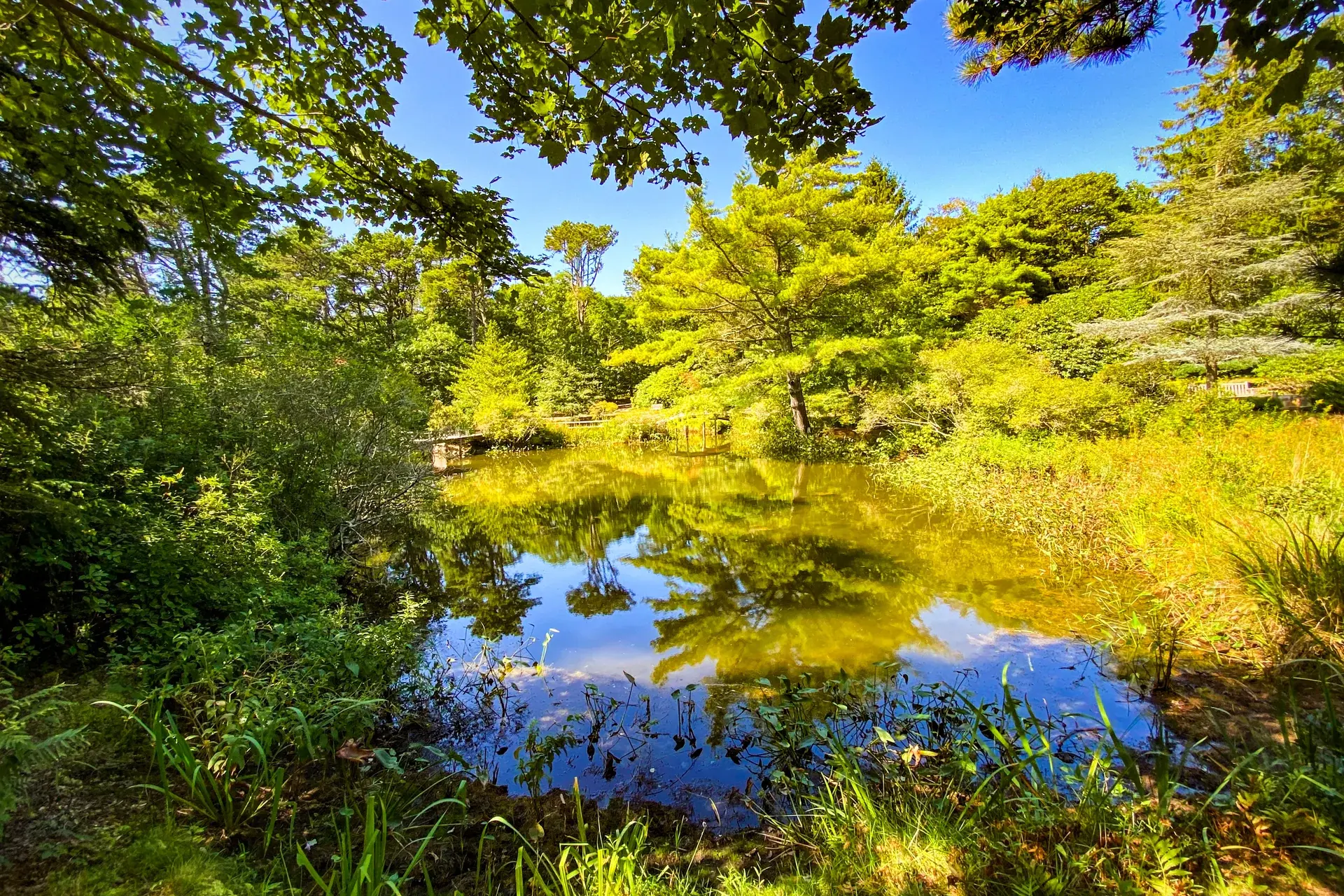
Chappaquiddick · MytoiPhoto by MV Vacation
Through the entrance gate on Dike Road: the garden opens on the pond and the bridge almost at once.
Mytoi is on Dike Road, a little under three miles from the Chappaquiddick ferry landing. Take the On Time ferry from Edgartown (it runs continuously, a few minutes across, no schedule to check), follow Chappaquiddick Road about two and a half miles to the sharp right-hand bend and carry straight on along the dirt Dike Road; the garden is three-tenths of a mile up on the left, with a small lot for fifteen cars. Roadside parking is prohibited and enforced, so if the lot is full, wait or come back. Many people bike it, which solves the parking and suits the pace. Our Chappaquiddick guide covers the ferry fares, the road and what else is out there.
Hours and admission
Open every day from sunrise to sunset, all year. From May through October non-members pay $10 per adult, with children 12 and under free; Trustees members pay $5 or nothing depending on membership level. From November through April the garden is free for everyone. There is an honor box at the gate when nobody is there, and the entry fees are what pay for the pruning.
Mytoi · the bridgePhoto by MV Vacation
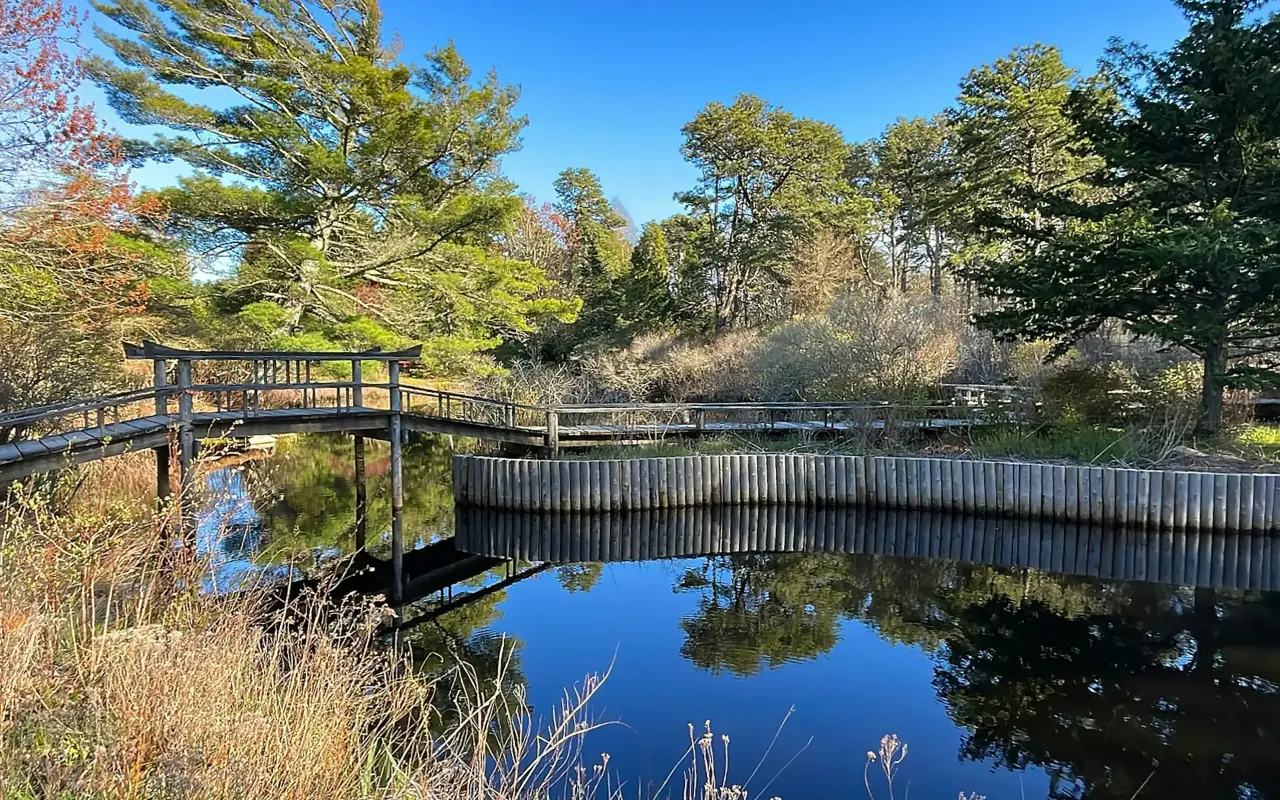
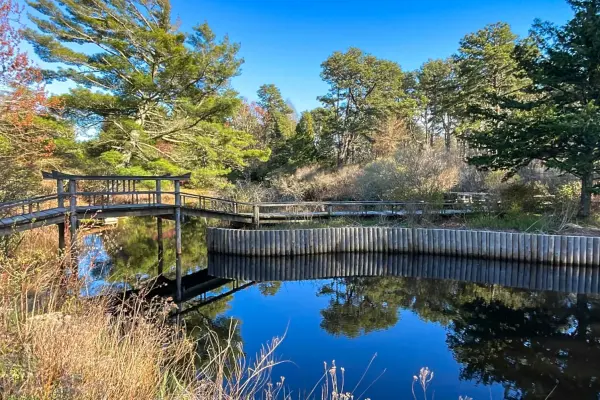
The arched footbridge to the island in the pond, on a clear day. Nearly everyone who visits stops here first.
Before you book
What Martha’s Vineyard really costs, free
Ferry fares by the day of the week, the room tax every town charges and four whole trips added up. Free with the island letter, together with our Beach, Fall and Where to Stay guides.
One-click unsubscribe, and we never share your email.
A short history
Hugh Jones, an Edgartown architect who had been posted to Japan in the military, began the garden in 1958. He named it Mytoi, which is simply "my toy" spelled to look Japanese; it has no meaning in the language. Jones tended it until his death in 1965, the island conservationist Mary Wakeman looked after it from then on, and in 1976 she gave it to the Trustees, who extended the land in 1981. Then in August 1991 Hurricane Bob flattened it: uprooted pines, shrubs torn out, the pond choked. The landscape architect Julie Moir Messervy redesigned the garden in the years after, and volunteers rebuilt it by hand. What you walk through today is largely her plan, thirty years grown in.
What to look for
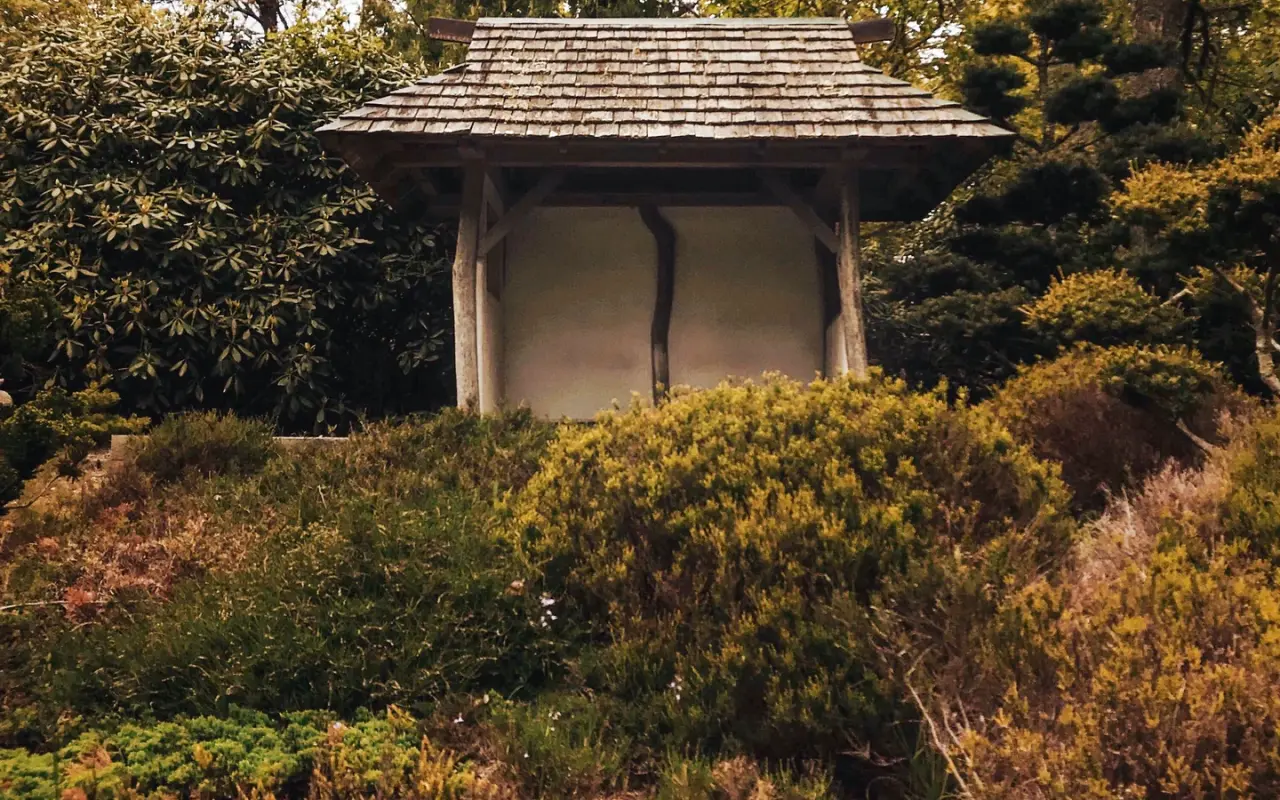
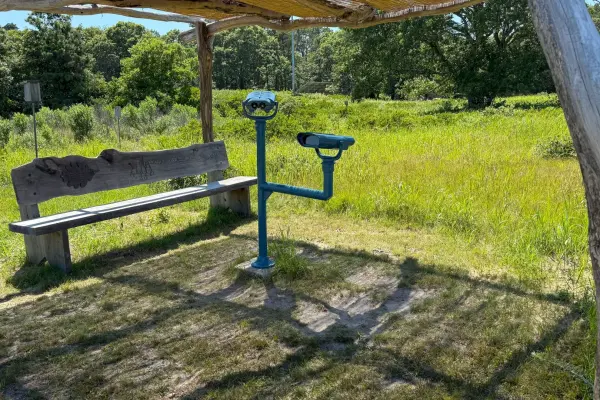
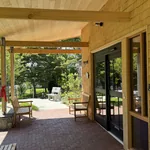
The path is a loop and the garden reveals itself in rooms. The pond with its island and bridge is the center; look for painted turtles on the stones and the goldfish under the bridge, and for the ospreys that fish it in summer. The birch walk is at its best in the low light of morning or late afternoon. The camellia dell flowers in spring, the azaleas after it, and the stone garden and the hillside garden hold the structure in winter when everything else is bare. There is a small open shelter for sitting out a shower, and benches placed exactly where you want them. An hour is about right; it is not a big garden, and it rewards going slowly.
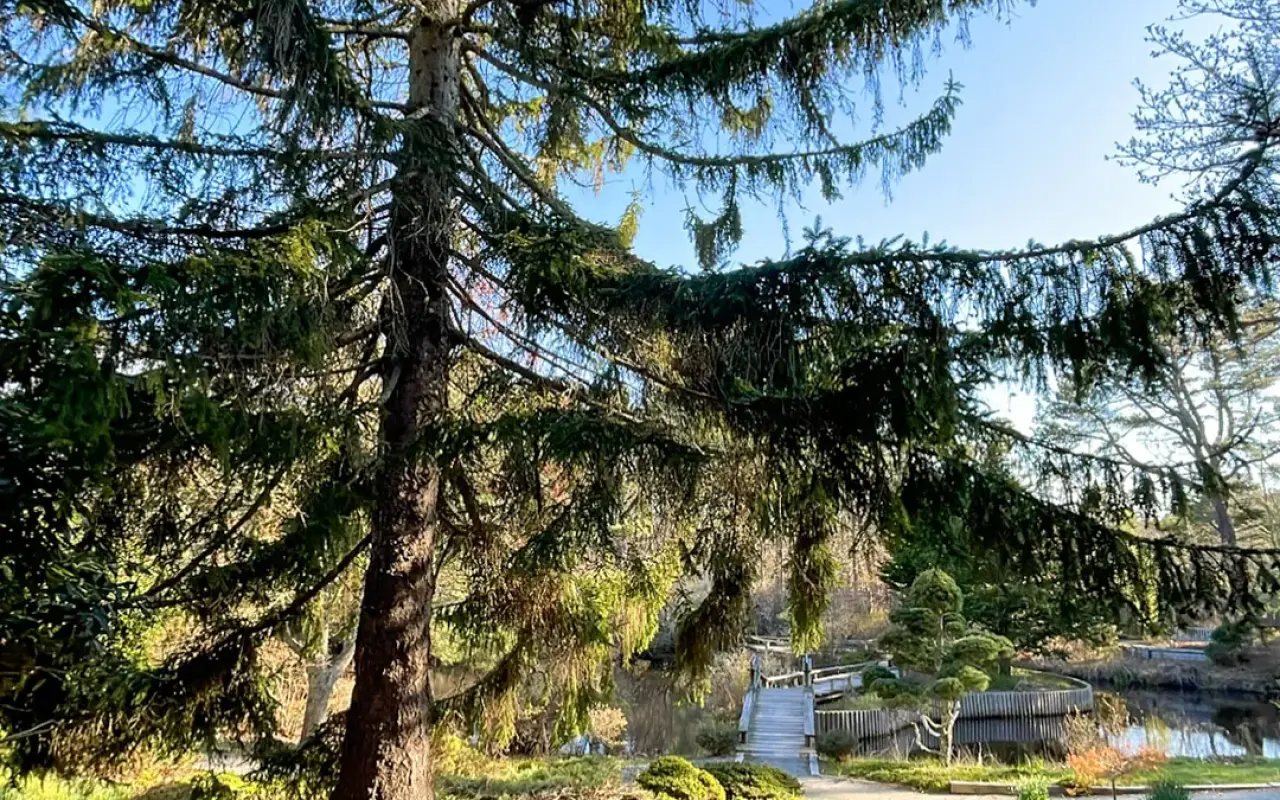
Mytoi · the pondPhoto by MV Vacation
The tall spruce above the bridge, and the pines reflected in the still water below it.
Rules, and the spirit of the place
No bicycles and no dogs inside the fence, which the Trustees ask for plainly and which the garden needs. Visitors keep to the paths, keep their voices low and leave the stones where they are. The garden is at its best when there are fewer than ten people in it, so early mornings, the shoulder months and gray days are the quiet times, and a gray day suits a Japanese garden. Our rainy day guide lists it for that reason.
Accessibility
The paths are gravel and packed earth with gentle grades, and the loop around the pond is manageable for a sturdy stroller or an all-terrain chair with help; the bridge is stepped. Year-round portable toilets at the lot include an accessible one, and the Trustees are adding adaptive equipment on their island properties, so ask them what is available before you cross. The accessibility guide has the ferry and bus details.
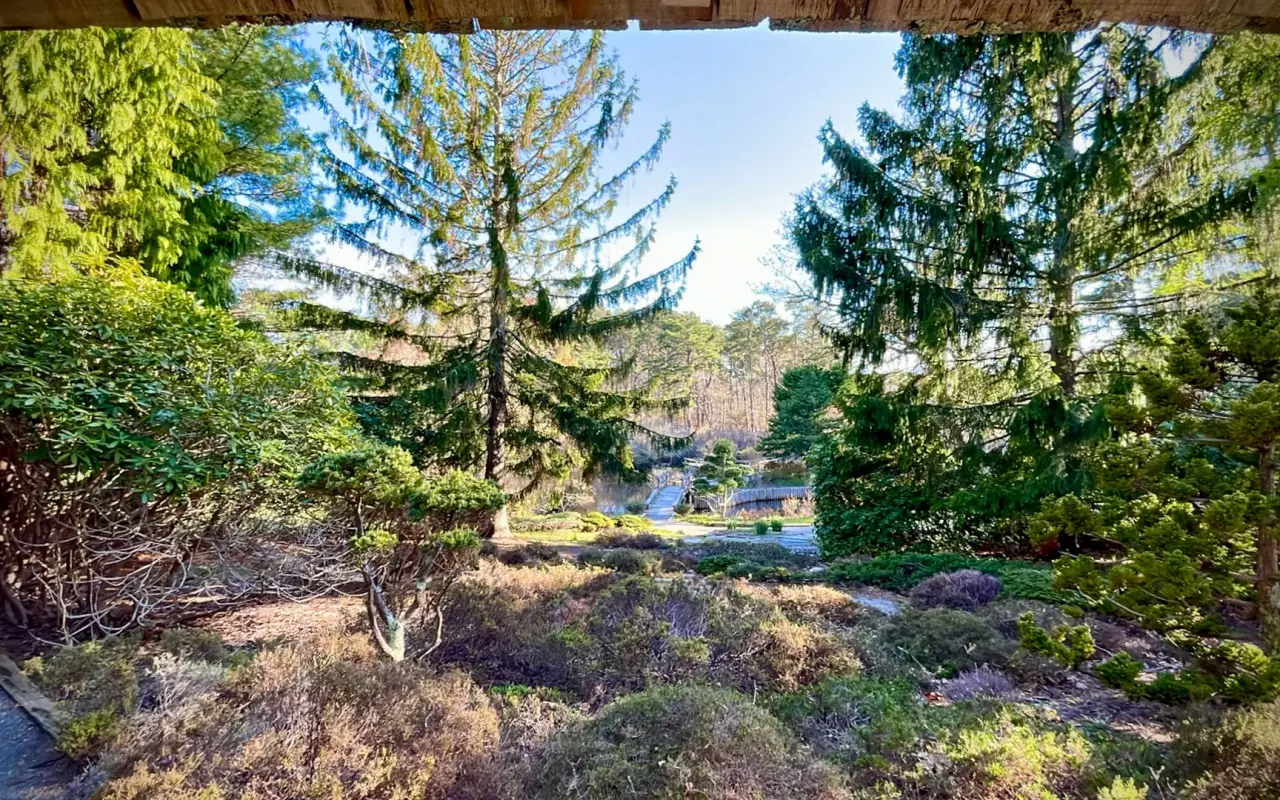
Mytoi · the shelterPhoto by MV Vacation
The small open shelter above the plantings, its shingled roof framed by rhododendrons and pines.
When to go, and what to pair it with
Late May for the azaleas and the first turtles; October for the color in our photographs; a still January morning for the stone garden and the silence. Mytoi pairs naturally with the rest of Chappy: continue down Dike Road to the Dike Bridge and the Cape Poge beaches, or go back to the fork for Wasque Point at the island's southeast corner, both Trustees properties with their own fees in season. Water and lunch are worth bringing, because there is very little to buy on Chappaquiddick, and so is the time of the last ferry if you stay for the evening. The word Chappy itself, and a few others you will hear on the boat, are in our island glossary.
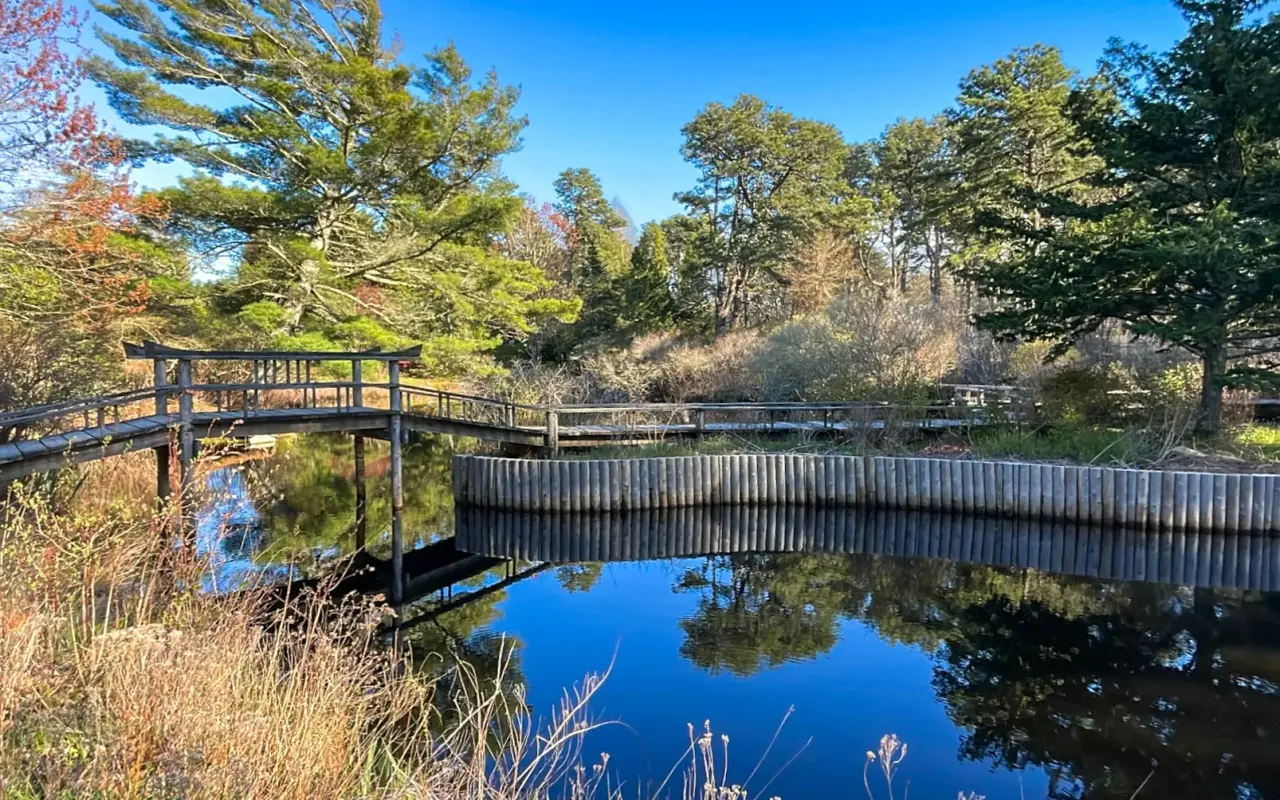
Mytoi · the footbridgePhoto by MV Vacation
The bridge and pond on a bright day, the trees doubled in the still water.
At a glance
Where
Dike Road, Chappaquiddick, a little under three miles from the Chappy ferry
Hours
Sunrise to sunset, every day, all year
Admission
May to Oct: $10 adults, children 12 and under free, members $5 or free; Nov to Apr: free
Parking
15 cars; no roadside parking; bikes welcome to the gate
Rules
No dogs or bikes inside the fence; stay on paths
Size
14 acres, an hour's loop
Since
Begun 1958 by Hugh Jones; cared for by Mary Wakeman after 1965; Trustees since 1976; rebuilt after Hurricane Bob 1991
How we checked this
Hours, admission, parking and rules are from the Trustees' Mytoi page as of September 2026. The history follows the Trustees and the Vineyard Gazette's 2023 account of the garden. The photographs are ours, across several autumns and springs. Fees change with the season and the Trustees revise them most years, so check before you go.
Frequently Asked Questions
How much does Mytoi cost?
From May through October non-members pay $10 an adult, children 12 and under free; Trustees members $5 or nothing depending on level. From November through April the garden is free for everyone. There is an honor box at the gate, and the entry fees pay for the pruning.
What are the hours?
Sunrise to sunset, every day, all year. It is one of the few island places as good in November as in June.
How do I get there?
Take the On Time ferry from Edgartown, which runs continuously with no schedule, follow Chappaquiddick Road to the sharp right-hand bend and carry straight on along Dike Road; the garden is a little under three miles from the landing, with a lot for fifteen cars. Roadside parking is prohibited and enforced, so many people bike it.
What does the name mean?
Nothing in Japanese. Mytoi is simply “my toy” spelled to look Japanese. Edgartown architect Hugh Jones, who had been posted to Japan, gave the garden that name when he began it in 1958.
What will I see?
Fourteen acres in a pine wood: a pond with an island reached by an arched bridge, a birch walk, a camellia dell and a stone garden, kept by the Trustees of Reservations since Wakeman gave it to them.
Island tip of the dayShoppingNo. 31 of 86New tip at midnight, island time
The Chappy Ferry costs $5/person round-trip and $17 for a car with driver. Cards work at the Edgartown-side kiosk; bring cash for the boat itself.
Useful?
More on
Four free downloads · 2026 editions
Four island guides, in your inbox
The Beach Guide (all 20 beaches decoded), The Vineyard in the Fall, the season date by date, Where to Stay, every town and price band, and What It Really Costs, the 2026 budget line by line. All four PDFs free, plus a short island letter when there is something worth telling. No schedule, no spam.
No spam, unsubscribe in one click. Want a look first? See what you get.
First email ever from us? Give it a minute, and peek in spam once.
Disclaimer: The information in this article is provided for general guidance only and was accurate at the time of writing. Beach conditions, hours, prices, lifeguard schedules, ferry fares, and business operations change frequently and without notice. Ocean swimming carries inherent risks including rip currents, undertow, and cold water shock. Always verify current conditions with official local sources before your visit. MV Vacation assumes no responsibility for any loss, injury, or inconvenience resulting from the use of this information. Swim only where lifeguards are on duty, supervise children at all times near water, and follow all posted safety signs.
A guide to Martha's Vineyard, written on the island: beaches, dining, events and island living. We write down what we know about the island so your trip goes the way you hoped.
Shellfishing on Martha's Vineyard town by town: what each of the six towns charges a visitor for a permit and what it covers, where to buy it, weekly limits and sizes, the 2026 to 2027 bay scallop dates published so far, how to check storm and rain closures, and keeping the catch safe to eat.
Martha's Vineyard's ponds explained: the great ponds sealed behind the south-shore beach and cut open to the sea by an excavator, the salt ponds with tides and scallops, the freshwater kettle ponds, why cyanobacteria blooms turn some of them green in August and what MV Cyano's colors mean, the nitrogen under the houses, and where a visitor can swim, paddle and watch the cut.
Where Martha's Vineyard's oysters, bay scallops and quahogs come from: the public solar hatchery on Lagoon Pond that turned fifty in 2026, the dozen oyster farms in Katama Bay, Menemsha Pond and Vineyard Sound, the wild beds in the great ponds, the autumn scallop season and its limits, visitor shellfish permits by town, why rain closes a pond, and where to eat them.
Felix Neck Wildlife Sanctuary in Edgartown: the four easy trails and what each passes, the ospreys, the butterfly garden, hours and admission, Mass Audubon's kayak tours and prices, accessibility, the Wampanoag and Smith-farm history, and when to go.
Plan a Chappaquiddick day trip: the On Time Ferry, Mytoi Japanese garden, Cape Poge Wildlife Refuge, Wasque Beach, and biking routes on Martha's Vineyard.
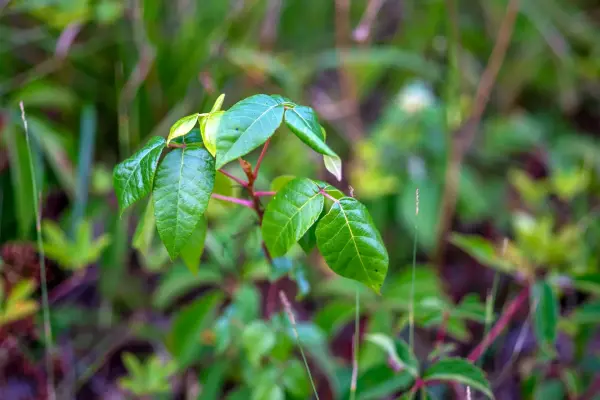
Guide to identifying and avoiding poison ivy on Martha's Vineyard. Recognition tips, treatment options, and safety measures for island trail visitors.
Subscribe
The free island library · 2026
One short island letter, and all four guides to start
Beach reports, events worth a day, ferry heads-ups. Sent when there is something worth telling. The Beach Guide, The Vineyard in the Fall, Where to Stay and What It Really Costs arrive with your welcome email.
The Beach Guide, The Vineyard in the Fall, Where to Stay and What It Really Costs. No spam, one-click unsubscribe.
We use cookies for trip planning, site stats and ads, including ads based on your browsing. To opt out, turn on Global Privacy Control in your browser. Cookie policy
These cookies are essential for the website to function properly.
These cookies help us understand how visitors interact with the website.
These cookies are used to deliver personalized advertisements.