

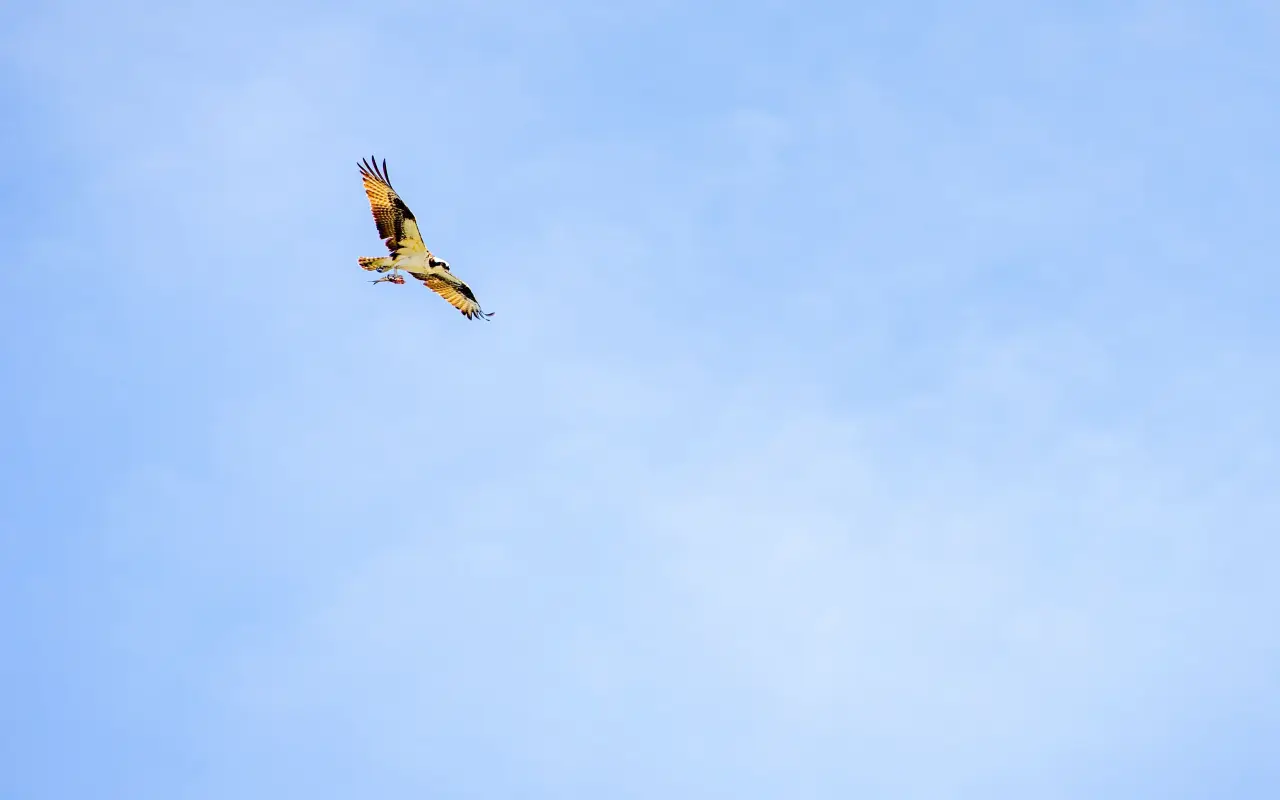
An osprey with its catch.
Osprey season cam · Felix Neck, Edgartown
The island’s ospreys, on camera
These are the animals visitors meet most often on Martha’s Vineyard, plus what recent research says about coyotes possibly arriving.
The island’s habitats
Martha’s Vineyard mixes protected conservation land, forests, barrier beaches, freshwater ponds and farm fields. With that much variety you run into wildlife all the time, even close to town, on the bike paths and in residential neighborhoods.
Animals you are most likely to see
Wild turkeys (Meleagris gallopavo)
Turkeys are the wildlife you will notice first. They travel in flocks, walk through neighborhoods, cross roads and feed along the edges of open fields. They are used to people, but fed turkeys get pushy and hold up traffic, so it is better to let them forage.
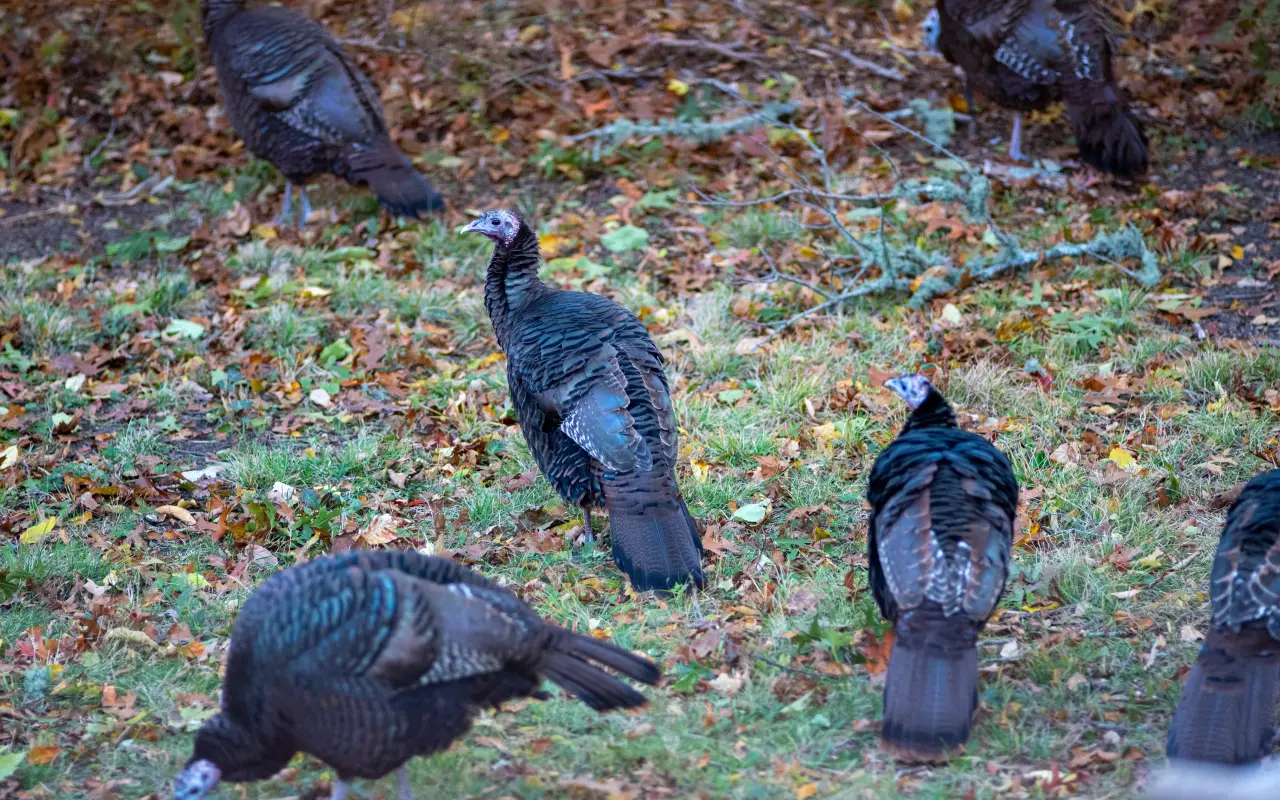
Wild turkeys, a common sight in island yards and fields.
White-tailed deer (Odocoileus virginianus)
Common around West Tisbury, Edgartown Great Pond areas, and on quieter backroads. They are most active at dusk and dawn. Deer are a major host for ticks, which is one more reason to keep to the trails and wear repellent.
Raccoons (Procyon lotor)
Raccoons come out at night and are not shy. They go for loose trash, compost and pet food left outside, so in a rental it pays to latch the trash and bring food in overnight.
Striped skunk (Mephitis mephitis)
Martha’s Vineyard has one of the densest skunk populations in New England due to mild winters and abundant food sources. They are not aggressive and only spray in self-defense. If you meet one, stop and let it wander off.
Squirrels (Sciurus carolinensis)
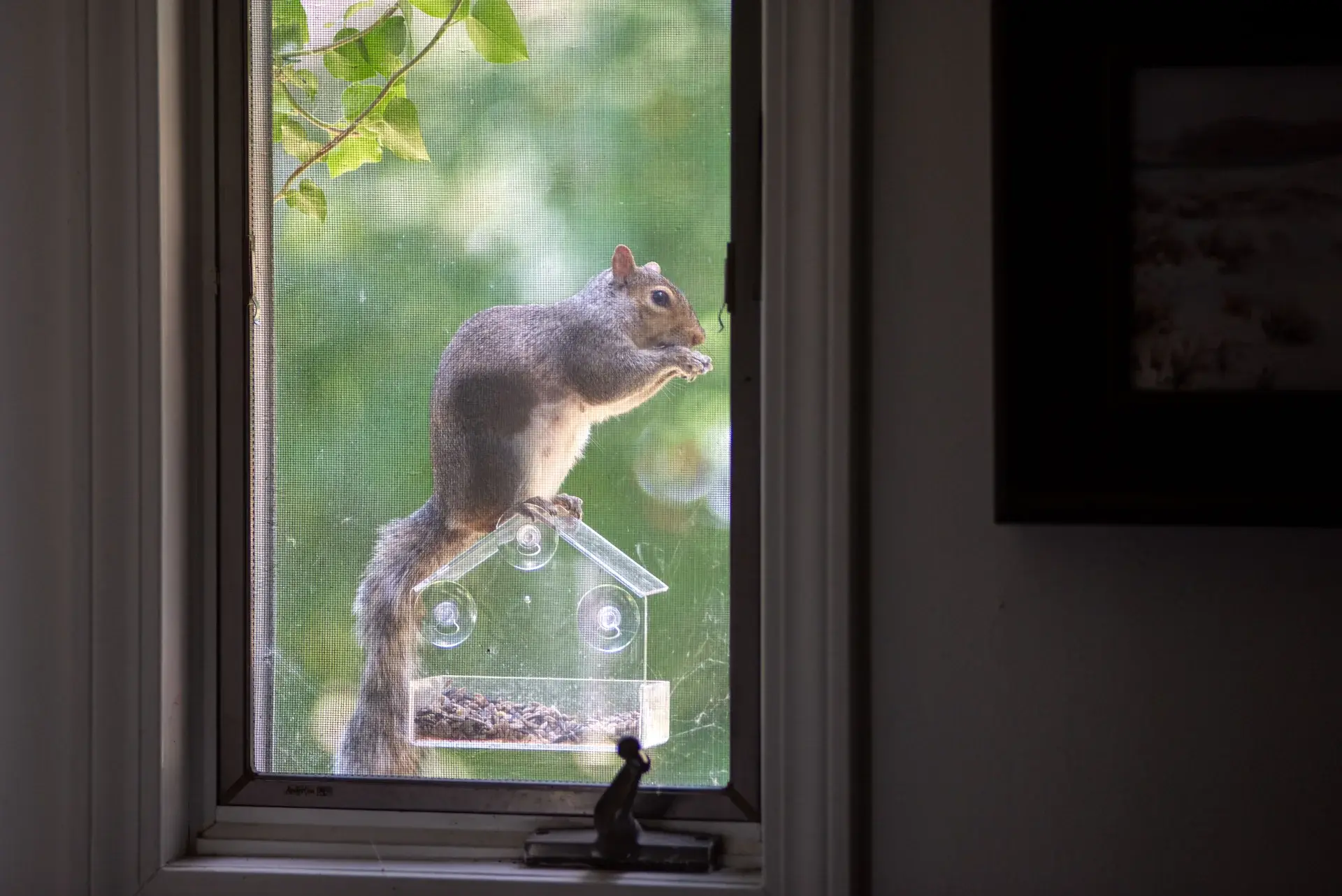
Squirrels are everywhere in town, at the campground and in the woods, out in daylight and comfortable around people.
Snakes (all of them harmless)
Every snake on the island is harmless to people and useful to the place. They keep mice and voles in check, which matters on an island where the white-footed mouse carries the tick-borne diseases, and they feed the hawks and herons in turn. If you meet one on a trail, in a garden or under a board, the kindest thing is to leave it where it is, unhandled, and let it get on with its work.
Eastern milk snake (Lampropeltis triangulum)
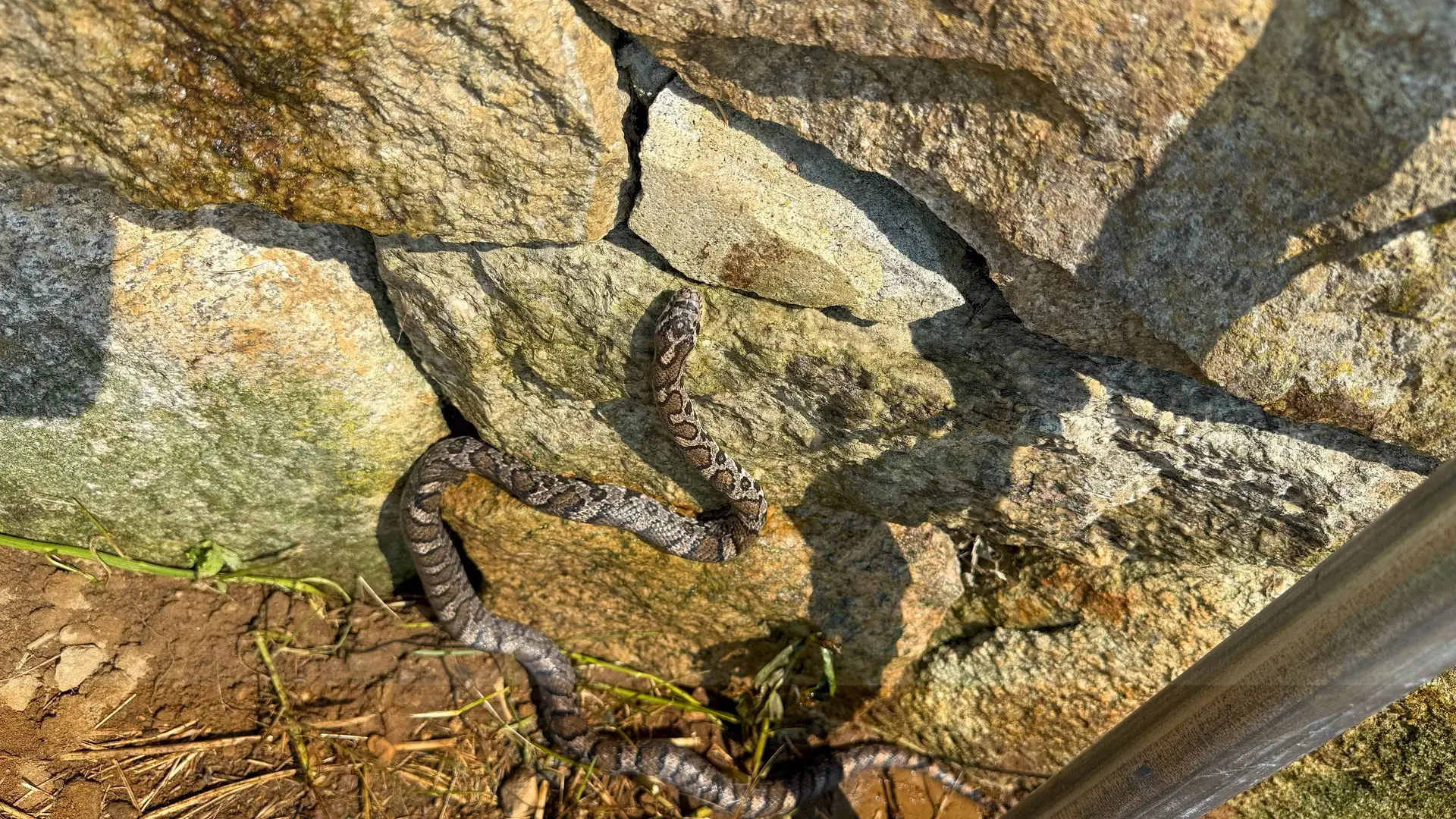
Harmless and useful, since it eats rodents. You tend to find it near stone walls, warm pavement or sunlit rocks. There are no venomous snakes on Martha’s Vineyard.
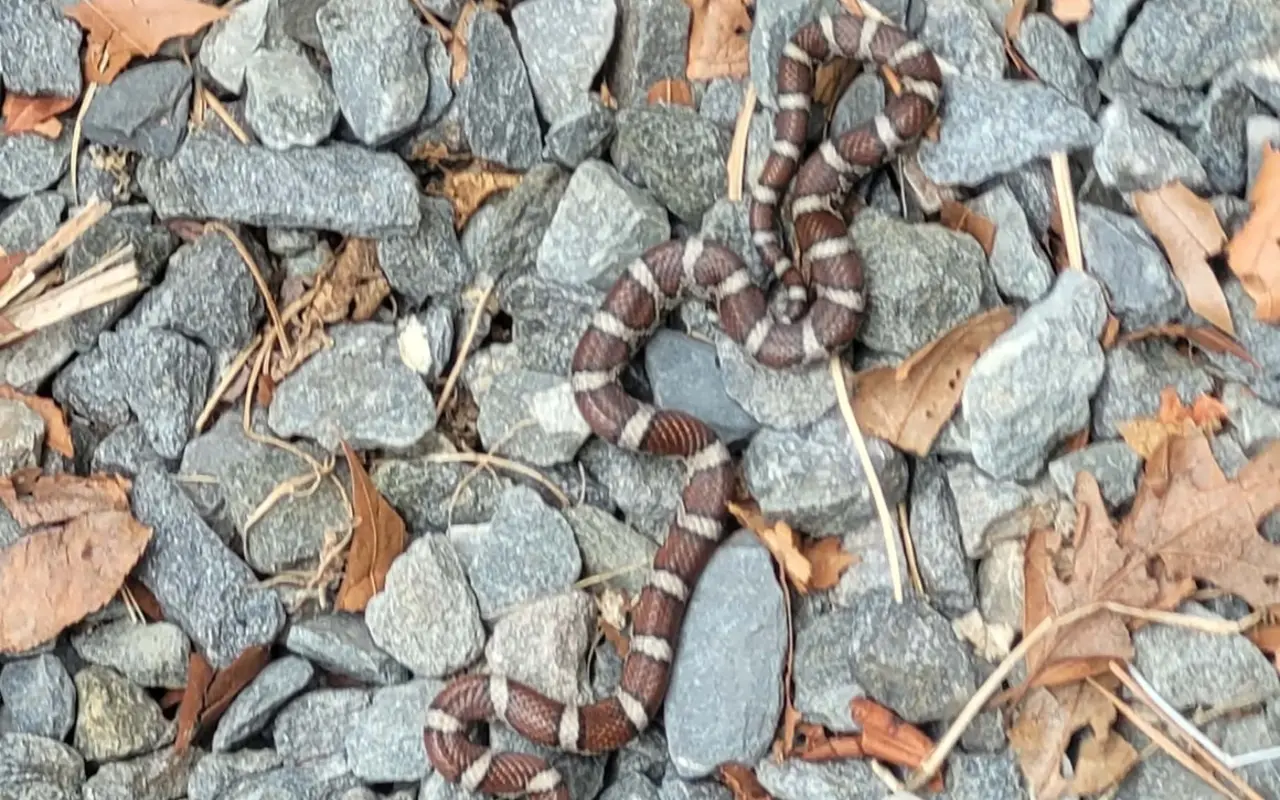
A young eastern milk snake on a gravel path in the leaves. The reddish saddles with dark edges get it mistaken for a copperhead, which does not live on the island. This one is harmless and grows up to eat mice.
Ring-necked snake (Diadophis punctatus)
Small and secretive, slate gray with a yellow or cream ring around the neck, and rarely longer than a ruler. It spends the day under boards, logs and flat stones and hunts at night for worms, slugs and salamanders. It is harmless, and if you lift a board and find one, it is happiest when the board goes back the way it was.
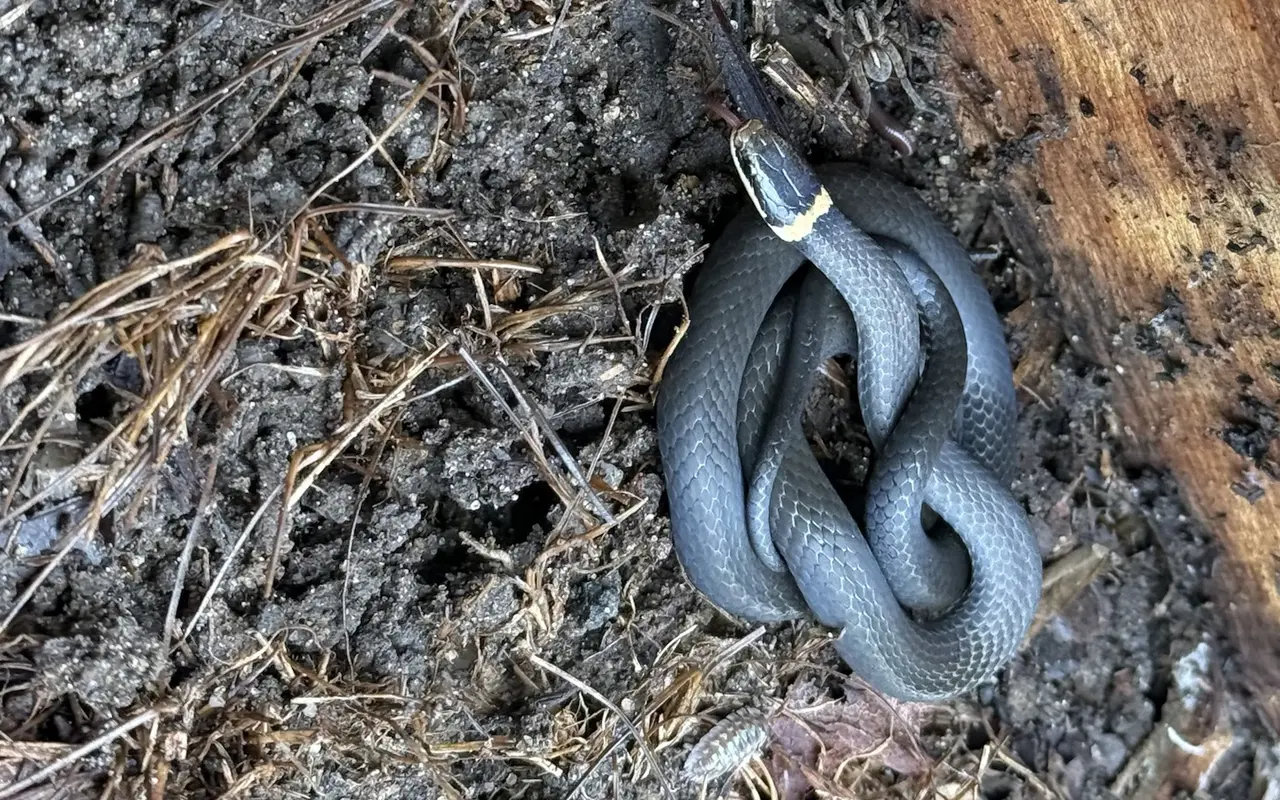
A ring-necked snake under a board, slate gray with a cream collar. It is best to set the board back the way you found it.
Birds
More than 300 bird species have been recorded on or migrating through Martha’s Vineyard (Mass Audubon data), so birdwatchers have plenty to look for in every season.
The easiest place to start is Felix Neck in Edgartown: osprey poles, a marsh and four flat trails, covered in our Felix Neck guide.
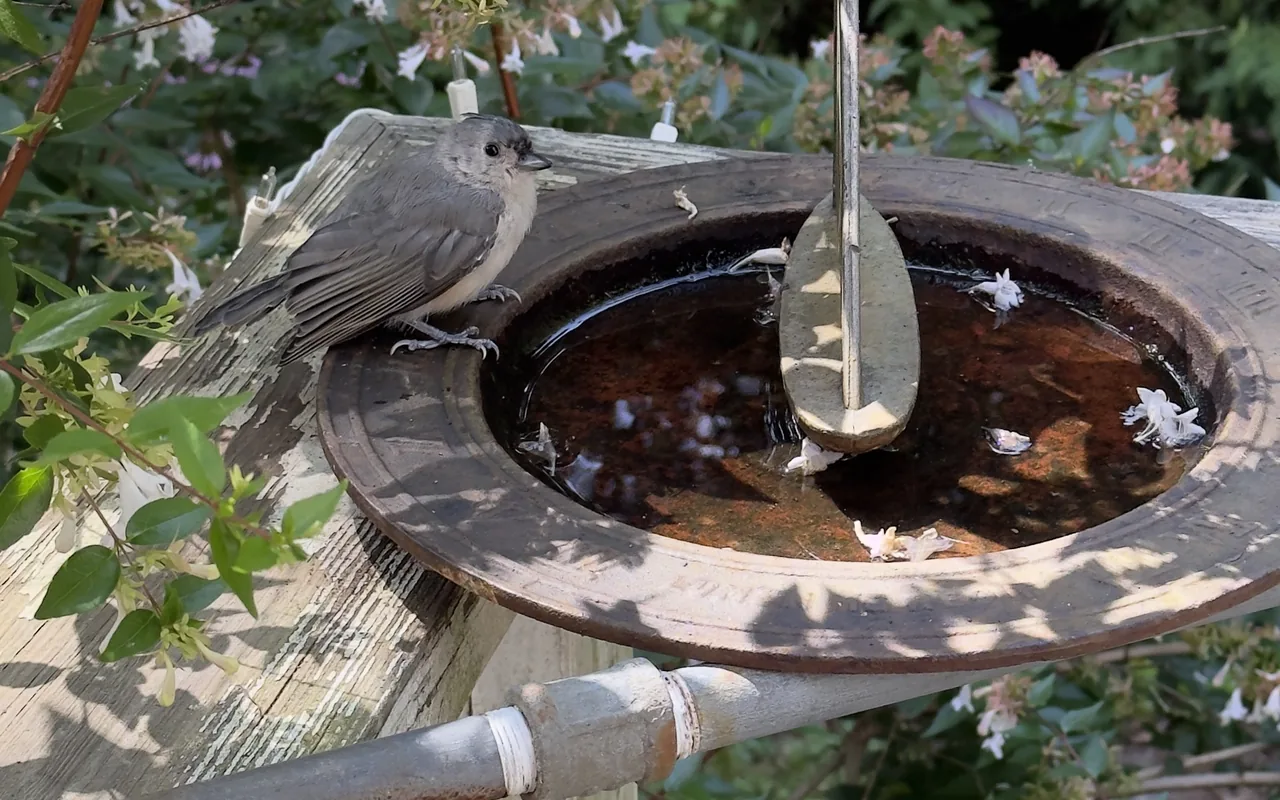
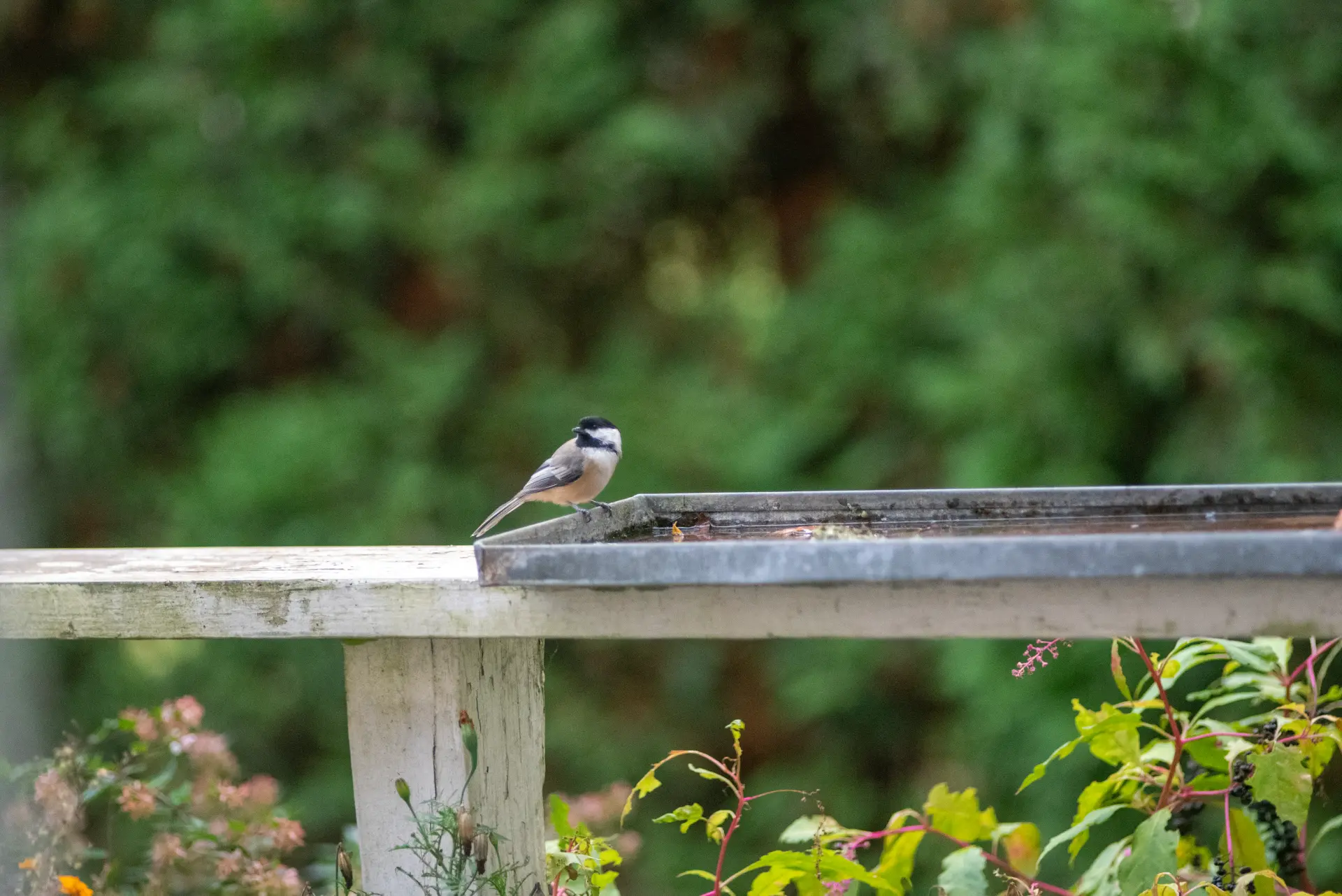
A tufted titmouse at a sundial bird bath. Titmice, chickadees and Carolina wrens are the garden birds you will hear before you see them.
Osprey (Pandion haliaetus)
Ospreys arrive every spring and build large nests on man-made platforms near ponds. They dive into shallow water to catch fish. In spring and summer you can watch a pair on their nest platform on the Felix Neck osprey cam above. They head south in late summer and early fall, so from October until spring the nest on camera is usually empty.
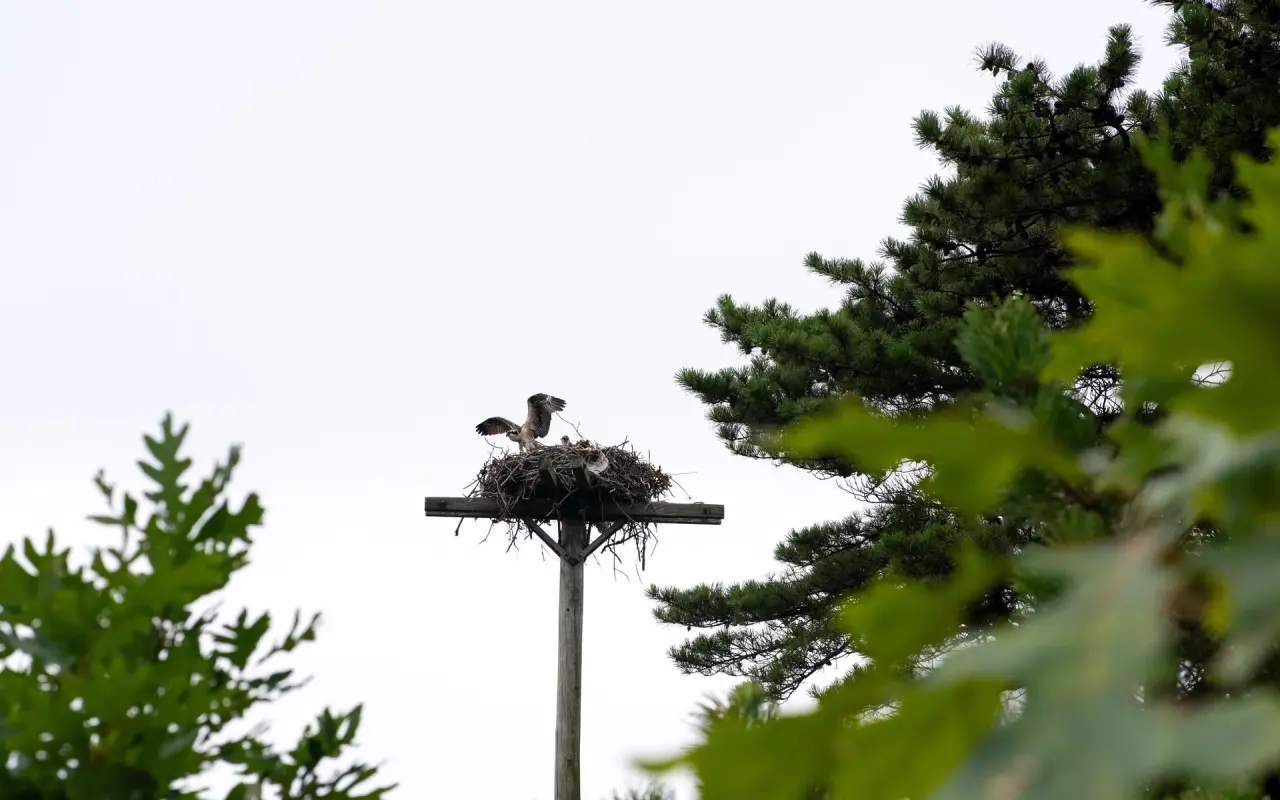
An osprey near its nesting platform. Look for them over ponds and harbors.
Good places to look: Felix Neck, Sengekontacket Pond and Edgartown Great Pond.
Great blue heron and snowy egret
Both feed in the salt ponds and marshes, most often at low tide.
Shorebirds (sandpipers, plovers)
Nesting areas on the beaches are roped off in spring and early summer, and the signs are there to protect the eggs and chicks.
Coyote sightings and what research shows
Coyotes are not established on Martha’s Vineyard, but there have been several confirmed sightings:
- 2010: DNA from scat found on the north shore came back 97 percent coyote
- 2019–2023: trail-camera confirmation in Edgartown (May 2019), then Oak Bluffs (January 2020) and Aquinnah (January 2023)
- 2019–2024: coyotes recorded on private security and trail cameras (Katama, Oak Bluffs, South Shore)
Wildlife experts, including long-time MV naturalist Gus Ben David, have examined remains and trail camera photos. The current thinking is that they most likely swim over from the Elizabeth Islands (Naushon).
So far there is no verified breeding population on Martha’s Vineyard.
What could change if coyotes settle (based on other islands)
- likely reduction in skunk and raccoon activity
- possible decrease in rodent and goose populations
- minimal impact on adult deer (may take fawns)
- potential risk to free-range sheep and poultry farms
Research from state wildlife biologists shows that attempting to eradicate coyotes increases reproduction: smaller populations produce larger litters. The long-term tools are fencing and livestock guardian dogs rather than culling.
Where to watch wildlife
- Felix Neck Wildlife Sanctuary (Edgartown): trail loops, ponds, osprey platforms
- Long Point Wildlife Refuge (West Tisbury): dunes, a freshwater pond, shorebirds
- Sengekontacket Pond (Oak Bluffs / Edgartown): ospreys, egrets, herons
- State Forest and the backroads: deer at dusk
Wildlife by season
- Spring: peak bird migration and the ospreys coming back
- Summer: turkeys everywhere, and shorebirds
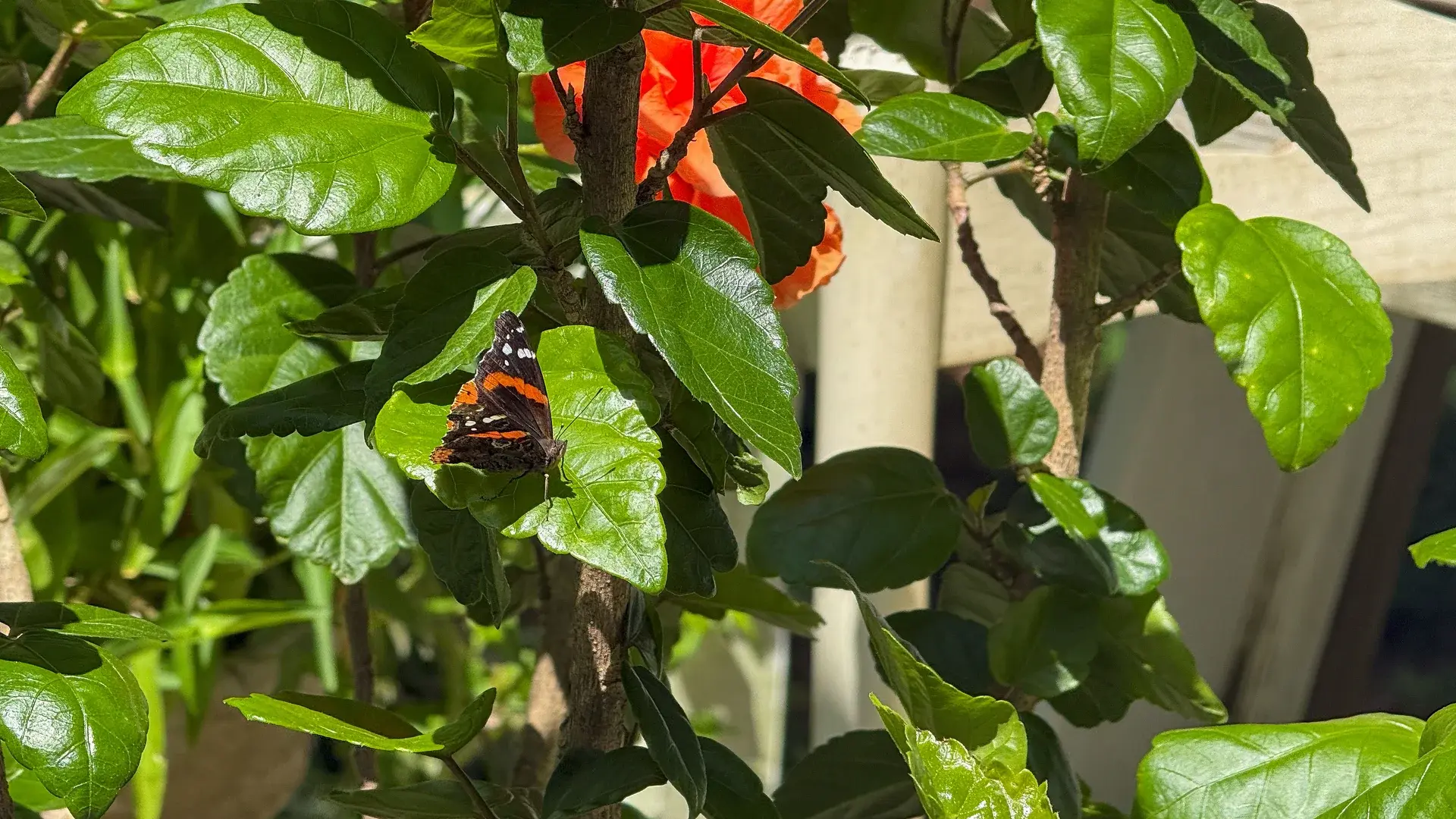
- Fall: the raptor migration and monarch butterflies
- Winter: owls and waterfowl
Watching without disturbing
- Feeding wildlife does more harm than good
- Marked trails keep you clear of nests and dens
- A zoom lens beats walking closer
- Animals relax when they have room and a way out
Logging your sightings
If you want to log what you see or check an identification, researchers use two databases:
- eBird (Cornell Lab): bird sightings and migration tracking
- iNaturalist: photo-based species identification and mapping




Questions
Wildlife questions, answered
Is there anything dangerous out there?
No venomous snakes, no bears, no established coyotes. Skunks spray only when cornered and raccoons only want your trash. What does bother visitors is ticks and poison ivy. Staying on the trail and wearing repellent covers most of it, and our tick guide and poison ivy guide have the rest.
Are there coyotes on Martha's Vineyard?
Not an established population. There have been confirmed sightings since 2010 (DNA from scat on the north shore) and trail-camera confirmations in Edgartown, Oak Bluffs, Aquinnah and Katama between 2019 and 2024, most likely animals that swam over from the Elizabeth Islands. So far there is no verified breeding population.
Where can I see ospreys?
Felix Neck in Edgartown is the easiest: nest platforms, a marsh and four flat trails, plus the osprey cam on this page. Sengekontacket Pond and Edgartown Great Pond have platforms too. The birds arrive in spring and leave in early autumn.
Can I feed the turkeys?
Better not. Feeding makes them pushy, and a flock that expects food will follow you and block the road. They are more fun to watch from a little way off.
When is the best season for birds?
Spring for the migration and the ospreys' return, autumn for the raptor migration and the monarch butterflies, winter for owls and waterfowl. More than 300 species have been recorded on or passing through the island.
Where should I log what I see?
Researchers use eBird from the Cornell Lab for bird sightings and iNaturalist for photo-based identification of everything else. Both welcome records from visitors.
Keep Reading
Continue exploring Martha's Vineyard
More photos: our island wildlife gallery.
Keep Reading
Listen to the island

 Four free downloads · 2026 The Beach Guide, the Fall Guide, Where to Stay and What It Really Costs Every beach, the fall season date by date, every town and price band for a stay, and the budget guide: four PDFs, free with the island letter. No spam, one click to leave. See a sample first
 Island wildlife on film
Turkeys, swans, squirrels and whatever else turns up at the feeder.
-
 Martha's Vineyard Photo Slideshow and Ambient Audio Birds Singing
 -
 We Don’t Check IDs at the Feeder, Martha’s Vineyard Wildlife
 -
 Exploring The Beauty Of Long Point Wildlife Refuge In West Tisbury
 -
 Island Alpaca Farm 2025, Baby Alpaca and More!
 -
 Wild Turkeys Feeding in Martha’s Vineyard Backyard
 -
 Aquinnah Beach, Ocean Waves and Seagulls at Rest, Martha's Vineyard