By MV VacationUpdated 09 Oct, 202613 mins read 248 views
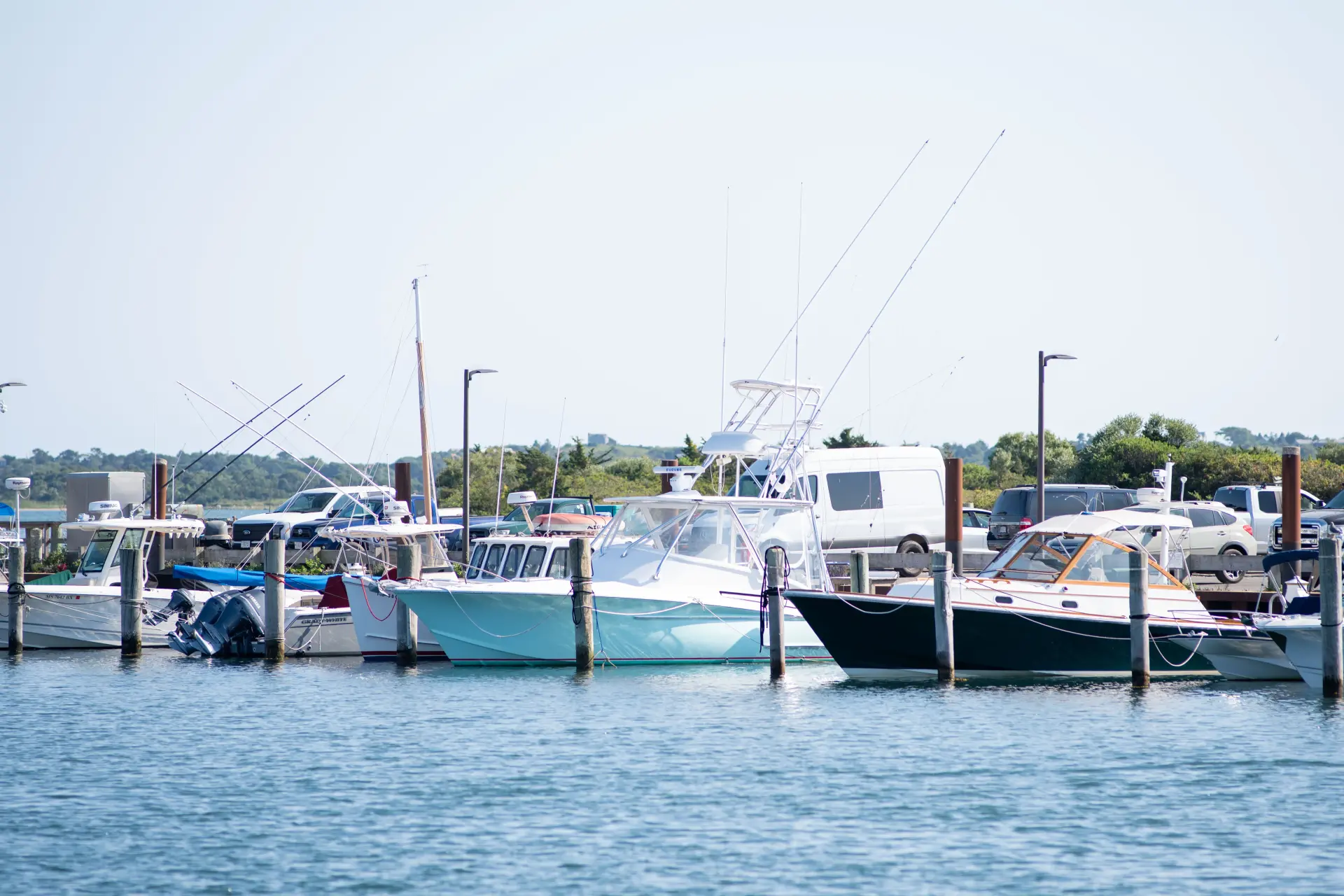
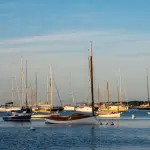
Chilmark · the harborPhoto by MV Vacation
Boats tied up in the harbor, sport boats and fishing boats side by side.
Lobster on Martha's Vineyard from trap to paper plate: how the small Menemsha fleet fishes, the Massachusetts rules on size, egg-bearing females and whale-safe gear, where to buy lobster off the boat (Larsen's, Menemsha Fish Market, The Net Result), how to eat it on the dock with your own bottle, and how a visitor can get a permit and catch a few.
The lobster on your paper plate on the Menemsha dock came out of a wire trap that somebody hauled by hand that morning, measured with a brass gauge, banded, and sold across a counter within sight of the boat. That is the whole appeal, and it is rarer than the menus suggest. Martha's Vineyard has a small, old, and shrinking lobster fleet, a set of state rules that decide which lobsters can be kept, and a handful of markets where the catch lands. Below: how the fishery works, what the rules mean for the animal on your plate, where to buy lobster off the boat, how to eat it the island way, and how a visitor can even catch a few.
An island lobsterman fishes strings of wire traps set on the bottom of Vineyard Sound, the waters south of the island and out toward Noman's, each string marked at the surface by a buoy painted in that boat's registered colors. The season for the island fleet runs roughly from spring, when the water warms and the traps go in, to late autumn, when they come out; the lobsters molt in late June and early July, so early summer brings soft-shell lobsters that are cheaper and sweeter and hold less meat, and late summer and autumn bring the hard-shell ones that ship well and cost more. A day is hauling: bring the trap up, empty it, measure every lobster, keep the legal ones, band the claws, throw back the rest, re-bait with something that smells, drop it again, and move to the next buoy. The bait, the fuel, the rope and the traps are the running cost; the price at the dock is set by a market that stretches from Maine to Canada, which is why a Vineyard lobsterman can have a good week and a bad month in the same season.
It is a small fleet and an aging one. The Vineyard Gazette counted about twenty lobstermen working out of Menemsha, Lake Tashmoo, Vineyard Haven and Edgartown in 2019, most of them out of Menemsha, and in 2024 it profiled a handful of new ones in their late teens and twenties who bought boats and permits from retiring fishermen, one of them the third generation in his family to haul traps. The same reporting put the cost of getting into the business at around $70,000 for a boat, gear and permits, and the southern New England lobster population down by about half over the previous decade. The island's own boats cannot supply a summer's demand: much of the lobster sold on the island in July arrives on the ferry from Maine and Canada, and the markets will tell you which tank is which if you ask.
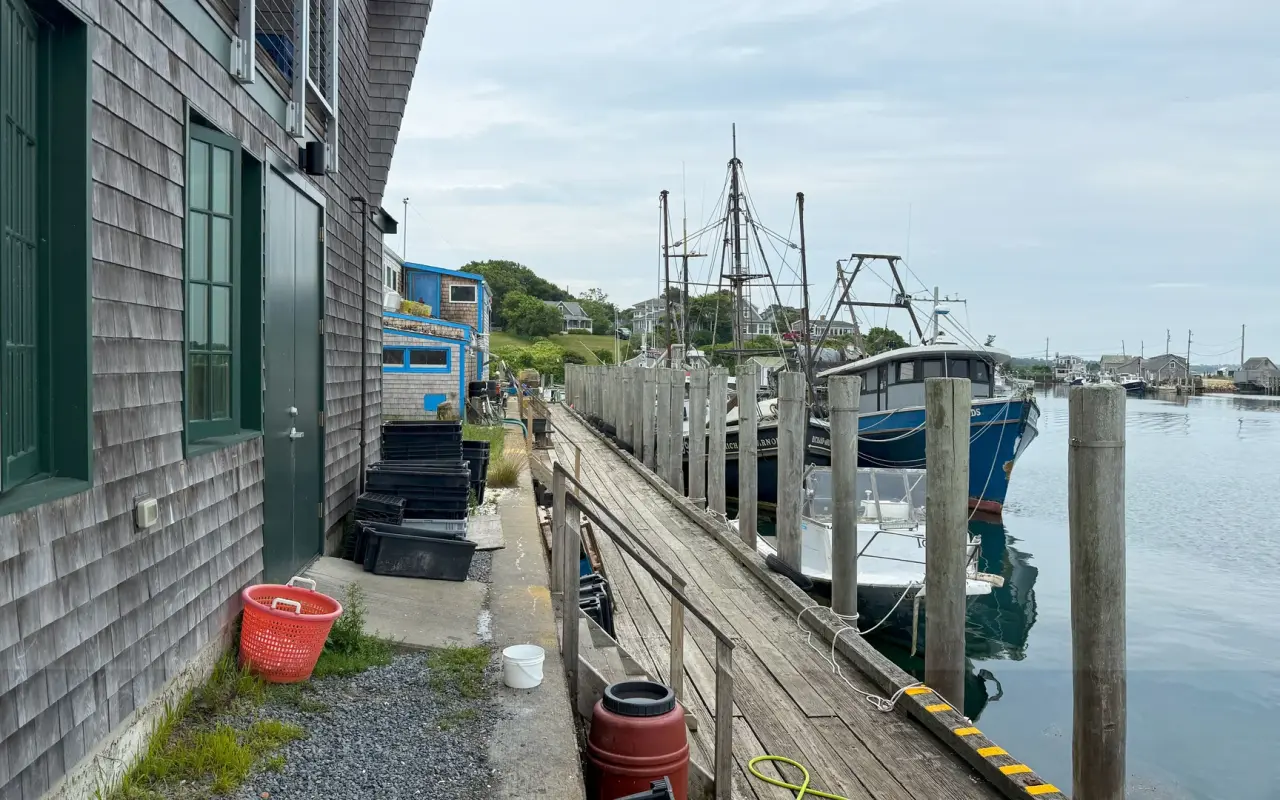
Menemsha · the working dockPhoto by MV Vacation
Fish totes and a red bait basket beside a shingled building on the dock, the boats tied up a few feet away.
The rules, and what they mean on your plate
Massachusetts sets the rules, and they exist because the fishery nearly collapsed in the early 2000s. Vineyard waters fall in the state's Southern New England lobster area, and these are the rules that decide what a legal lobster is.
05 RULE
THE GAUGE Minimum 3 3/8 inches, maximum 5 1/4 inches
Measured on the carapace, from the eye socket to the back of the body shell, with a brass gauge every boat carries. Under the minimum is a short and goes back; over the maximum is a breeder and goes back. That is why the lobsters on the island are all roughly the same size: a pound and a quarter to two pounds, and the giants of the postcards are illegal to land.
EGG-BEARING FEMALES Never kept
A female carrying eggs under her tail goes back into the water, always. Commercial boats cut a small V-notch in her tail flipper before releasing her, and a notched female cannot be landed by anyone afterwards, for the rest of her life.
THE BANDS Rubber bands on the claws
Put on at the boat to protect the handlers' fingers. A lobster with one claw is a cull and sells cheaper by the pound; the meat is the same.
WHALE-SAFE GEAR Weak rope and breakaway links, since 2022
Federal rules meant to let an entangled North Atlantic right whale break free require weaker rope or inserts between buoy and trap, plus seasonal closures. Island lobstermen argue their grounds are not whale habitat; the rules apply anyway and add to the cost of every string. Congress was debating a delay in 2026.
THE BAG, FOR VISITORS 15 a day, 10 traps a household
A recreational permit ($55 for Massachusetts residents, $75 for non-residents) allows up to 15 lobsters a day, either from 10 traps per household, from May 16 to October 31, or by diving with a separate endorsement and a dive flag. The same gauge and egg rules apply, and the wardens check.
Before you book
What Martha’s Vineyard really costs, free
Ferry fares by the day of the week, the room tax every town charges and four whole trips added up. Free with the island letter, together with our Beach, Fall and Where to Stay guides.
One-click unsubscribe, and we never share your email.
The counter with the carved fish sign, open daily 9 to 7 in season (10 to 6 in October; the last day of 2026 is October 18). Live lobsters by the pound at the board price, cooked to order (call 508-645-2680 in the morning to reserve cooked ones for the evening), oysters and clams shucked while you wait. Cash only. You carry the tray to the dock and sit on a crate.
The other counter, on the harbor side, supplied by the boats tied up at the dock; summer hours 10 to 7 (Wednesday to 6), 508-645-2282. It ships lobster and seafood nationwide, if you want to send some home. The sign over the tank says prices change with the market, and they do, week to week.
The down-island fish market, year-round, with live lobsters, cooked lobsters, sushi and the fried counter. The closest lobster to the ferry, and the one to use if Menemsha is a forty-minute drive you are not making tonight.
Live tank and cooked lobsters, year-round, a walk from the village rentals. In July it helps to order cooked ones ahead.
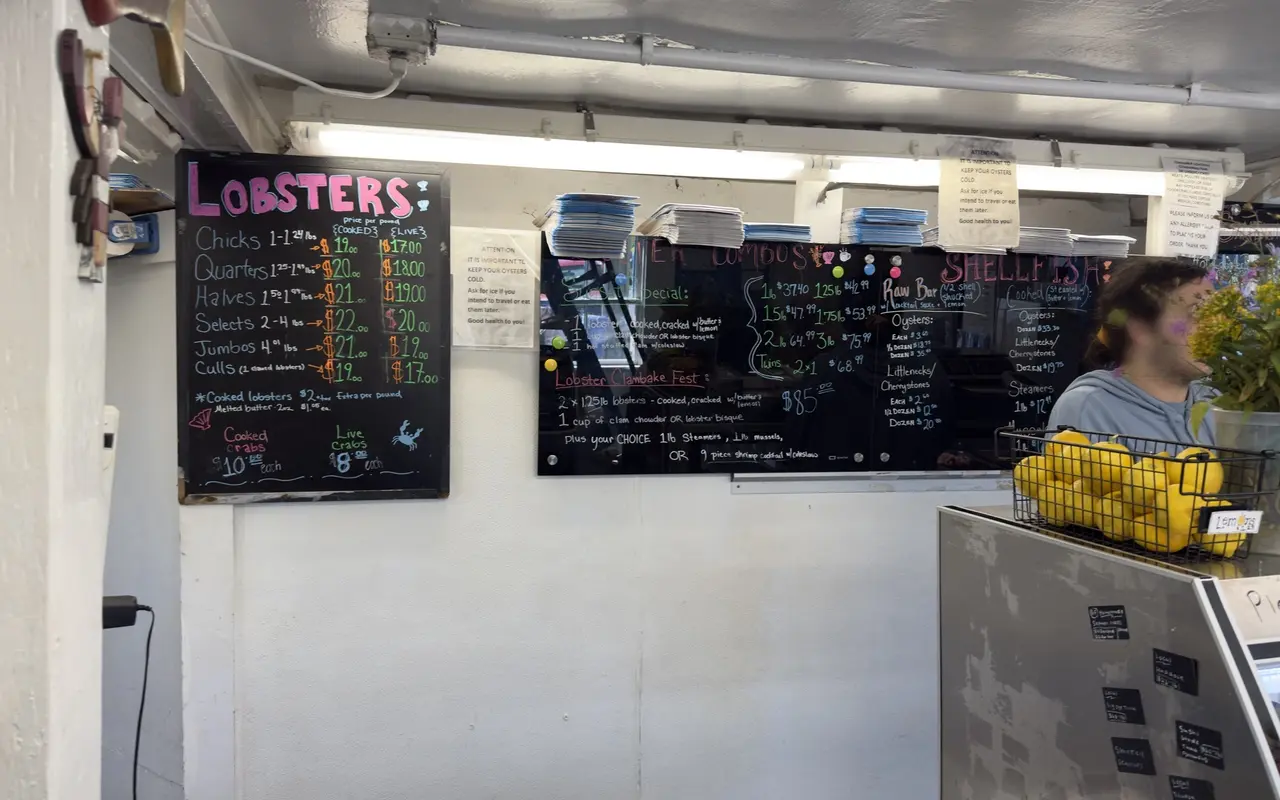
Menemsha · Menemsha Fish MarketPhoto by MV Vacation
The board at Menemsha Fish Market on October 9, 2026: live lobsters $17 to $20 a pound depending on size, cooked ones $2 more a pound, crabs $8 live or $10 cooked, and sunset combos from $37.40.
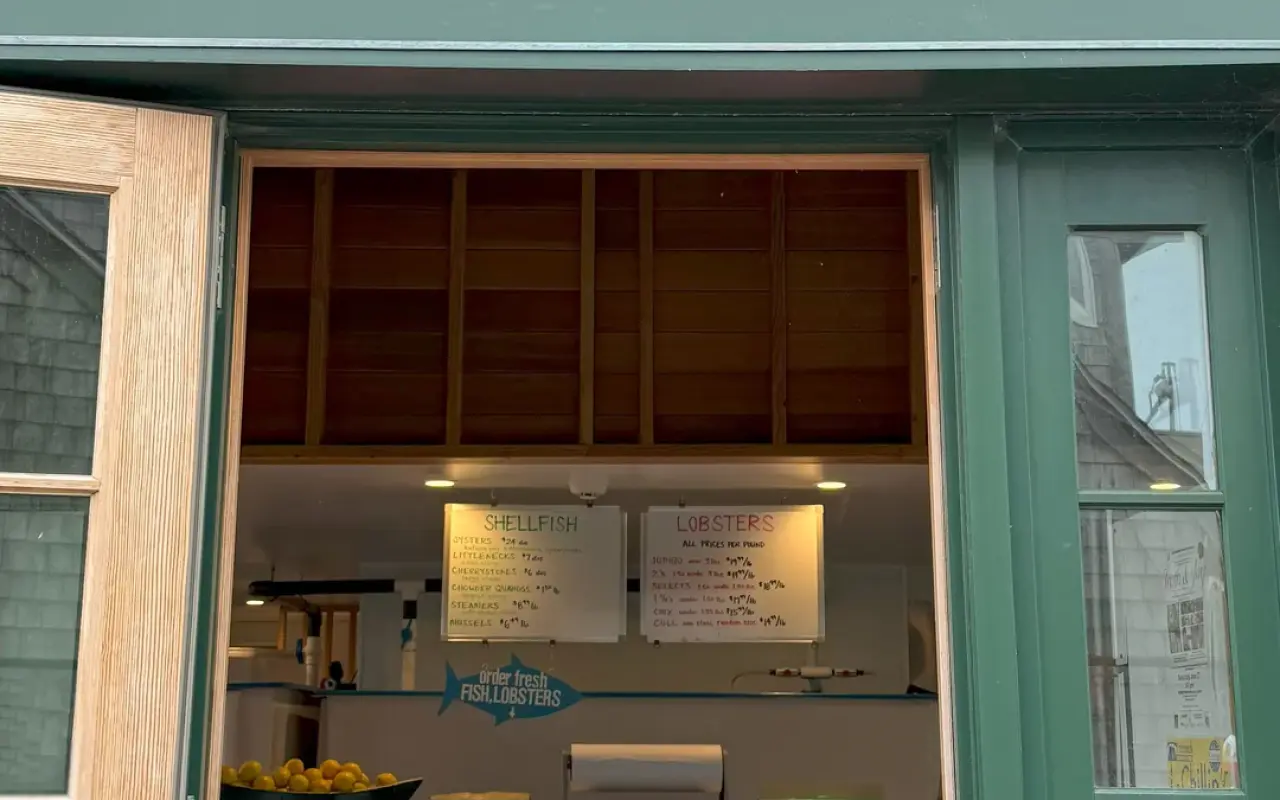
Menemsha · the order window at Larsen’sPhoto by MV Vacation
The shellfish and lobster boards at the window, prices written in marker and changed as the catch and the season change.
How to eat it the island way
The dock at sunset is the classic. Order at Larsen's or the Fish Market, carry the tray to the dock, sit on a crate or the boards, and eat while the sun goes into the Sound. Get there before six in July and August or you will be eating in the dark. Our Menemsha guide has the parking, which is the hard part. The oysters have their own story in our shellfish guide.
Chilmark is a dry town: no shop sells alcohol and the markets cannot, so the wine or beer comes from Edgartown or Oak Bluffs on the way. The dry towns guide has the rules at the dock.
Early-summer soft-shells are cheaper, sweeter and easier to open with your hands; late-season hard-shells are fuller and need the cracker. Ask which is in the tank.
Culls are the bargain: a one-clawed lobster is the same animal at a lower price; the tail is where the meat is anyway.
For cooking in the rental, a live lobster wrapped in damp newspaper keeps in the fridge for a day. Boil in salted water: about 8 minutes for a pound and a quarter, 10 to 12 for a two-pounder, until the shell is red and the antennae pull out easily. Melt the butter, put the paper down first.
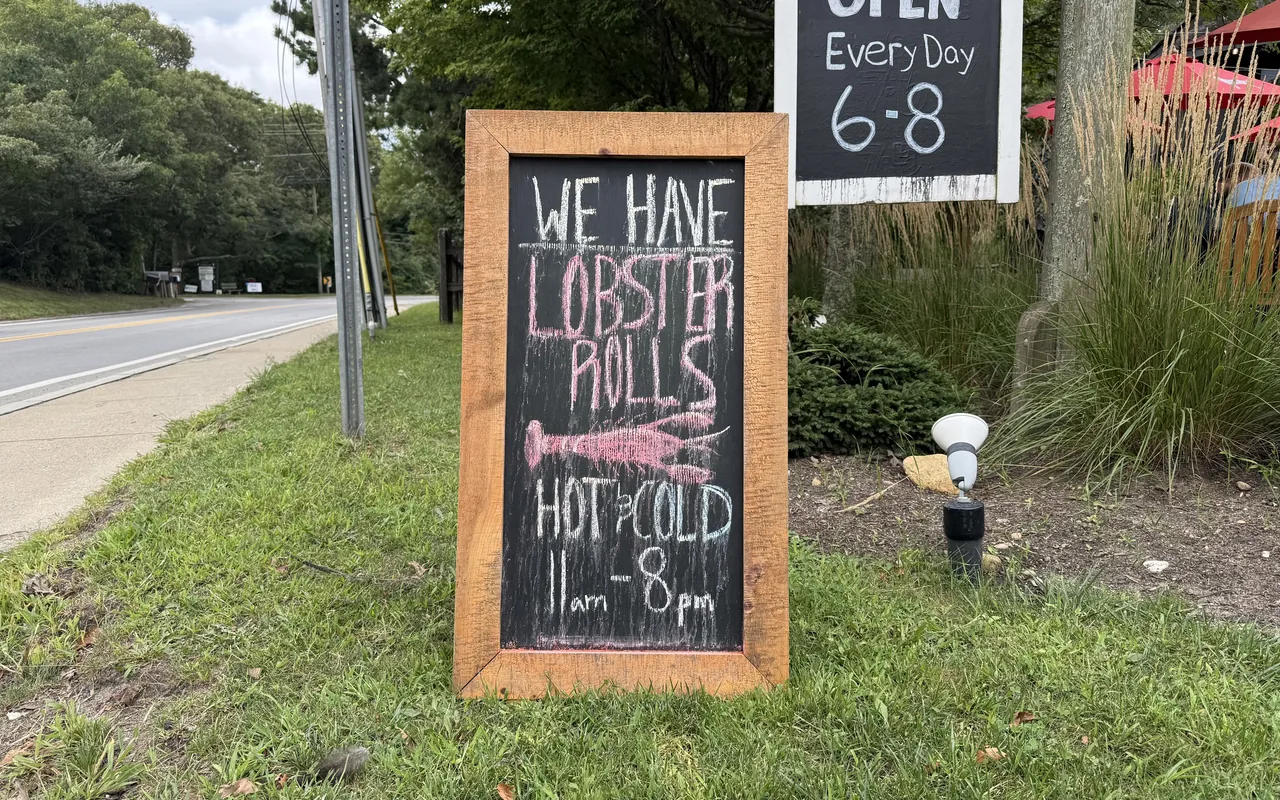
Lobster rolls are a separate art, and the island has strong opinions; our food tour ranks them, and the church lobster-roll suppers in Vineyard Haven are the best value on the island in July. The easy answer near the Vineyard Haven ferry is the Black Dog Bakery Cafe on State Road, which sells them hot or cold from 11 in the morning to 8 at night, every day, at 30 dollars in September 2026.
Vineyard Haven · 509 State RoadPhoto by MV Vacation
The chalkboard at the Black Dog Bakery Cafe: hot or cold, 11 to 8, and the cafe itself open every day from six.
Chilmark · the fleetPhoto by MV Vacation
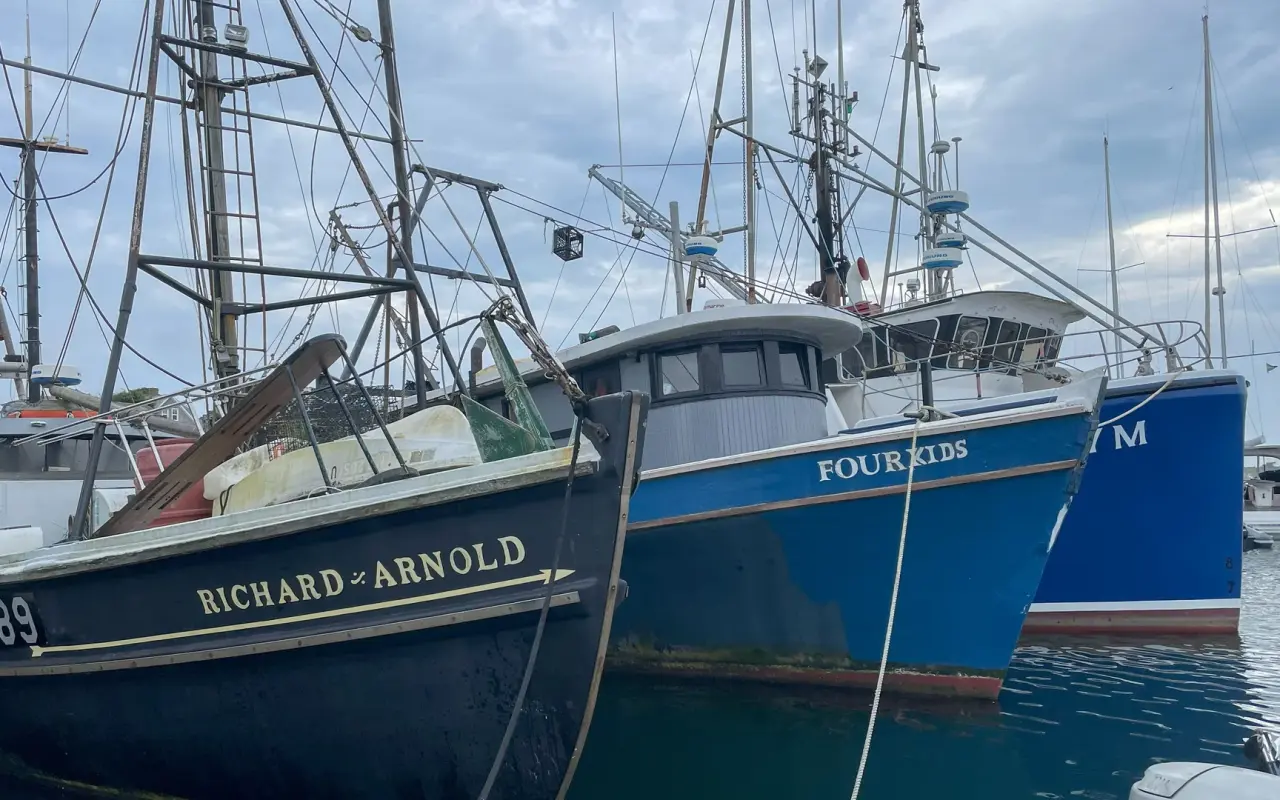
Draggers rafted up at the dock, the Richard and Arnold and the Four Kids among them. The dock is a workplace first.
Being a good guest on a working dock
Menemsha is a fishing harbor that tolerates visitors gracefully, and the grace runs out at a few points. Traps, buoys and gear stacked on the dock each belong to somebody and are set up in a particular way, so they are best left alone. The boats and the float are off-limits while a boat is unloading. The gulls are better not fed, the bait barrels are no place for a foot, and lobster shells go in the bins, not the harbor. The boats and the harbor photograph beautifully, a hello first gets a better portrait of anyone at work, and our photo spots guide explains the morning light on the shacks. The rules and etiquette guide has the rest.
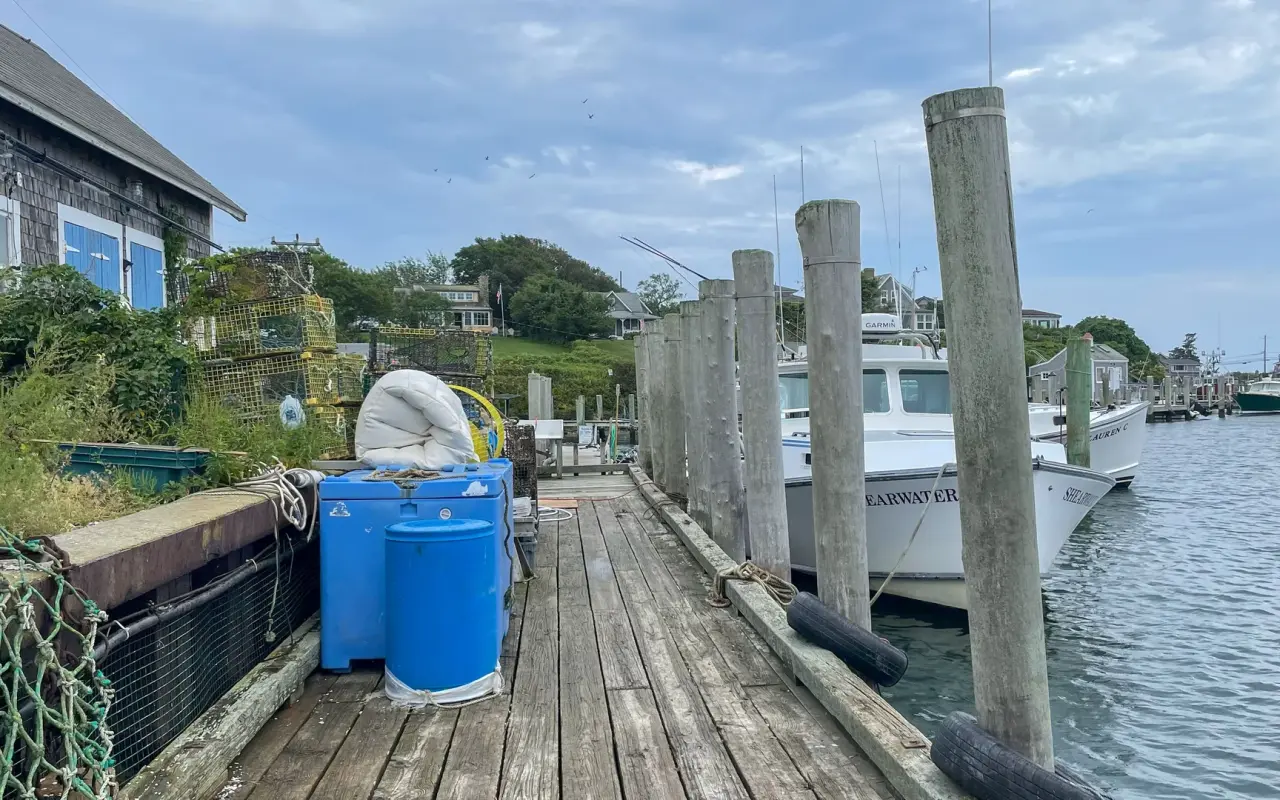
A working dock · pilings and barrelsPhoto by MV Vacation
A working fishing dock: pilings, barrels and a boat tied alongside.
Catching your own
Visitors can. A Massachusetts recreational lobster permit covers a household and can be endorsed for up to 10 traps or for diving; the trap season runs May 16 to October 31, the limit is 15 a day, and every gauge and egg rule above applies to you exactly as it does to the fleet. The realistic version for a week's visit is a permit endorsed for diving and a mask on a calm morning along the rocks at the north shore, or a couple of traps set from a rented boat with a friend who knows the bottom. You will want your own gauge, since a warden at the dock may ask to see it. The beach safety guide is worth reading before you go under: the same currents that make the fishing good make the swimming serious.
On the dock · wire trapsPhoto by MV Vacation
Wire traps stacked on the dock between sets, buoys and line coiled inside. Each trap is baited, dropped, hauled and reset by hand; a working boat runs dozens to a few hundred of them.
The season in brief
Spring
Traps go in as the water warms; markets open by May, catch light
Late June to July
The molt; soft-shells arrive, cheaper and sweeter; demand peaks with the crowds
August to October
Hard-shells, the best eating and the best price for the boats; the Derby crowds the harbor in September
November on
Traps come out; markets in Menemsha close for the season, the down-island fish markets stay open with lobster from off-island
Recreational traps
May 16 to October 31; diving year-round with the endorsement
At a glance
Legal size
3 3/8 to 5 1/4 inches on the carapace (Southern New England area)
Never landed
Egg-bearing or V-notched females, shorts, oversize breeders
Island fleet
About twenty lobstermen in 2019, most out of Menemsha; a few new young ones since
Off the boat
Larsen’s (cash, cooked to order, 9–7) and Menemsha Fish Market (ships nationwide, 10–7) on Dutcher Dock
Down-island
The Net Result and John’s in Vineyard Haven, Edgartown Fish and Meat Market
Drink
Bring your own to Menemsha; Chilmark sells none
Your own permit
$55 resident, $75 non-resident; 10 traps or diving; 15 a day
How we checked this
The size, egg, V-notch, permit, trap and season rules are from the Massachusetts Division of Marine Fisheries' recreational lobster regulations as published for 2026; the state revises them, and the gauge for the Gulf of Maine changed in 2025 with a further change scheduled for 2027, so check the current page before you fish. The fleet numbers, the young lobstermen, the entry cost and the population decline are from the Vineyard Gazette's reporting of May 2019 and June 2024 and the Martha's Vineyard Times of November 2025. Market hours and phone numbers are from the markets' own sites in September 2026. Prices are deliberately not printed: they change weekly and the board at the window is the only honest source. The photographs are ours, taken on the dock.
Frequently Asked Questions
Where can I buy lobster off the boat?
At the markets on the Menemsha dock, where the catch lands within sight of the boat, and at the handful of other markets this page lists. Most of the island’s roughly twenty lobstermen fish out of Menemsha, with a few from Lake Tashmoo, Vineyard Haven and Edgartown.
When is lobster season here?
Roughly spring, when the water warms and the traps go in, to late autumn when they come out. Lobsters molt in late June and early July, so early summer brings soft-shells, cheaper and sweeter with less meat; late summer and autumn bring the hard-shells that cost more.
Why does the price change so much?
The dock price is set by a market that stretches from Maine to Canada, while bait, fuel, rope and traps are the running cost, so a Vineyard lobsterman can have a good week and a bad month in the same season.
Can a visitor catch lobster?
Yes, a few, under the state rules for size, sex and gear; the permit and the rules are explained on this page.
What are the rules on the animal on my plate?
State rules decide which lobsters can be kept: every one is measured with a brass gauge, undersized and egg-bearing ones go back, and the claws are banded before sale.
Island tip of the dayShoppingNo. 32 of 86New tip at midnight, island time
No standalone McDonald's, Starbucks, or Dunkin' on MV, but Edgartown Meat and Fish Market has a licensed Starbucks counter inside. The only spot for Starbucks coffee on the island.
Useful?
More on
Four free downloads · 2026 editions
Four island guides, in your inbox
The Beach Guide (all 20 beaches decoded), The Vineyard in the Fall, the season date by date, Where to Stay, every town and price band, and What It Really Costs, the 2026 budget line by line. All four PDFs free, plus a short island letter when there is something worth telling. No schedule, no spam.
No spam, unsubscribe in one click. Want a look first? See what you get.
First email ever from us? Give it a minute, and peek in spam once.
Disclaimer: The information in this article is provided for general guidance only and was accurate at the time of writing. Beach conditions, hours, prices, lifeguard schedules, ferry fares, and business operations change frequently and without notice. Ocean swimming carries inherent risks including rip currents, undertow, and cold water shock. Always verify current conditions with official local sources before your visit. MV Vacation assumes no responsibility for any loss, injury, or inconvenience resulting from the use of this information. Swim only where lifeguards are on duty, supervise children at all times near water, and follow all posted safety signs.
A guide to Martha's Vineyard, written on the island: beaches, dining, events and island living. We write down what we know about the island so your trip goes the way you hoped.
Where Martha's Vineyard's oysters, bay scallops and quahogs come from: the public solar hatchery on Lagoon Pond that turned fifty in 2026, the dozen oyster farms in Katama Bay, Menemsha Pond and Vineyard Sound, the wild beds in the great ponds, the autumn scallop season and its limits, visitor shellfish permits by town, why rain closes a pond, and where to eat them.
Every supermarket and market on Martha's Vineyard with posted hours: Stop and Shop, Cronig's, Reliable Market, Alley's, the meat and fish markets, the Falmouth Stop and Shop before the ferry, Instacart and pre-stocking delivery, and an honest word on island prices.
Is Martha's Vineyard a dry island? Town by town: Chilmark is fully dry and BYOB, West Tisbury and Aquinnah pour beer and wine with meals, Vineyard Haven serves full liquor but has no liquor store, and only Oak Bluffs and Edgartown have package stores. Corkage, beach rules, the ferry and the state laws, checked September 2026.
Every farm stand and visitable farm on Martha's Vineyard, checked with the farms in September 2026: Morning Glory, Beetlebung, North Tabor, Mermaid Farm's 24-hour dairy shed, Native Earth, Allen Farm, Island Alpaca, the FARM Institute and the West Tisbury Farmers Market, with hours, honor-system rules and the fall pumpkin dates.
A reader planning a trip for May 2027 asked us what would actually be open. The honest year-round map: restaurants, cafes, trails, museums and services that never close, town by town, plus the calendar of when everything else reopens.
Mad Martha's, Ben and Bill's lobster ice cream, Back Door Donuts and 20+ more dessert spots. Flavors, prices, hours, and the only real late-night guide.
Subscribe
The free island library · 2026
One short island letter, and all four guides to start
Beach reports, events worth a day, ferry heads-ups. Sent when there is something worth telling. The Beach Guide, The Vineyard in the Fall, Where to Stay and What It Really Costs arrive with your welcome email.
The Beach Guide, The Vineyard in the Fall, Where to Stay and What It Really Costs. No spam, one-click unsubscribe.
We use cookies for trip planning, site stats and ads, including ads based on your browsing. To opt out, turn on Global Privacy Control in your browser. Cookie policy
These cookies are essential for the website to function properly.
These cookies help us understand how visitors interact with the website.
These cookies are used to deliver personalized advertisements.