Travel advisorySteamship Authority travel advisory · Gale Warning on the ferry waters until Fri 2 PMGusty winds are forecast for Cape Cod and the Islands that will have the potential to cause cancellations on both the Hyannis-Nantucket and Woods Hole-Martha's Vineyard routes through Thursday. We are waiving change and cancellation fees for travel scheduled for Tuesday, October 20, through Thursday, October 22.Steamship Authority · checked 12:00 AM ET
By MV VacationUpdated 21 Oct, 202611 mins read 1,578 views
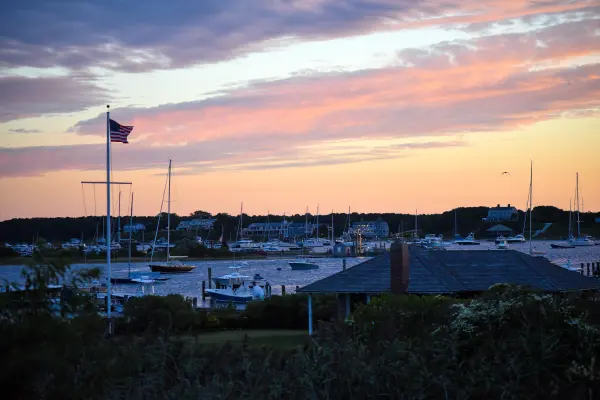
The island · surf at sunsetPhoto by MV Vacation
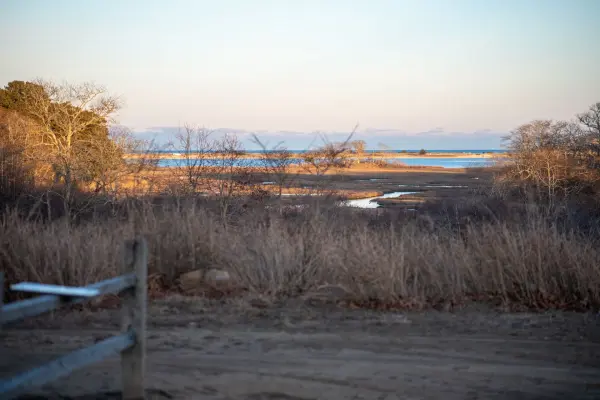
Surf at sunset on an island beach. We have not photographed the Long Point refuge itself yet, so the film above shows it best for now.
Long Point Wildlife Refuge: 632 acres of rare grassland, Atlantic beach, trails, kayaking, and seasonal access in West Tisbury.
Long Point Wildlife Refuge is a 632-acre coastal sanctuary in West Tisbury that protects one of the last large stretches of sandplain grassland, a globally rare habitat. The Trustees of Reservations have managed it since 1979, and it takes in a wild Atlantic barrier beach, freshwater ponds, pitch pine and scrub oak forest, and open grassland. Roughly 85–98% of the world’s sandplain grassland has been lost since the mid-1800s, and Martha's Vineyard and Nantucket together hold about 90% of what remains.
Filmed March 2024The island moves on: shops, signs and prices may differ from what you see here. The text of this guide was checked October 2026.
Summer (mid-June to mid-September): Turn south off Edgartown–West Tisbury Road onto Waldron's Bottom Road, then follow Scrubby Neck Road and Hughes Thumb Road to the staffed gatehouse. It is about 1.5 miles of bumpy dirt road, so figure on ten minutes of slow driving.
Winter/off-season (mid-September to mid-June): The way in is Deep Bottom Road, West Tisbury, off Edgartown–West Tisbury Road. Follow it for 1.5 miles, bearing left at every fork. At the hanging "Long Point" sign, turn right onto Thumb Point Road and go another 1.3 miles. Access is free and you don’t need a reservation. From the first Monday in October through December the Trustees allow permit deer hunting here Monday to Saturday, never on Sunday, so a bright jacket is a good idea on a fall walk.
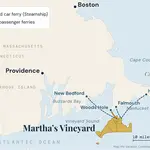
About 8–9 miles from the Vineyard Havenferry terminal (20–25 minutes). If you're visiting without a car, the VTA bus runs along Edgartown–West Tisbury Road but doesn't reach the refuge entrance, so the last stretch takes a bike or a taxi.
For beach days
The Beach Guide, free
All 20 beaches with parking, stickers, lifeguards and dog rules, plus a one-page card for the beach bag. Free with the island letter, together with three more island guides.
One-click unsubscribe, and we never share your email.
Trails through four habitats
About 2 miles of flat trails cross the property over soft sand and packed dirt. The path runs through four zones: pitch pine and scrub oak woodland, sandplain grassland and heathland, freshwater marsh and ponds, and barrier beach with dunes. Along the way you look out over Long Cove Pond, Tisbury Great Pond, Big Homer's Pond and Little Homer's Pond, and pass an osprey nesting platform and a wildlife viewing blind.
The walking is easy and flat, fine for families and beginners. The only hard part is the soft sand near the beach, where a sand wagon helps. The hike from parking to beach takes roughly 15–20 minutes. For the complete island trail guide, see our Martha's Vineyard Hiking Trails guide.
The beach and the ponds
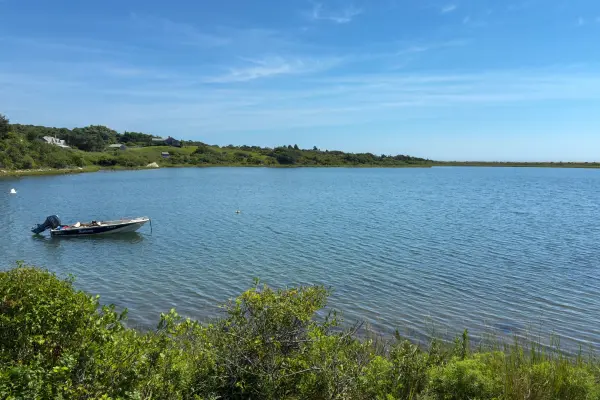
Long Point's beach is a sandy barrier beach on the open Atlantic, South Shore frontage with real surf. On the inland side of the dune, Long Cove Pond has warm, calm, shallow water over a sandy bottom, which is why families with young children like it. Visitors say you can walk five minutes or more either way along the beach without seeing anyone.
There are no lifeguards, so swimming is at your own risk. The ocean side can have rough surf and undertow, and the pond side is much gentler. Gray seals are regularly spotted offshore. For more beach options, see our every beach on Martha's Vineyard guide.
Rip currents on this stretch of the South Shore
On July 31, 2026, a 55-year-old visitor died after being caught in a strong rip current about 100 yards off the beach here while trying to help his sons; first responders brought his sons and two other swimmers back to shore. There are no lifeguards and help is a long way off, so Long Cove Pond is the gentler choice for small children. The National Weather Service notes that rip currents often form on calm, sunny days, so a flat-looking sea is no guarantee. NOAA’s advice if a rip current catches you is not to fight it: swim parallel to the shore, then head back to land at an angle. Our beach safety guide has more on reading the water.
Wildlife at Long Point
Confirmed breeding species include piping plover (federally threatened), least tern, American oystercatcher and common tern. In 2026, preliminary counts put 104 pairs of piping plovers on the island's beaches.
Ospreys nest on a platform on the property, and northern harriers hunt the grasslands. The annual Christmas Bird Count tallies 120–130 species in a single December day. Beyond the birds, the property has North American black racer snakes (tracked by radio telemetry since 2014), diamondback terrapins (MA Threatened), red foxes in the dunes, and white-tailed deer kept in check by seasonal hunting. See our Wildlife guide for more on island species.
Why sandplain grassland is rare
Sandplain grassland is a low, open, prairie-like plant community growing on nutrient-poor sandy soils deposited as glacial outwash roughly 15,000 years ago. Massachusetts ranks it S1, Critically Imperiled. The Wampanoag kept these plains open for thousands of years with deliberate burning. Colonial-era sheep grazing expanded them further, with grasslands reaching their greatest extent around the mid-1800s.
Fire suppression after World War II, and development, wiped out most of it. The main grass is little bluestem, whose roots reach up to six feet down. In late summer you can find butterfly weed, yellow wild indigo and the globally rare New England blazing star. The Trustees still use prescribed burns to keep the grassland going.
From Wampanoag land to duck club to refuge
The Wampanoag, on Martha’s Vineyard for thousands of years, used the land at Long Point for farming (mostly corn), firewood, fishing, hunting and gathering. Over about 30 years in the second half of the 1600s, English colonists acquired all of what is now Long Point. It was held in common for grazing at first, and by the 1700s the coastal parcels were being divided and sold.
The next century worked the land hard: big fields cleared, sheep raised for wool, commercial fishing in the coastal ponds, and salt hay cut for cattle feed and for insulating houses. In the early 1900s wealthy summer people bought up the old farms and started waterfowl hunting clubs. The Tisbury Pond Club kept logbooks from 1912 to 1948 noting members, weather and the birds they saw and shot, and those books now sit in the Trustees’ archives in Sharon.
As the club dwindled, its last three members, Frederick N. Blodgett, Carl J. Gilbert and William B. Rogers, gave the original land to the Trustees in 1979. More land followed from Arthur Hadley in 1990, Anthony Lewis and Margaret Marshall in 1993, and Richard and Barbara Campbell in 1999. The old duck hunting club building is still there as Long Point Cottage, a four-bedroom, single-level camp the Trustees rent out by the week, with two canoes and a launch steps from the door and the South Shore beach about a ten-minute walk away.
Parking, fees and rules
Summer (passes needed mid-June to the end of August):
Non-member vehicle: $25
Trustees member vehicle: $15 (Contributing level and above: free)
Pedestrians and bicyclists: free, no reservation needed
Library day pass: free, no reservation needed; the island libraries lend Trustees parking passes to cardholders, day-specific, so ask ahead in summer
An advance online reservation is required: passes are not sold at the gate, though a few may be released online for same-day use after cancellations
Two time blocks: 9:00 AM–2:00 PM or 2:00 PM–7:00 PM
Popular dates sell out, so booking early pays off
Winter: free, no reservation via Deep Bottom Road entrance.
Summer pass fine print
Last entry is 5:00 PM. Staff at the gate ask for proof of purchase, either your name or the ticket on paper or on your phone. Passes bought at full or member rates are non-refundable, the date can’t be changed, and Long Point stays open rain or shine, so it pays to check the forecast before you book. Holders of the Trustees’ All Over OSV permit get in free with an online reservation, and the island libraries’ day pass works too (more in our libraries guide).
Waldron’s Bottom Road is a single-lane private road through a residential area with limited sight lines, and the speed limit is 15 mph the whole way in. The Trustees say drivers who ignore posted speed limits on Waldron’s Bottom Road or Deep Bottom Road will be dismissed from the property. Radios are not allowed, and poison ivy as well as ticks can be thick along the trail edges.
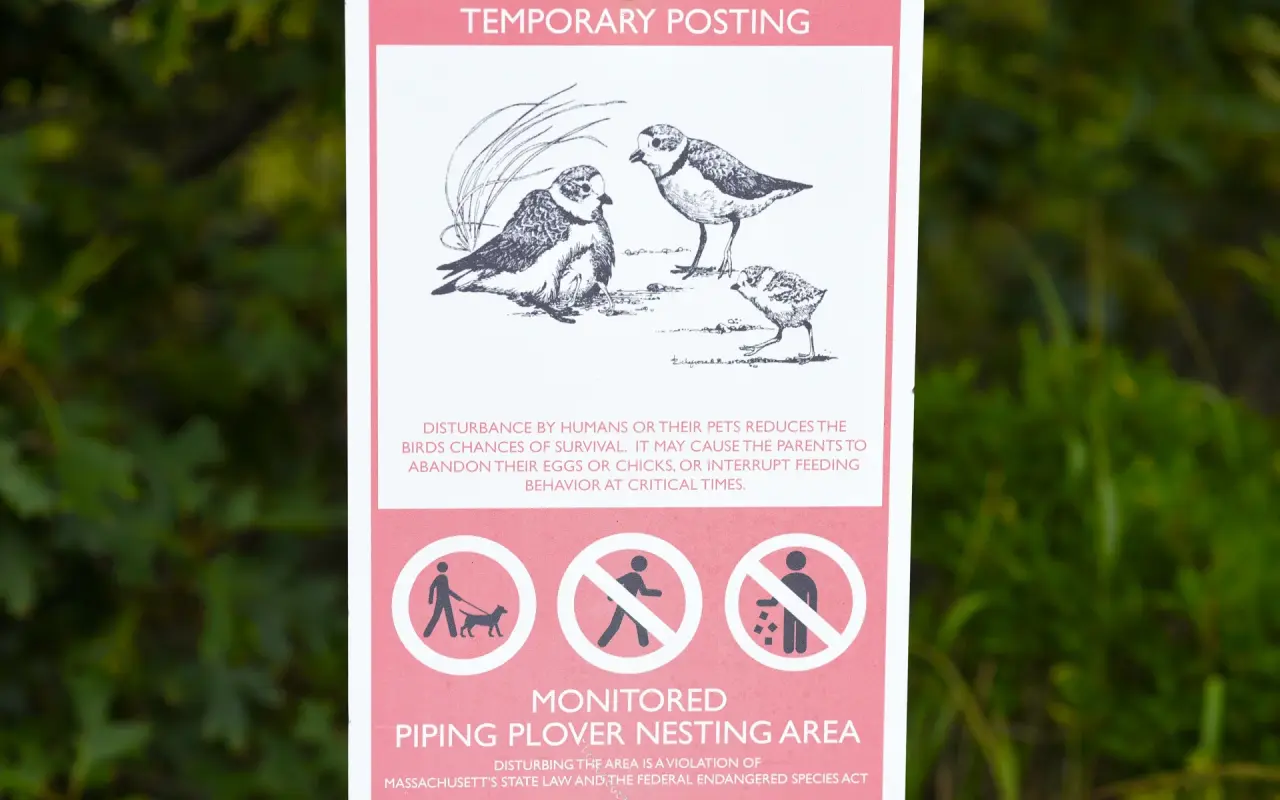
The rules: no dogs or other pets at any time of year (it is a wildlife refuge), no bikes on the trails or beach, and no alcohol. There are no trash cans, so you carry out what you bring. Parts of the beach may close during piping plover nesting season (April–August). Ticks are plentiful here; see our tick precautions.
The island · plover nesting signPhoto by MV Vacation
A monitored piping plover nesting area sign on Martha’s Vineyard, asking people to keep themselves and their pets away from the nests. This one was not photographed at Long Point, where parts of the beach can close for nesting birds in the same months.
Practical tips
Late June–August is for the beach; September–October brings fewer people and the grassland wildflowers (blazing star, asters, goldenrods); winter means free access and raptor watching.
Bring water (there is none on site), food, sunscreen, insect repellent, sturdy shoes for the sand and binoculars.
Portable toilets and a foot-washing station in summer only, and no food or water anywhere on the property.
Cell coverage is unreliable.
Plan on half a day or more; most families use the full 5-hour reservation block.
Beach and trail wheelchairs at the summer gatehouse, and an adaptive kayak on Long Cove Pond with an accessible launch (reservations required).
Paddling Long Cove Pond
The Trustees rent kayaks and stand-up paddleboards on Long Cove Pond daily in June, July and August, booked online, so you can explore the pond on your own. It is sheltered water, a gentle place for a first paddle.
For visitors with mobility disabilities, or anyone who wants extra stability, there is an adaptive kayak with a fully accessible launch and a transfer bench. The kayak has stabilizing floats and a paddle pedestal, and the seat adjusts with modular supports to fit a wide range of bodies. It goes out in two-hour blocks so nobody is rushed, staff are trained to help with setup and transfers, and a reservation is required. For other spots to paddle, see our kayaking guide, and for more accessible outings our accessibility guide.
Long Point in fall and winter
Once the summer entrance closes in mid-September, everyone comes in the winter way: Deep Bottom Road, then Thumb Point Road through Frost Bottom to the off-season parking area. It is free and needs no reservation, and the Trustees call the refuge an off-season treasure for birders and other nature-watchers. The restrooms and foot-washing station run only from mid-June to mid-September, so it helps to plan for no facilities at all.
From the first Monday in October through December, a limited number of hunters with written permission take part in the Trustees’ deer management program, Monday to Saturday from half an hour before sunrise to half an hour after sunset. Sundays have no hunting, which makes them an easy choice for a late-fall walk, and blaze orange is a sensible layer any day in season.
Our live webcams show what the island looks like right now.
Book Martha’s Vineyard Experiences
Explore more of the island on a guided nature tour or day trip. Browse all tours →
If you book through this link we may earn a small commission, at no extra cost to you. It helps keep our guides free.
In summer, mid-June to mid-September, turn south off Edgartown–West Tisbury Road onto Waldron’s Bottom Road and follow Scrubby Neck and Hughes Thumb roads about 1.5 bumpy miles to the staffed gatehouse. Off-season use Deep Bottom Road, bearing left at the forks, then Thumb Point Road for 1.3 miles. It is 8 to 9 miles from the Vineyard Haven ferry; the bus does not reach the entrance.
Does it cost anything?
In summer the Trustees charge $25 a vehicle for non-members and Long Point needs an advance pass from mid-June to August; walking or biking in is free. Off-season access is free with no reservation.
Is the swimming safe?
You have two choices. The ocean side is open Atlantic with real surf and no lifeguards. Long Cove Pond, on the inland side of the dune, is warm, calm and shallow with a sandy bottom, which is why families choose it.
How long is the walk?
About two miles of flat trails over soft sand and packed dirt through pine and oak woodland, sandplain grassland, freshwater marsh and the barrier beach. Parking to beach takes 15 to 20 minutes; a sand wagon helps.
Why is the grassland special?
Sandplain grassland is globally rare: 85 to 98 percent of it has been lost since the mid-1800s, and Martha’s Vineyard and Nantucket together hold about 90 percent of what remains. The refuge’s 632 acres have been managed by the Trustees since 1979.
Can I bring my dog?
No. Because Long Point is a wildlife refuge, dogs, horses and other pets are not allowed at any time of year.
What is the latest I can arrive in summer?
Last entry is 5:00 PM. Passes come in two blocks, 9:00 AM to 2:00 PM and 2:00 PM to 7:00 PM, they are non-refundable, and the refuge is open rain or shine.
Can I rent a kayak at Long Point?
Yes, in June, July and August the Trustees rent kayaks and stand-up paddleboards on Long Cove Pond, booked online. An adaptive kayak with an accessible launch goes out in two-hour blocks by reservation.
Can you stay overnight at Long Point?
The refuge has one rental, Long Point Cottage, the former duck hunting club building. The Trustees rent it by the week; it has four bedrooms, two canoes and a launch close by, and the beach is about a ten-minute walk.
Keep Reading
Listen to the island
AUDIOIsland soundscapesEight field recordings: summer nights, crickets and birdsong, about ninety minutes. It keeps playing while you read on.→
Island tip of the dayTimingNo. 58 of 79New tip at midnight, island time
Oak Bluffs restaurants are packed 6–8 PM. Eat at 5 PM or after 8:30 PM: same food, half the wait, easier parking.
Useful?
More on
Four free downloads · 2026 editions
Four island guides, in your inbox
The Beach Guide (all 20 beaches decoded), The Vineyard in the Fall, the season date by date, Where to Stay, every town and price band, and What It Really Costs, the 2026 budget line by line. All four PDFs free, plus a short island letter when there is something worth telling. No schedule, no spam.
No spam, unsubscribe in one click. Want a look first? See what you get.
First email ever from us? Give it a minute, and peek in spam once.
Disclaimer: The information in this article is provided for general guidance only and was accurate at the time of writing. Beach conditions, hours, prices, lifeguard schedules, ferry fares, and business operations change frequently and without notice. Ocean swimming carries inherent risks including rip currents, undertow, and cold water shock. Always verify current conditions with official local sources before your visit. MV Vacation assumes no responsibility for any loss, injury, or inconvenience resulting from the use of this information. Swim only where lifeguards are on duty, supervise children at all times near water, and follow all posted safety signs.
A guide to Martha's Vineyard, written on the island: beaches, dining, events and island living. We write down what we know about the island so your trip goes the way you hoped.
The island's farmers markets, checked October 2026: the West Tisbury Farmers Market at the Agricultural Hall (Saturdays to October 31, 9 AM to noon), the Harvest Festival on October 24, the indoor winter market, Edgartown's summer Tuesday market, and the farm stands that stay open all year.
Shellfishing on Martha's Vineyard town by town: what each of the six towns charges a visitor for a permit and what it covers, where to buy it, weekly limits and sizes, the 2026 to 2027 bay scallop dates published so far, how to check storm and rain closures, and keeping the catch safe to eat.
Joshua Slocum, first to sail alone around the world, spent his last years farming in West Tisbury and vanished from Vineyard Haven harbor in November 1909. The voyage, the farm called Fag End, the last departure, and what a visitor can actually see: the harbor, a marker stone by a country road, the museum's Slocum papers, and the book itself.
Martha's Vineyard's ponds explained: the great ponds sealed behind the south-shore beach and cut open to the sea by an excavator, the salt ponds with tides and scallops, the freshwater kettle ponds, why cyanobacteria blooms turn some of them green in August and what MV Cyano's colors mean, the nitrogen under the houses, and where a visitor can swim, paddle and watch the cut.
Where Martha's Vineyard's oysters, bay scallops and quahogs come from: the public solar hatchery on Lagoon Pond that turned fifty in 2026, the dozen oyster farms in Katama Bay, Menemsha Pond and Vineyard Sound, the wild beds in the great ponds, the autumn scallop season and its limits, visitor shellfish permits by town, why rain closes a pond, and where to eat them.
Mytoi, the Japanese garden on Chappaquiddick: how to get there on the Chappy ferry, the 15-car lot, hours and admission by season, the pond and bridge, birch walk and camellia dell, the story of Hugh Jones, Mary Wakeman and the rebuild after Hurricane Bob, rules, accessibility and when to go.
Subscribe
The free island library · 2026
One short island letter, and all four guides to start
Beach reports, events worth a day, ferry heads-ups. Sent when there is something worth telling. The Beach Guide, The Vineyard in the Fall, Where to Stay and What It Really Costs arrive with your welcome email.
The Beach Guide, The Vineyard in the Fall, Where to Stay and What It Really Costs. No spam, one-click unsubscribe.
We use cookies for trip planning, site stats and ads, including ads based on your browsing. To opt out, turn on Global Privacy Control in your browser. Cookie policy
These cookies are essential for the website to function properly.
These cookies help us understand how visitors interact with the website.
These cookies are used to deliver personalized advertisements.