By MV VacationUpdated 08 Oct, 202613 mins read 225 views
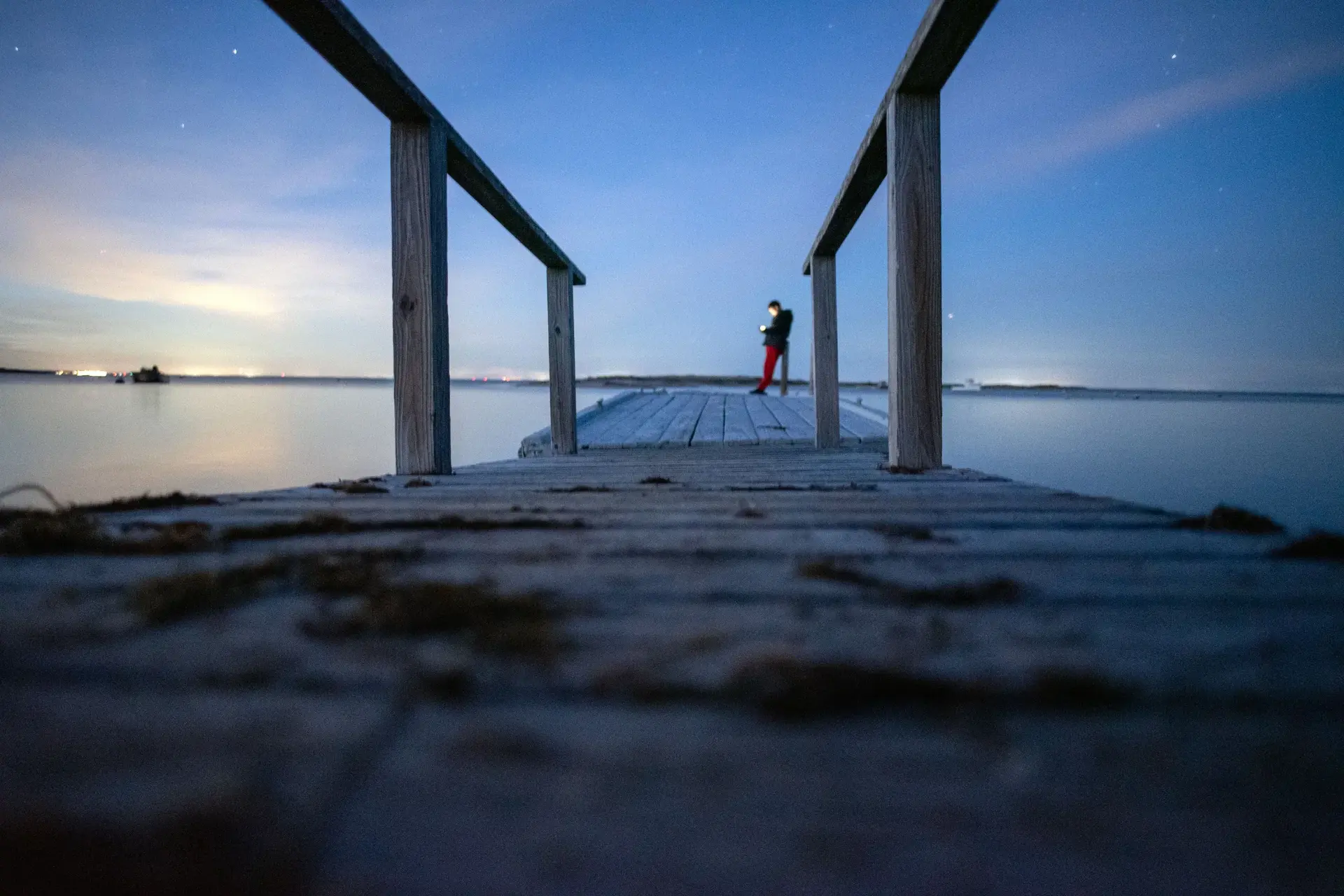
A dock at blue hourPhoto by MV Vacation
A long exposure on a dock as the last light goes: the first stars over the water and one figure at the end of the boards. Fifteen minutes later the sky is properly dark.
Martha's Vineyard after dark: where the full moon rises out of the ocean, the darkest spots for stars (Aquinnah, Lobsterville, South Beach), full-moon and meteor dates through 2027, the honest word on bioluminescence in the ponds, the three towns after the shops close, and the practical side of deer, dark roads, parking lots and night swimming.
Most visitors see the island by day and leave before it does the other thing it does well. After dark Martha's Vineyard turns into a place with almost no sky glow, a full moon that comes up out of the ocean on the south shore, a harbor that goes blue and then black while the restaurants stay lit, and, on a few July nights, ponds that light up when you drag a hand through them. Below: where to watch the moon rise over water, where the stars are darkest, the full-moon and meteor dates through 2027, what to expect from bioluminescence, the three towns after the shops close, and the practical side of being out in the dark on an island with deer on the roads and no streetlights past the last village.
The island has no highway, no city, and one modest airport; the mainland's glow sits low on the northern horizon and the rest of the sky is open ocean. Down-island, the three towns light their streets and harbors and you can still see the major constellations from a beach. Up-island, in West Tisbury, Chilmark and Aquinnah, there are few streetlights at all, and on a moonless night from the cliffs or a south-shore beach the Milky Way is plainly visible in late summer, a sight that is hard to find near the big East Coast cities. Good stargazing comes down to three things anywhere: distance from the towns, twenty minutes for your eyes to adjust, and a night near the new moon.
Moonrise over the water
The full moon rises in the east at about sunset, so the show is on the shores that face east and south: South Beach and the whole Katama shore, where it comes up out of the Atlantic; Lighthouse Beach in Edgartown, where it rises over Chappaquiddick behind the lighthouse; and State Beach, looking across the Sound toward Cape Cod. The west-facing sunset beaches, Menemsha and Aquinnah, get the moon setting instead, in the small hours. Full-moon nights on the island, Eastern time, through the end of 2027:
2026
September 26 (Harvest), October 26, November 24, December 23 (the Cold Moon, full at 8:28 pm)
Winter 2027
January 22, February 20 (with a faint penumbral eclipse), March 22
Spring 2027
April 20, May 20, June 18 (full at 8:44 pm, rising with the sunset over Katama)
Summer 2027
July 18, August 17 (Sturgeon Moon, with a penumbral eclipse), September 15 (Harvest Moon, full at 7:04 pm)
Autumn 2027
October 15, November 13, December 13
The night before the full-moon date is often the better one for photographs: the moon rises a little before sunset into a sky that still has color. Felix Neck runs guided moonrise kayak paddles on Sengekontacket Pond on the summer full moons; our kayaking guide has the prices.
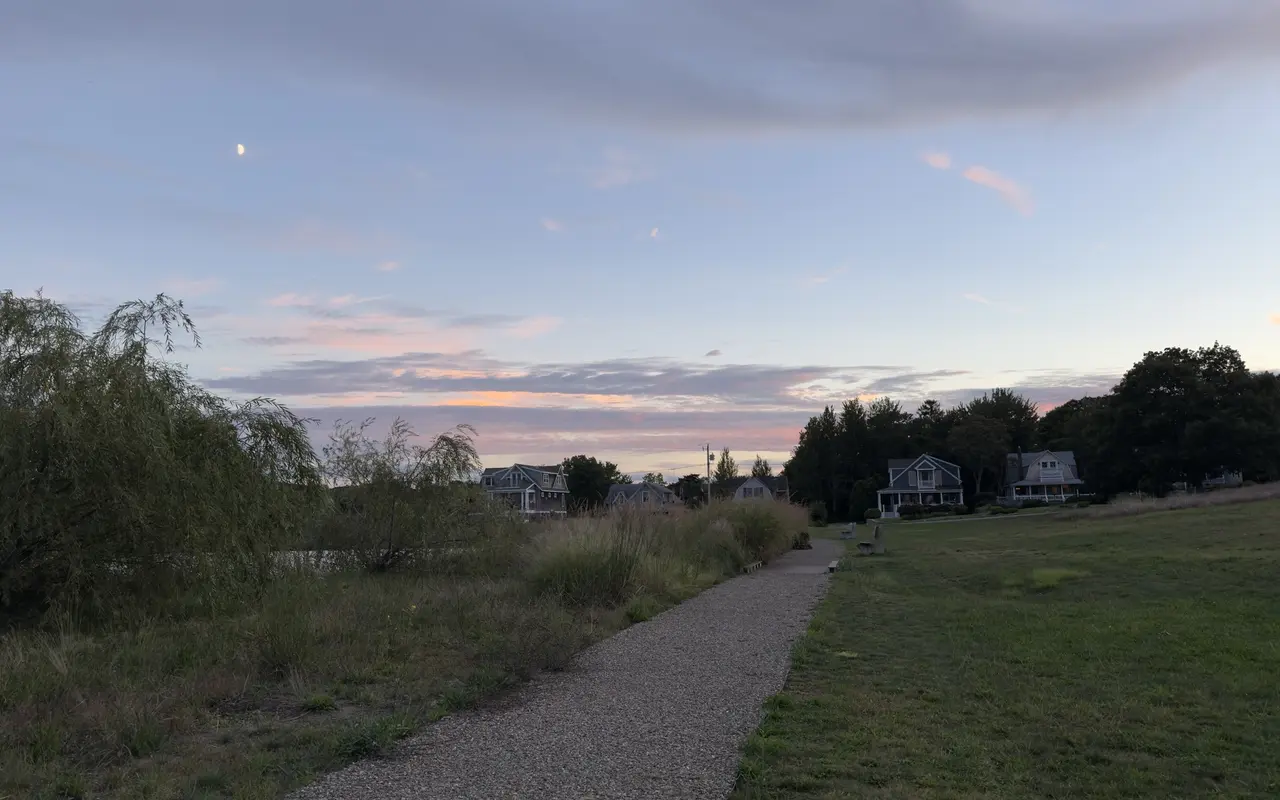
Oak Bluffs · dusk, a week before the Harvest MoonPhoto by MV Vacation
A first-quarter moon already high before the sun is down, over a pond in Oak Bluffs: the gravel path, the willows and the last pink in the clouds. The half moon rises around midday, so in the week before full it is up in daylight and easy to miss.
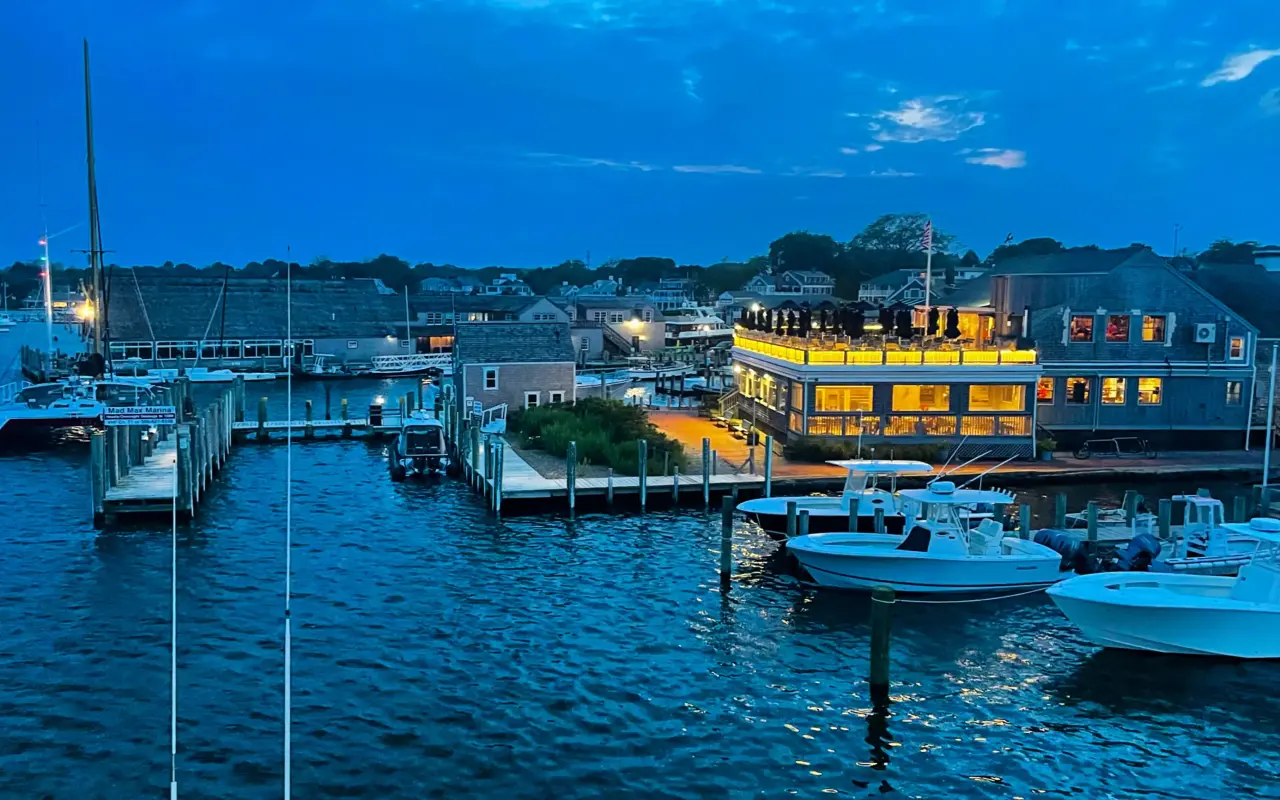
Edgartown · the harbor at blue hourPhoto by MV Vacation
Edgartown harbor just after sunset, with the waterfront restaurant lit, the boats in at the docks and the sky gone deep blue. Memorial Wharf is a free place to watch from.
For beach days
The Beach Guide, free
All 20 beaches with parking, stickers, lifeguards and dog rules, plus a one-page card for the beach bag. Free with the island letter, together with three more island guides.
One-click unsubscribe, and we never share your email.
The end of the island, ocean on three sides, and nothing but the lighthouse beam behind you. The overlook path and the parking lot are public; the cliffs themselves are tribal land and off limits in daylight and dark alike. Read our guide to visiting Aquinnah respectfully, and keep the car lights off once you are parked.
A north-facing beach with no parking lot to speak of and no lights; bike or walk in from the road. The Sound in front, the Elizabeth Islands as a low black line, and the sky everywhere else.
Big sky over the Atlantic, the moon coming up out of it, and the sound of the surf. The lots are large and unlit, so it helps to park facing out, use an entrance you know and keep off the dunes.
Everyone goes home at dusk, and by nine the harbor is dark except the boats’ riding lights. The beach and the jetty face the Sound; the parking is easy once the sunset cars have gone.
The island’s highest point on Land Bank trails, with the whole south shore below you. Trails close at dusk on some properties, so it is worth checking the posted hours and carrying a light for the walk back.
Not dark, but open to the north and east, and enough to see Orion in winter and the Perseids in August from a beach chair after the restaurants close.
The meteor showers
Perseids, August 12 to 13. The island's best sky show, in the warmest week of the year. In 2026 the peak fell on a new moon, the ideal case. In 2027 the moon is a waxing gibbous that sets in the small hours, so the best watching is from about 2 am until dawn on August 13. A blanket at South Beach or the cliffs, facing northeast, and an hour of patience is all it takes.
Geminids, December 13 to 14. The richest shower of the year and the coldest to watch. In 2026 a thin crescent moon sets by mid-evening and leaves the sky dark; dress as for a February ferry deck.
Any clear night in late August and September. The Milky Way stands high in the south after full dark, and the island's south shore is the place to see it. The climate guide has the fog odds by month; June is the worst for clear nights, September the best.
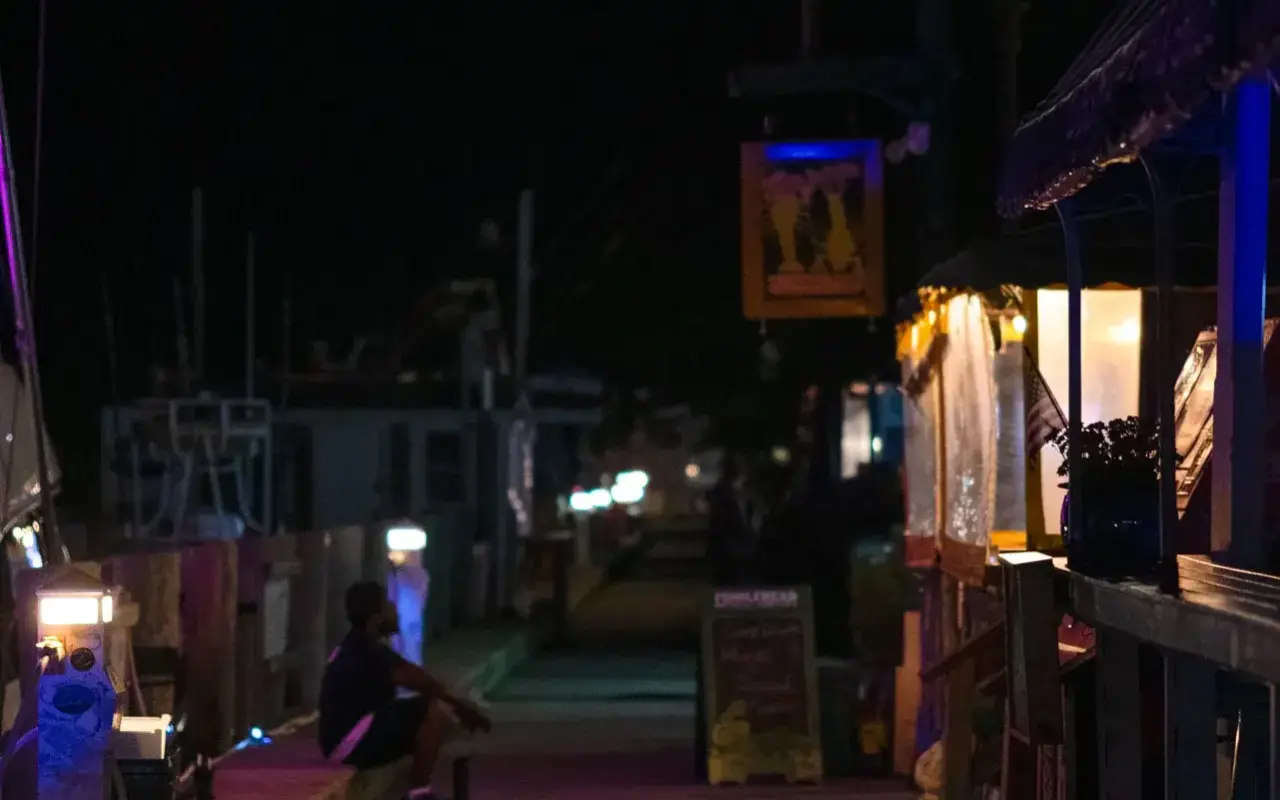
Oak Bluffs · the harbor boardwalkPhoto by MV Vacation
The Oak Bluffs harbor boardwalk on a summer night: bar signs lit, someone on the bench, the boats dark behind. It is the part of the island that stays up past eleven.
Bioluminescence: what to expect
It happens, but nobody can promise it. On warm, calm, moonless nights in July and August, and sometimes into September, the dinoflagellates in the island's brackish ponds, Sengekontacket and the Lagoon above all, can glow blue-green when the water is disturbed, so that a paddle stroke leaves a trail and a hand pulled through the water sparkles. The glow depends on a plankton bloom that comes and goes, and on darkness, so the nights around the new moon are the only serious candidates. Island Spirit Kayak's Glow Paddle night tour on Sengekontacket (about $120 a person) is a different thing: clear-bottom kayaks lit by glow lights, so there is something to see whatever the plankton is doing; our kayaking guide has the details. For the plankton itself, a swim at a pond beach after full dark on a windless August night is the free way to look, life jacket on if you are in a boat, and no swimming near the openings where the tide runs.
The towns after dark
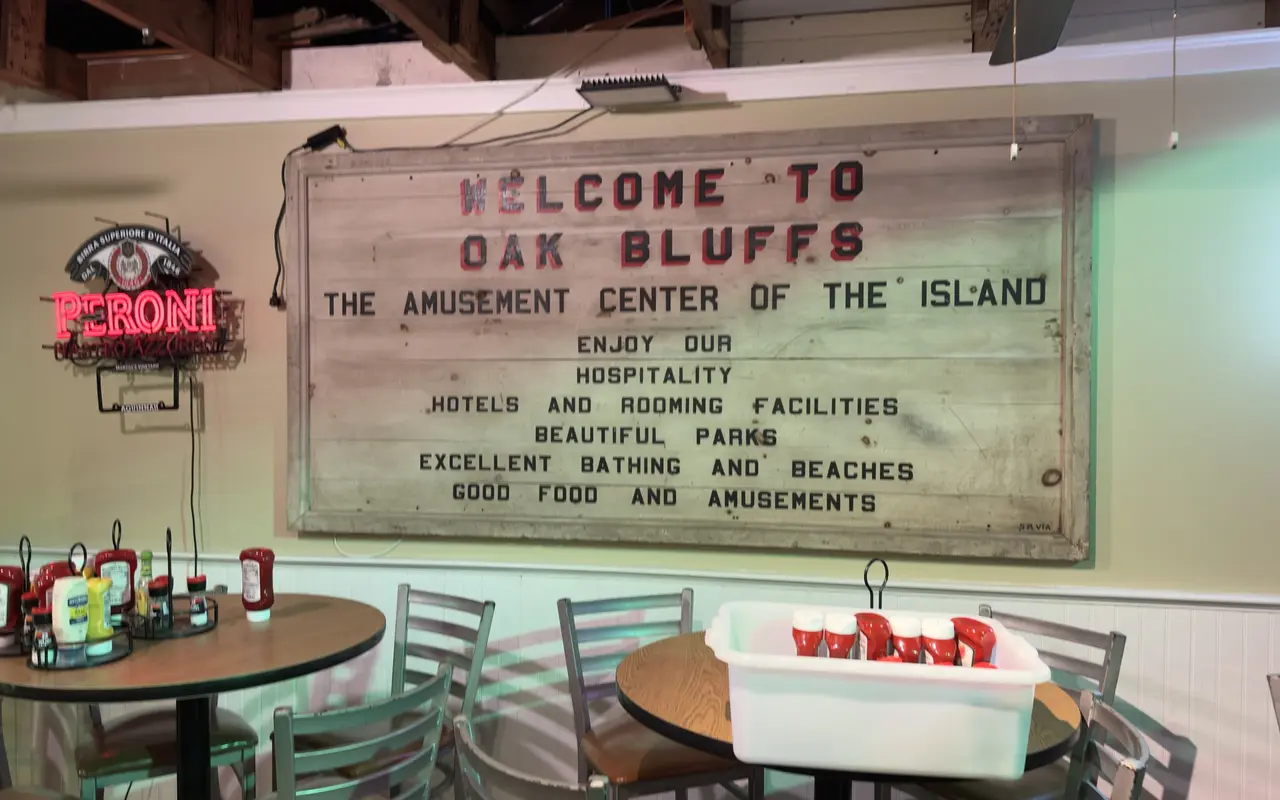
Oak Bluffs has been the island’s night town for a century. The old painted welcome sign that now hangs inside the Sand Bar says it plainly: the amusement center of the island.
Oak Bluffs · inside the Sand BarPhoto by MV Vacation
An old painted Welcome to Oak Bluffs sign, now on the wall inside the Sand Bar and Grille: hospitality, hotels and rooming facilities, beautiful parks, excellent bathing and beaches, good food and amusements.
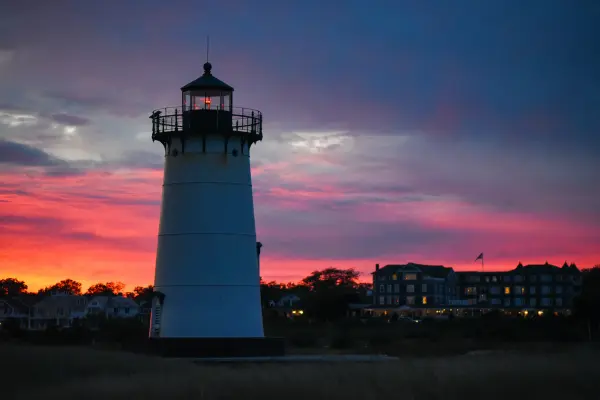
White houses under gas-style lamps, the harbor at blue hour from Memorial Wharf, the lighthouse beam across the moorings, and the Chappy ferry running late. Restaurants and a few bars until eleven or midnight in season, and then the streets go quiet.
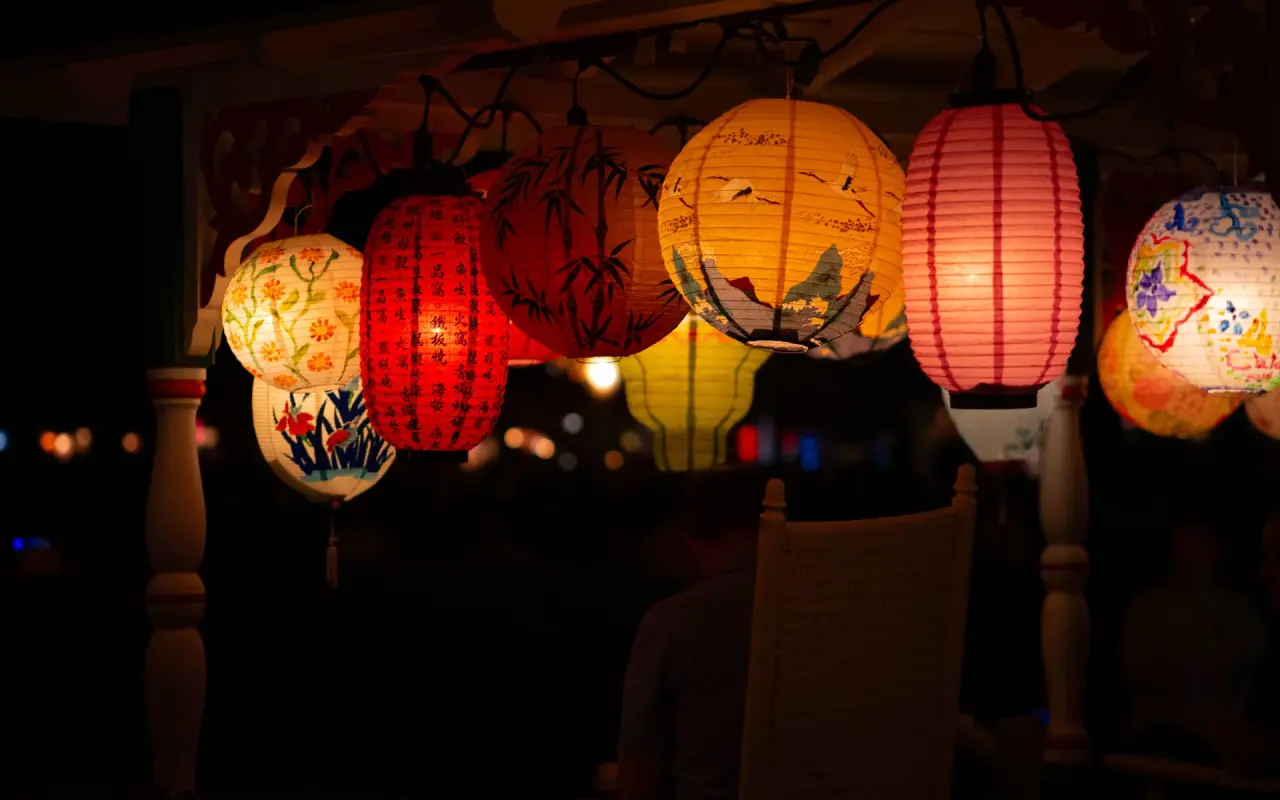
Circuit Avenue and the harbor boardwalk: bars, music, the arcade, ice cream until late, the ferry crowds. Our nightlife guide has the rooms and the hours. On Grand Illumination night in August the Campground lights every porch with paper lanterns, and much of the island comes out for it.
Main Street goes quiet by nine outside July and August; the Playhouse and the Film Center run evening shows year-round, and a moonlit harbor walk to Owen Park costs nothing. Restaurants and their bars pour everything, but there is still no standalone bar and no package store in town.
No streetlights and no bars. Chilmark is dry and bring-your-own; West Tisbury and Aquinnah restaurants pour beer and wine with meals. Dinner, then the sky. The Chilmark Community Center and the Ag Hall run summer evenings of music and dancing; otherwise the night sky is the entertainment.
Oak Bluffs · duskPhoto by MV Vacation
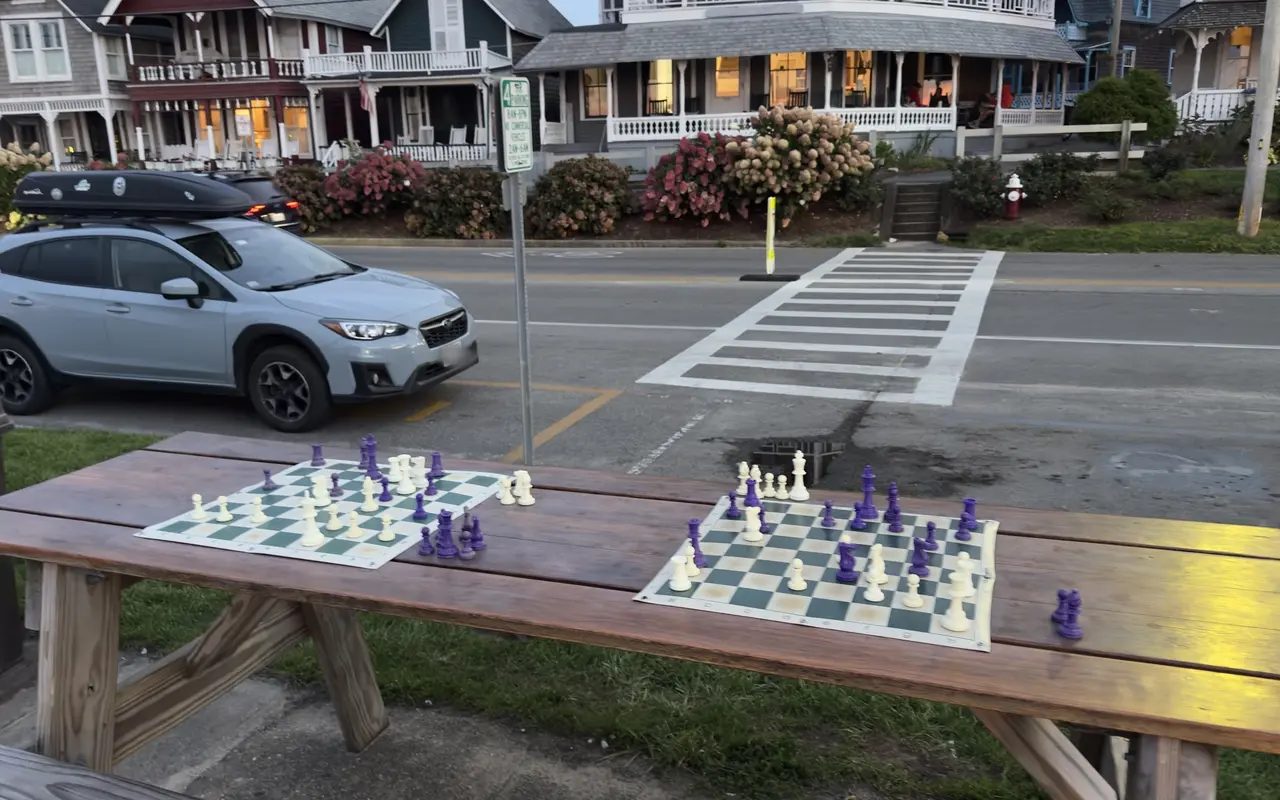
A picnic table in Oak Bluffs at dusk, two chess games left mid-play, and the cottages across the street with their porch lights coming on.
Vineyard Haven · Main Street at nightPhoto by MV Vacation
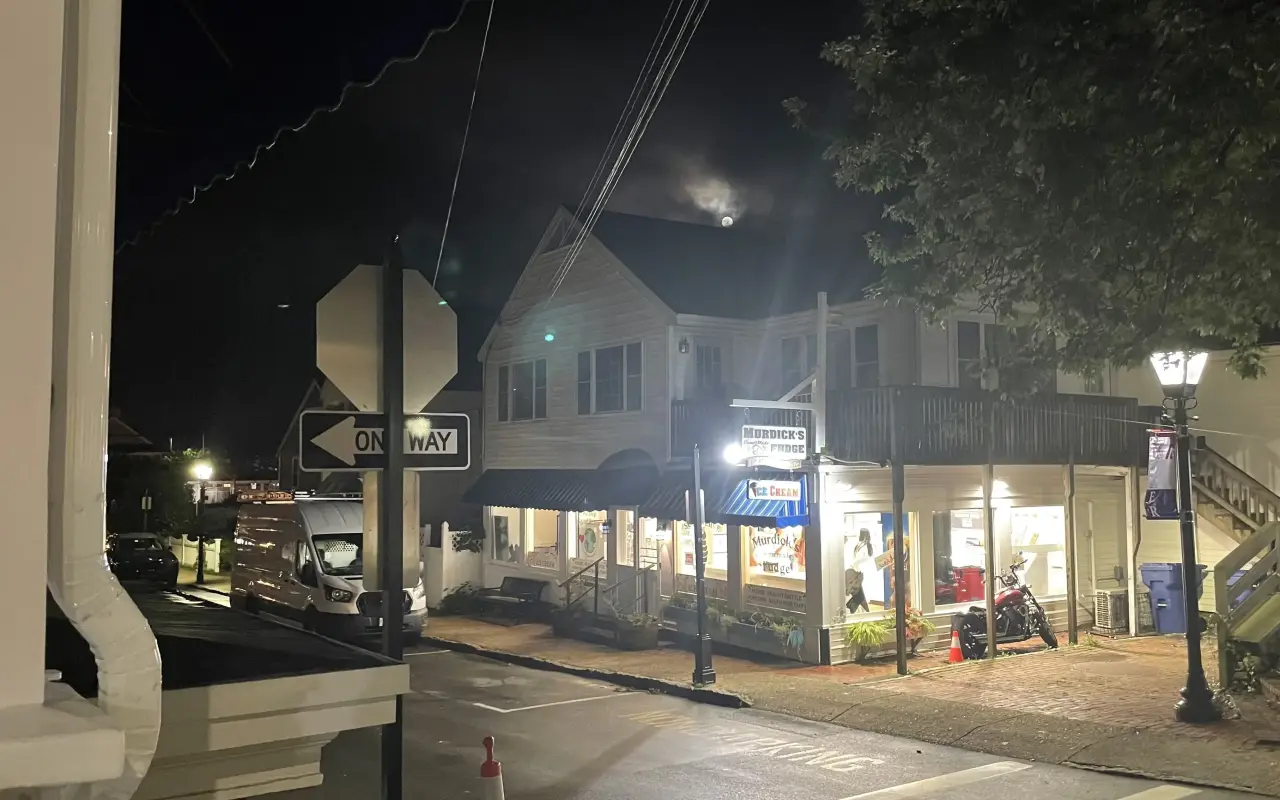
Main Street in Vineyard Haven on a summer night, the shopfronts lit, the moon behind the chimney and nobody on the sidewalk. By nine the town has gone home.
Practical notes for being out after dark
The island has thousands of deer, and they cross the up-island roads at dusk and dawn. The speed limit, high beams when nobody is coming, and an eye out for a second deer behind the first all help.
Up-island roads have no streetlights and no shoulders. Cyclists and walkers need lights front and back, and the bike paths are unlit too; the car-free guide and the taxi guide cover getting home when the last bus has gone, which up-island is early.
Edgartown bans parking on its streets from 2 to 5 am year-round and the other towns have their own overnight rules; Land Bank properties and the state forest generally close at dark, and the Trustees post their hours at the gate. Town beach lots are generally open; driving onto the sand needs an over-sand permit and is allowed only on a few beaches such as Norton Point and Cape Poge, and the trash goes home with you.
Beach fires need a town permit where they are allowed at all, and private fireworks are illegal in Massachusetts; the town shows on the Fourth and in August are the ones you will see.
Night swimming is a different sport: no lifeguards, no visibility, and the same channels and rips as by day. The beach safety guide applies twice as hard after dark.
Dune grass and trail edges are tick country at any hour, so a check when you get in is worth it. Even in August the beach at 2 am is in the low 60s with a wind, so the layers you would bring for the ferry come in handy.
A dark beach at midnight is usually somebody’s front yard. Quiet voices, no music and a headlamp on red keep it friendly, and the rules and etiquette guide has the rest.
When the bars start to thin, Oak Bluffs still has a lit room: Midnight Taco on Circuit Avenue, red neon over a painted mural, tacos until late in season. Our nightlife guide has the rooms and the hours.
Oak Bluffs · Midnight TacoPhoto by MV Vacation
The neon at Midnight Taco in Oak Bluffs, beside a big dark painted mural. After the harbor bars, this is where the night ends up.
Photographing it
A phone on night mode, braced on a rail, will get the harbor at blue hour and the moon over the lighthouse. For stars you need a tripod or a flat rock, ten to twenty seconds, the widest lens you have, and a foreground: the Edgartown or Gay Head towers, a dock, a boat on a mooring. The blue hour, the twenty minutes after sunset, is the easiest good light of the day and the one the harbors are built for. Our photo spots guide covers the places and the sunset guide the times by month; add half an hour to the sunset time for blue hour and an hour and a half for full dark.
Oak Bluffs · CampgroundPhoto by MV Vacation
Paper lanterns on a Campground porch on Grand Illumination Night in Oak Bluffs, the kind of low light a phone on night mode can handle.
At a glance
Darkest skies
Aquinnah overlook, Lobsterville, South Beach, Menemsha after nine, Peaked Hill
Moonrise over water
South Beach and Katama, Lighthouse Beach in Edgartown, State Beach
Next full moons
October 26, November 24, December 23, 2026; then January 22, 2027 and monthly
Meteors
Perseids August 12–13; Geminids December 13–14
Bioluminescence
Warm, calm, moonless July and August nights on Sengekontacket and the Lagoon; never guaranteed
Night town
Oak Bluffs; Edgartown until about eleven; Vineyard Haven and up-island early
Bring
Red headlamp, layers, bike lights, a blanket, tick check on return
How we checked this
Full-moon dates and times are from the Royal Observatory Greenwich calendar for 2026, converted to Eastern time, and from published 2027 lunar calendars in Eastern time; the meteor-shower peaks and moon phases are from the American Meteor Society and EarthSky. The bioluminescence description and the guided tour price are from the operator’s published tours and our kayaking guide, verified in 2026. Parking and property hours are the towns’ and the land trusts’ own rules and change seasonally; the gate sign wins. The dark-sky spots are our own nights out. The photographs are ours.
Frequently Asked Questions
Why are the stars so good here?
No highway, no city and one small airport; the mainland’s glow sits low on the northern horizon and the rest of the sky is open ocean. Up-island on a moonless night the Milky Way is plainly visible in late summer. Get away from the towns, wait twenty minutes for your eyes and pick a night near the new moon.
Where does the full moon rise over water?
On the shores that face east and south: South Beach and the Katama shore, where it comes up out of the Atlantic; Lighthouse Beach in Edgartown, over Chappaquiddick behind the lighthouse; and State Beach, across the Sound toward Cape Cod. The night before the full-moon date is often better for photographs.
When are the full moons?
For the rest of 2026: October 26, November 24 and December 23. The 2027 dates run through the year on this page, including a June 18 moon that rises with the sunset over Katama.
Is there bioluminescence?
Sometimes. On warm, calm, moonless nights in July and August, and sometimes into September, Sengekontacket and the Lagoon can glow blue-green when the water is disturbed. It depends on a plankton bloom that comes and goes, so nobody can promise it.
Can I paddle under the moon?
Felix Neck runs guided moonrise kayak paddles on Sengekontacket Pond on the summer full moons; our kayaking guide has the rest.
Island tip of the dayShoppingNo. 31 of 86New tip at midnight, island time
The Chappy Ferry costs $5/person round-trip and $17 for a car with driver. Cards work at the Edgartown-side kiosk; bring cash for the boat itself.
Useful?
More on
Four free downloads · 2026 editions
Four island guides, in your inbox
The Beach Guide (all 20 beaches decoded), The Vineyard in the Fall, the season date by date, Where to Stay, every town and price band, and What It Really Costs, the 2026 budget line by line. All four PDFs free, plus a short island letter when there is something worth telling. No schedule, no spam.
No spam, unsubscribe in one click. Want a look first? See what you get.
First email ever from us? Give it a minute, and peek in spam once.
Disclaimer: The information in this article is provided for general guidance only and was accurate at the time of writing. Beach conditions, hours, prices, lifeguard schedules, ferry fares, and business operations change frequently and without notice. Ocean swimming carries inherent risks including rip currents, undertow, and cold water shock. Always verify current conditions with official local sources before your visit. MV Vacation assumes no responsibility for any loss, injury, or inconvenience resulting from the use of this information. Swim only where lifeguards are on duty, supervise children at all times near water, and follow all posted safety signs.
A guide to Martha's Vineyard, written on the island: beaches, dining, events and island living. We write down what we know about the island so your trip goes the way you hoped.
Where to photograph Martha's Vineyard, by subject and by light: the five lighthouses and their best hours, the working harbors, the ferries, the gingerbread cottages, the Aquinnah cliffs and the rules that protect them, the up-island stone walls, the Jaws bridge, Mytoi and Menemsha Hills, seasons and weather, and the drone, cliff and private-beach rules, illustrated with our own photographs.
Sunset from West Chop in Vineyard Haven, Martha's Vineyard: the view over Vineyard Sound and the harbor from a quiet spot at the point.
Subscribe
The free island library · 2026
One short island letter, and all four guides to start
Beach reports, events worth a day, ferry heads-ups. Sent when there is something worth telling. The Beach Guide, The Vineyard in the Fall, Where to Stay and What It Really Costs arrive with your welcome email.
The Beach Guide, The Vineyard in the Fall, Where to Stay and What It Really Costs. No spam, one-click unsubscribe.
We use cookies for trip planning, site stats and ads, including ads based on your browsing. To opt out, turn on Global Privacy Control in your browser. Cookie policy
These cookies are essential for the website to function properly.
These cookies help us understand how visitors interact with the website.
These cookies are used to deliver personalized advertisements.