Month-by-month Martha's Vineyard weather: air temps, ocean temps, rain, snow, sunshine, humidity and wind. Plan your visit with real climate data.
Martha's Vineyard sits a few miles off the southern coast of Cape Cod in the Atlantic Ocean, and the water around it shapes the weather. The island's maritime climate keeps it a few degrees milder in winter and a few degrees cooler in summer than mainland Massachusetts. NOAA’s normals put Edgartown’s July high at 80°F against 82°F in Boston and 84°F in Providence, and its January high at 40°F against 37°F in Boston. Annual rainfall averages 47.7 inches, spread fairly evenly across all 12 months, and snowfall runs about 25 inches per year: significant, but nothing like inland New England.
It's a true four-season island, with warm, breezy summers, crisp fall days, wild winters and a late spring.
Temperatures are in °F, ocean is NOAA’s monthly average for the Sound side, humidity is a rough all-day average, sunshine hours are rough estimates (no official sunshine record is kept on the island), and wind is NOAA’s average speed in mph at the island airport.
Month
Avg High °F
Avg Low °F
Ocean °F
Rain Days
Snow Days
Sun Hrs/Day
Humidity %
Wind mph
What to Wear
Summary
January
40
26
38
12
4
5
73%
11
Heavy coat, hat, gloves, waterproof boots
Cold and quiet, the island at its most remote.
February
42
27
36
10
3
6
71%
11
Heavy coat, hat, gloves, waterproof boots
Coldest ocean of the year; nor'easters possible; fewer rain days than January.
March
46
32
39
11
2
7
71%
12
Warm layers, windproof jacket, waterproof boots
Windy and changeable, the island's most unpredictable month.
April
55
40
46
12
0
8
70%
11
Light jacket, fleece, layers
The snow is gone, daffodils bloom, and the island slowly reopens for the season.
May
65
49
54
12
0
8
74%
10
Layers, light jacket, comfortable walking shoes
Mild and green, with the most rain days of spring and lovely weather in between.
June
74
58
64
10
0
9
79%
9
Shorts, t-shirts, light sweater for evenings, light rain layer
Long, warm days, though sea fog is common.
Month by month: July–December
The second half of the year brings summer's peak warmth, clear, settled fall skies in September and October, and then the slow return of winter. Ocean temperatures peak in August and hold warmth well into September.
Month
Avg High °F
Avg Low °F
Ocean °F
Rain Days
Snow Days
Sun Hrs/Day
Humidity %
Wind mph
What to Wear
Summary
July
80
64
72
8
0
9
79%
8
Swimsuit, shorts, t-shirt, light sweater for evenings
Peak summer, with the fewest rain days of the year and water warm enough to swim.
August
80
64
74
9
0
8
79%
8
Swimsuit, shorts, t-shirt, light sweater for evenings
The warmest water and calmest winds of the year, and the busiest month on the island.
September
74
58
69
9
0
8
79%
9
Layers, light jacket for evenings, swimsuit still useful
Clear skies, warm water and thinner crowds; islanders love this month.
October
64
48
62
11
0
7
76%
10
Fleece, light jacket, comfortable layers
Fall color, lots of sun, and water still swimmable early in the month.
November
54
40
52
11
0
5
73%
10
Warm jacket, hat, layers
The off-season arrives; the wind picks up and most summer businesses close.
December
46
31
43
12
1
5
74%
11
Heavy coat, hat, gloves, waterproof boots
Wettest month of the year; first snows possible; Christmas in Edgartown is the month's big weekend.
For a fall trip
The Vineyard in the Fall, free
The Derby, the beaches that open to everyone and what closes when, date by date. Free with the island letter, together with our other three island guides.
One-click unsubscribe, and we never share your email.
Ocean temperature
Summer · the water warms slowlyPhoto by MV Vacation
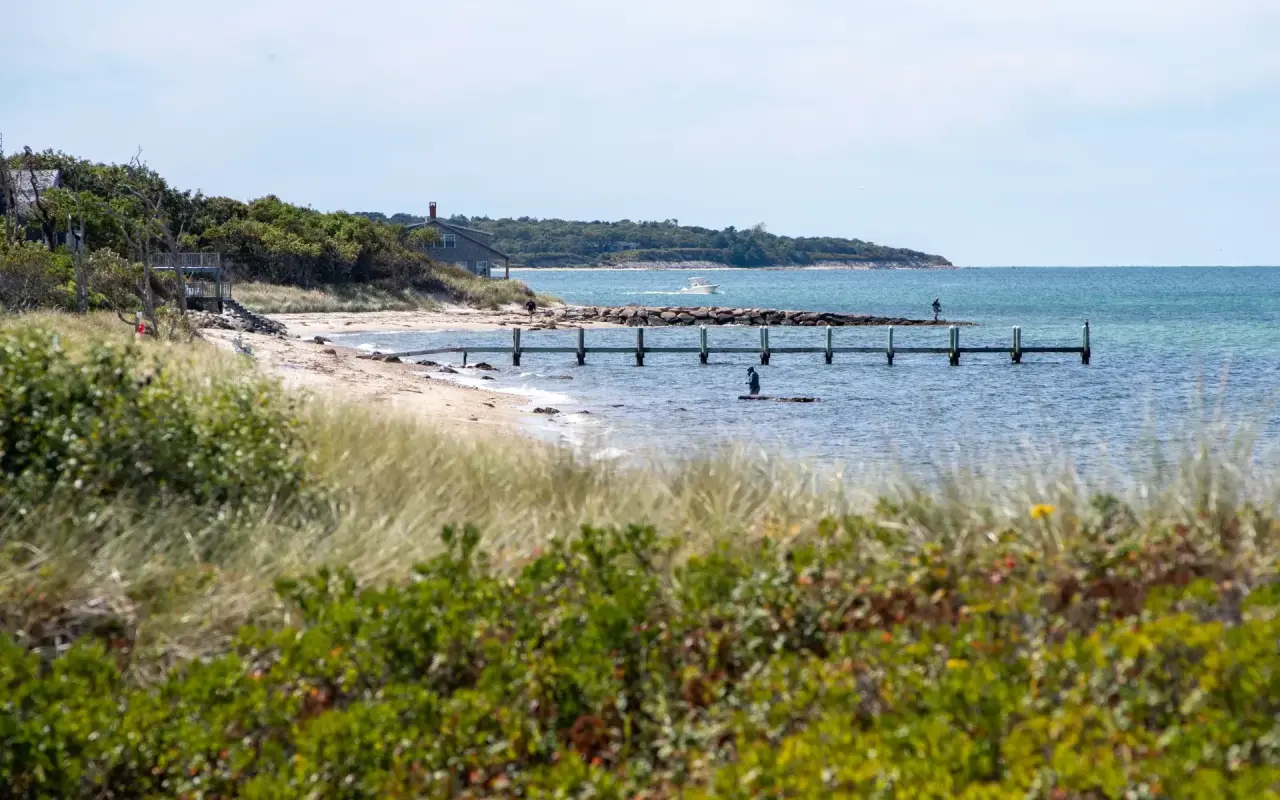
The Sound side warms first and stays swimmable into September. The Atlantic beaches on the south shore run colder and rougher right through the season.
The island sits at the boundary between colder Gulf of Maine waters and the warmer offshore flow influenced by the Gulf Stream. The mix works as a thermal buffer: in summer the water runs far warmer than Maine's, and it never gets as warm as the Carolina coast.
The swimming season runs July through September only. On the Vineyard Sound side, NOAA’s monthly averages put the water at about 72°F in July and 74°F in August, warm enough for comfortable swimming, though still cooler than a heated pool; the south shore runs cooler. September holds at about 69°F, which most swimmers find perfectly acceptable. By October it drops to 62°F, which is for the brave, and November's 52°F calls for a wetsuit.
It surprises people that September ocean water is about 15°F warmer than May’s (about 69°F vs 54°F on the Sound side). The ocean takes months to absorb summer heat and gives it back slowly into fall. If swimming is a priority, September is a far better month than June despite having similar air temperatures.
Late spring and early summer bring the most fog to the island for exactly this reason. Warm, humid air moving off the land meets still-cool ocean water and makes sea fog that sometimes burns off by midday and sometimes hangs on all day. It's pretty, though it can rearrange a day's plans.
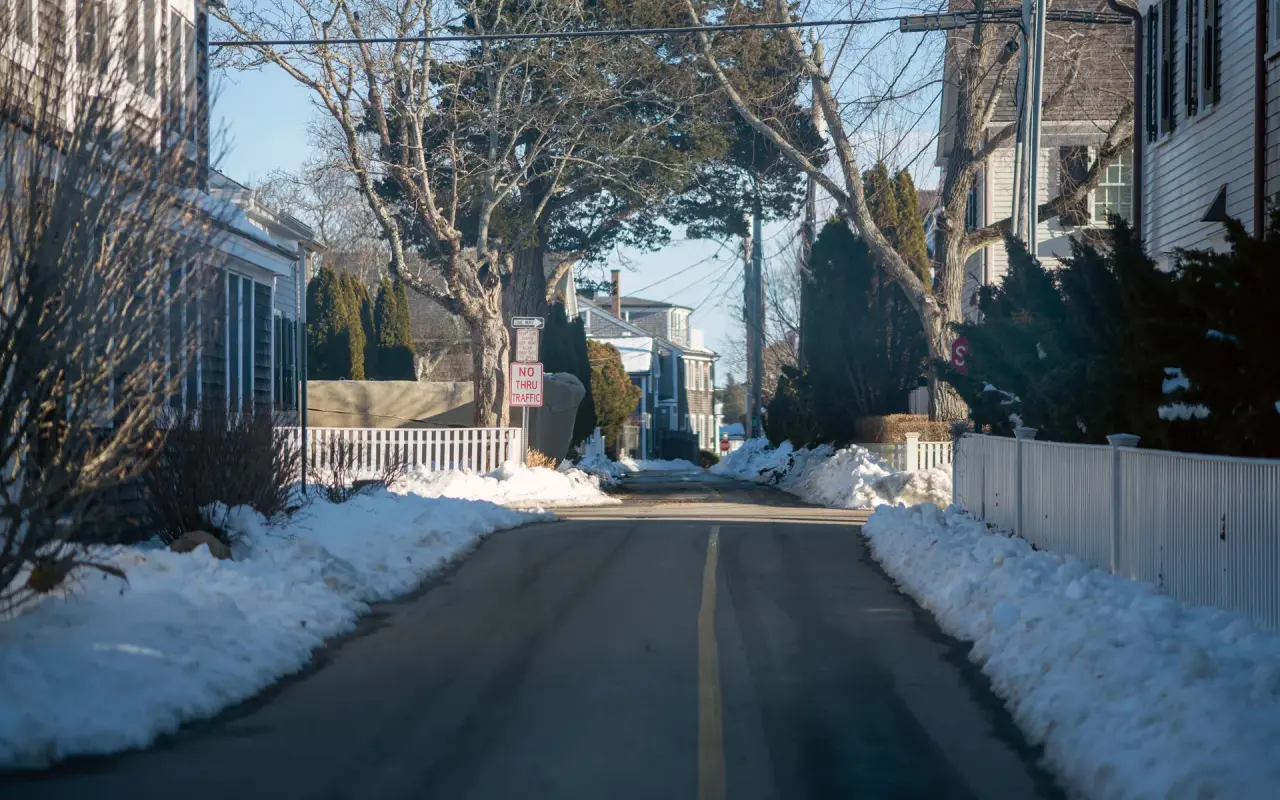
A plowed side street after a snowstorm, snowbanks along the picket fences. Snow that piles up like this is unusual here.
Winter · the quiet monthsPhoto by MV Vacation
Real snow is rare here and seldom lasts. What the island does get is wind and the odd coastal storm, which can shut the ferries down for a day at a time.
Martha's Vineyard averages 25.3 inches of snow per year, though the maritime climate turns most winter precipitation into rain or a mix. A real accumulating snowstorm is a memorable event, not a weekly one.
Island-wide · on the busPhoto by MV Vacation
The state emergency agency rides the VTA: a MEMA poster on a Route 13 bus in September 2026, mid hurricane season, with the three things it asks of everyone on the coast.
Nor'easters hit the island a few times most winters, typically between November and March. They come in from the northeast with strong wind, heavy precipitation and rough surf, and depending on the track they can drop 12–18 inches of snow or bring damaging rain and coastal flooding. The worst ones cancel ferries and close roads. The February 2026 blizzard dropped about 14 to 20 inches across the island, one of the heaviest single-storm totals in recent years.
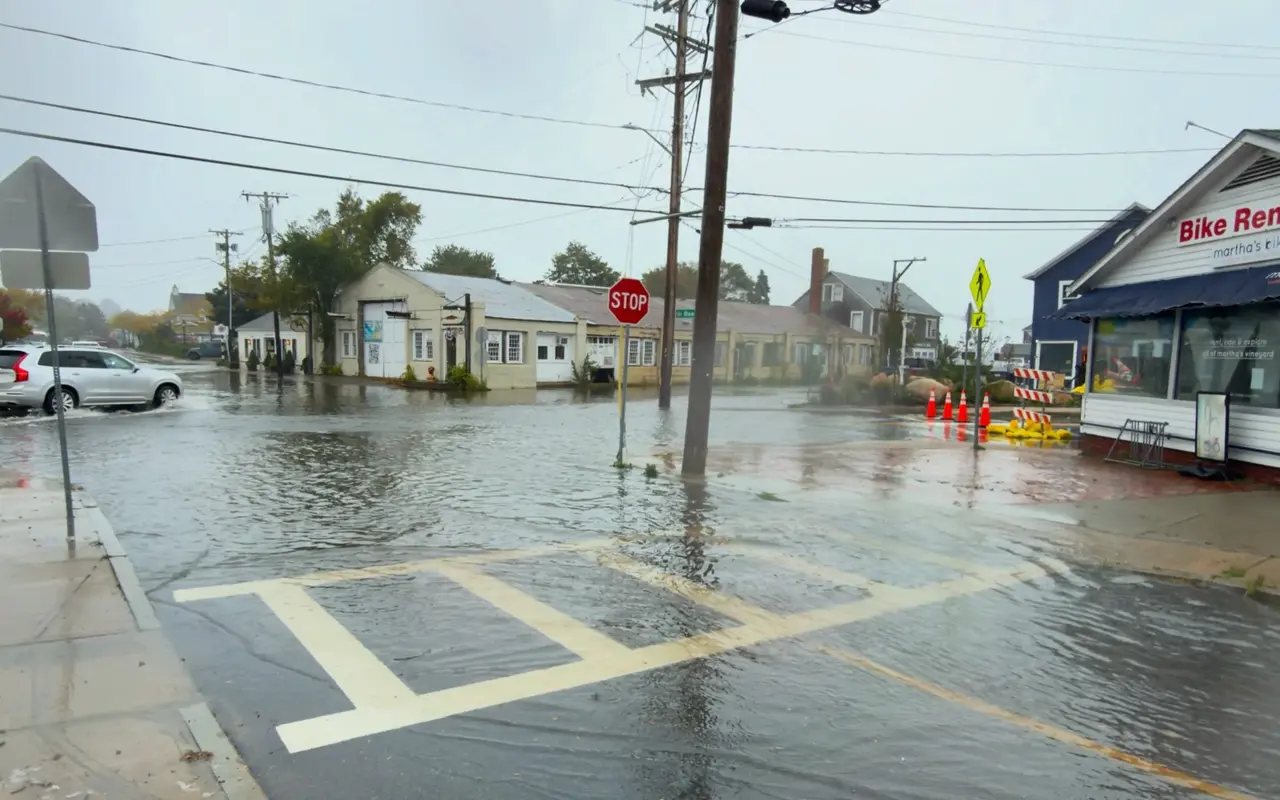
Vineyard Haven · September 26, 2026Photo by MV Vacation
Nor’easters are not only a winter thing. On Saturday, September 26, 2026, one arrived with a Coastal Flood Warning for the island, and Five Corners in Vineyard Haven went under: sandbags outside Martha’s Bike, an SUV wading through the intersection.
Hurricanes reach the island too. Hurricane Bob in 1991 is still the storm islanders measure others by, with 100+ mph gusts and heavy structural damage. The off-season guide covers storm preparedness for winter visitors.
July is the driest month with only about 8 days of measurable rain, one reason it's so popular for vacations. December is the wettest, with 12 rain days on average. The gap between the driest and wettest months is small next to inland climates, because the ocean keeps moisture coming all year.
Total annual rainfall of 47.7 inches is distributed fairly evenly, so no month is truly dry, and a light rain layer is useful any time of year.
Wind and sunshine
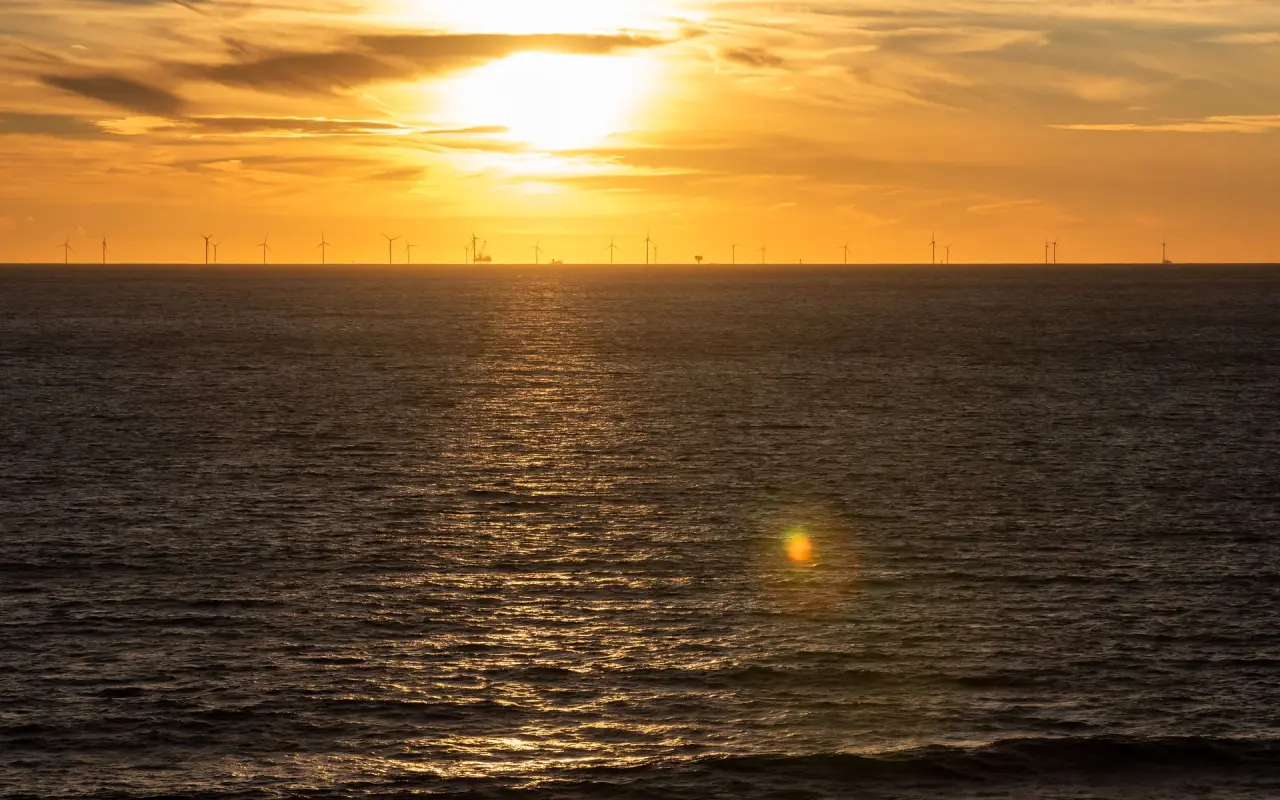
The Atlantic · the horizonPhoto by MV Vacation
Low sun over the Atlantic, a row of offshore wind turbines on the horizon. The same wind that turns them is why the island runs cooler than the mainland in summer.
After a shower · a rainbowPhoto by MV Vacation
A rainbow over the grassland after a passing shower. Rain days here are often brief, and the afternoon clears.
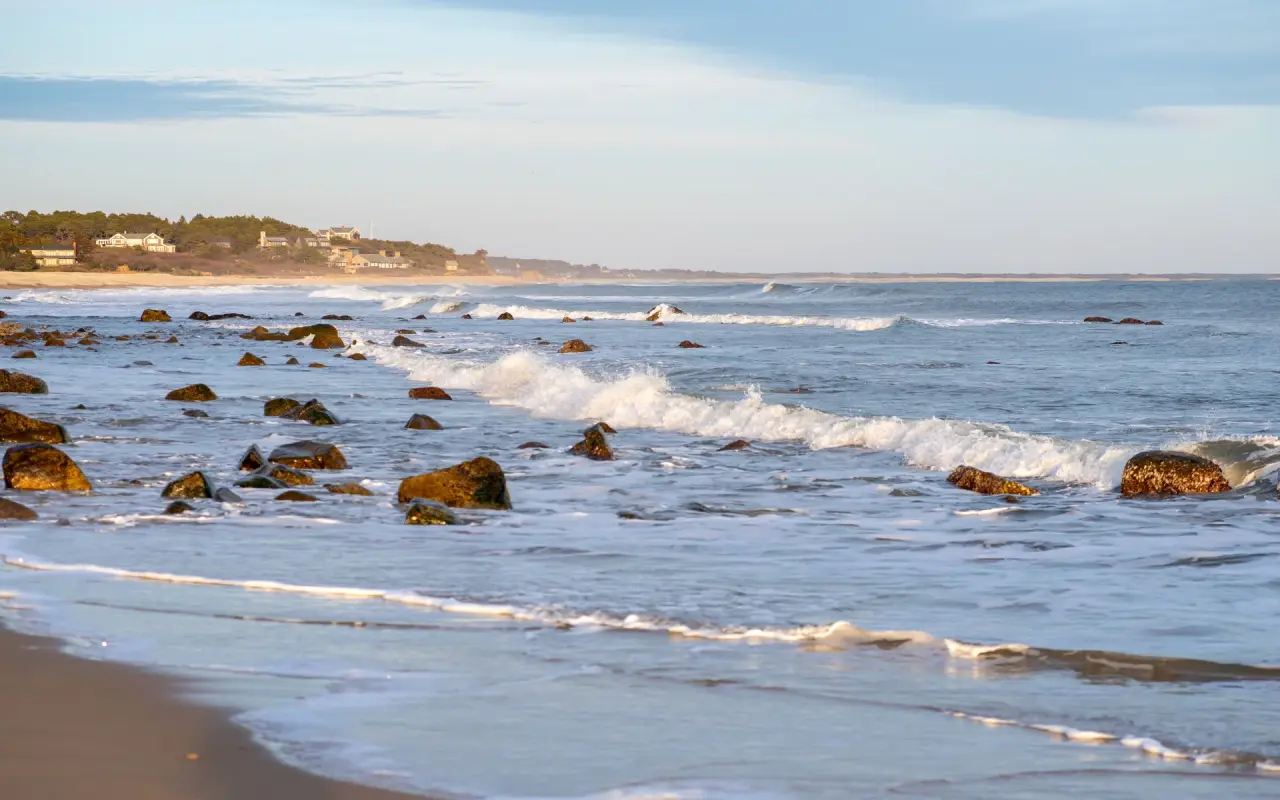
The island runs breezyPhoto by MV Vacation
The rocky shore below the clay cliffs. The Vineyard is a windy place, and a layer earns its place even in July.
Out in the Atlantic, the island rarely gets a day without wind. It's what makes summer afternoons so pleasant and winter days so biting.
March is the windiest month on the island, with persistent westerly and northwesterly winds and frequent gusts. NOAA’s records at the airport put it at about 12 mph on average, just ahead of January, February and April at about 11 mph, and March's wind feels relentless because it comes with the slow turn from winter to spring. August is the calmest month, when the Bermuda High settles over the Atlantic and brings steady, gentle southwest breezes, good for sailing and the beach.
June and July are the sunniest months, with the longest days of the year. With a little over 15 hours of daylight around the solstice, even a foggy June morning often turns into a lovely afternoon. Clear, settled skies are common in September and October, too.
Daylight swings a lot over the year:
Summer solstice (late June): 15 hours and 10 minutes of daylight; evening light until nearly 9pm
Winter solstice (late December): about 9 hours and 10 minutes of daylight; sunset around 4:15pm and dark by about 4:45pm
For June visits, the long evenings are the reward. In July and August, afternoon beach time catches the sea breeze at its strongest. September and October bring the clear fall light photographers wait for.
Season by season
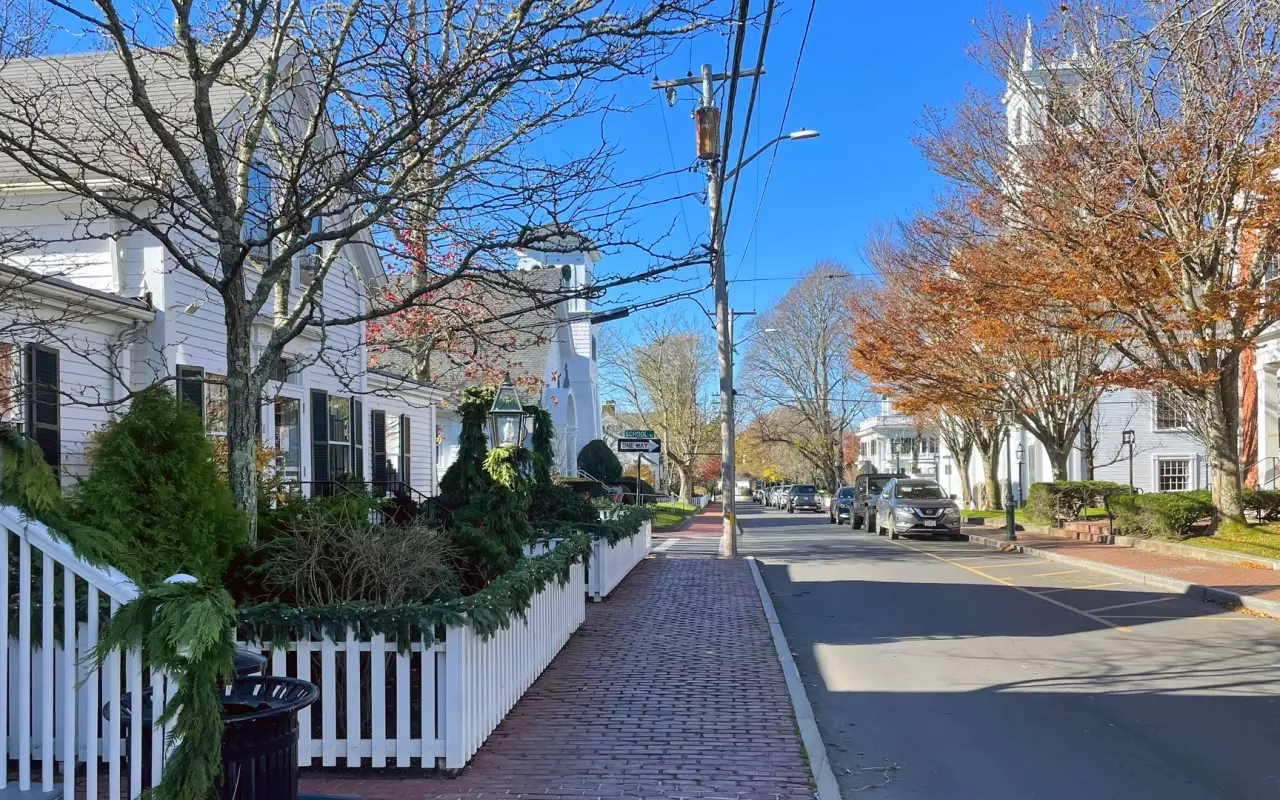
Fall · the island’s best lightPhoto by MV Vacation
Edgartown in November, after the summer crowds have gone.
Peak season: late June through Labor Day
This is the island at full throttle. Every restaurant is open, every beach is staffed, ferries run at maximum frequency, and prices are at their highest. Air temperatures are reliably warm (highs in the mid-70s to low 80s), the ocean is swimmable, and the light is at its best. The catch is crowds: beaches fill by 10am on weekends, restaurants need reservations, and summer car spots on the ferry sell out months ahead, so booking early helps with everything. See the spring guide for advance planning tips that apply to summer bookings too.
Shoulder season: May–June and September–October
Weather in May and early June is mild and green, with wildflowers blooming and restaurants running full menus without the summer crush. September and October bring the finest weather of the year, most years: clear skies, warm ocean (September), fall foliage (October), and hotel prices that usually come down from August peaks. Seasonal businesses start closing after Labor Day and close faster after mid-October, so hours are worth checking. The September guide and October fall foliage guide have full details on what's open and what to do.
Off-season: November through April
This is the island as islanders live it. Year-round residents make up nearly the entire population, most summer businesses are closed, and the island looks raw and beautiful. Lodging prices drop a long way, and a handful of good restaurants stay open. Winter hiking, birding and storm-watching from the cliffs are reasons to come. The weather can change fast, ferries can be disrupted, and meals take some planning around shorter hours. The winter off-season guide has the details.
Annual snowfall: 25.3 inches average (NOAA), varying a lot from year to year with the nor'easters
Maritime temperature moderation: a few degrees milder than Boston in winter (January high about 40°F vs 37°F) and a few degrees cooler in summer (July high 80°F vs 82°F)
Warmest months (air): July and August; both average 80°F high / 64°F low
Coldest month (air): January; average 40°F high / 26°F low
Warmest ocean: August, about 73–75°F on the Sound side (NOAA), cooler on the south shore
Coldest ocean: February, about 35–36°F
Swimming season: July, August and September, when the Sound side runs about 69–74°F
Foggiest time: late spring and early summer, when warm air meets the cold ocean
Driest month: July (about 8 rain days)
Wettest month: December (12 rain days)
Windiest period: November through April, about 10–12 mph on average at the airport, with March the windiest
Calmest month: August (about 8 mph average at the airport)
Sunniest months: June and July, with the longest days
Clear fall skies: common in September and October
Max daylight: 15h 10m (summer solstice)
Min daylight: about 9h 10m (winter solstice)
Nor'easters: a few most winters
Last major blizzard: February 2026, about 14 to 20 inches
What to pack by season
Dress in layers, any monthPhoto by MV Vacation
Wind and surf on a rocky stretch of shore. Even in summer the breeze off the water calls for a layer.
Sometimes, and it rarely lasts. The island averages about 25 inches a year, but the maritime climate turns most winter precipitation into rain or a mix. A real accumulating storm, like February 2026, is a memorable event rather than a weekly one.
Why is the island cooler than the mainland in summer?
The water. Martha’s Vineyard sits a few miles off the Cape, and the ocean cools the island in summer and warms it in spring and fall. In NOAA’s normals that is a couple of degrees cooler than Boston in July (a high of 80°F against 82°F), and a later, longer autumn.
When is the ocean warmest?
August, at about 74°F on the Sound side, with July close behind at about 72°F and September at about 69°F. The water crosses the 65°F comfort line in late June and drops back below it in October.
Which is the foggiest month?
There is no official fog count for the island, but sea fog is most common in late spring and early summer, when warm air meets the still-cold water. The fog is part of the island’s look, but it can hide the views you came for and it slows the ferries. Clear, settled skies are common in September and October.
Do storms stop the ferries?
Yes, for a day at a time when the wind is up, mostly in the nor’easter months from October through March and during hurricane season, which officially runs June 1 to November 30. The Steamship Authority posts cancellations before you leave for the boat, and our live advisory banner carries the current travel and weather notices.
The Beach Guide (all 20 beaches decoded), The Vineyard in the Fall, the season date by date, Where to Stay, every town and price band, and What It Really Costs, the 2026 budget line by line. All four PDFs free, plus a short island letter when there is something worth telling. No schedule, no spam.
No spam, unsubscribe in one click. Want a look first? See what you get.
First email ever from us? Give it a minute, and peek in spam once.
Disclaimer: The information in this article is provided for general guidance only and was accurate at the time of writing. Beach conditions, hours, prices, lifeguard schedules, ferry fares, and business operations change frequently and without notice. Ocean swimming carries inherent risks including rip currents, undertow, and cold water shock. Always verify current conditions with official local sources before your visit. MV Vacation assumes no responsibility for any loss, injury, or inconvenience resulting from the use of this information. Swim only where lifeguards are on duty, supervise children at all times near water, and follow all posted safety signs.
A guide to Martha's Vineyard, written on the island: beaches, dining, events and island living. We write down what we know about the island so your trip goes the way you hoped.
Martha's Vineyard in December 2026: First Friday on December 4, Light Up Oak Bluffs on December 5, Christmas in Edgartown December 10 to 13, 4:15 sunsets, one ferry into Vineyard Haven, and what stays open through Christmas.
Halloween on Martha's Vineyard 2026, town by town: Edgartown's Happy Haunting on Sunday, October 25, Halloween in Oak Bluffs on Saturday, October 31, the museum's Halloween on the Hill, the library events, haunted Edgartown walks and Circuit Arts' revue at the Grange, plus how the Vineyard Haven puppet parade ran in past years (set for October 31 at 4 PM).
The Hamptons or Martha's Vineyard? A New York scene two to three hours away by Jitney or train, with ocean beaches behind a $750 season permit, against a six-town island reached by an hour's flight or a day's train and boat, where thirteen beaches are free to all, the bus is free and the nights are quiet. Getting there, beaches, beds, towns, nightlife, children and cost, honestly.
Newport or Martha's Vineyard? A drivable Gilded Age city with the Breakers ($32), the free 3.5-mile Cliff Walk, festival weekends at Fort Adams and a late harbor front, against a six-town island reached by an $11 ferry with twenty beaches, a free bus and quiet nights. Getting there, sights, beds, nights, children, weddings, and doing both from Rhode Island.
Block Island vs Martha's Vineyard, honestly: a 9-square-mile island with one village and a $12 year-round ferry from Point Judith against 90 square miles, six towns and an $11 boat from Woods Hole. Size, ferries (the car fare gap is huge), beds, beaches, the week versus the weekend, and which one fits your trip from Rhode Island.
New Year's Eve on Martha's Vineyard: the $150 dinner over the lit harbor, the two-seating table in Edgartown, live music at the Ritz, the family First Night at the Playhouse, where the lights are, what runs on the holiday (the ferry does, the reservation office does not), what is open on New Year's Day, and the empty January that begins the week you leave. 2026–2027 dates.
Island tip of the dayTimingNo. 61 of 79New tip at midnight, island time
Visit Edgartown on a Tuesday or Wednesday. Same beautiful town, maybe 30% of the weekend crowds. Most restaurants have availability without reservations.
Useful?
More on
Subscribe
The free island library · 2026
One short island letter, and all four guides to start
Beach reports, events worth a day, ferry heads-ups. Sent when there is something worth telling. The Beach Guide, The Vineyard in the Fall, Where to Stay and What It Really Costs arrive with your welcome email.
The Beach Guide, The Vineyard in the Fall, Where to Stay and What It Really Costs. No spam, one-click unsubscribe.
We use cookies for trip planning, site stats and ads, including ads based on your browsing. To opt out, turn on Global Privacy Control in your browser. Cookie policy
These cookies are essential for the website to function properly.
These cookies help us understand how visitors interact with the website.
These cookies are used to deliver personalized advertisements.