Travel advisorySteamship Authority travel advisory · Gale Warning on the ferry waters until Fri 2 PMGusty winds are forecast for Cape Cod and the Islands that will have the potential to cause cancellations on both the Hyannis-Nantucket and Woods Hole-Martha's Vineyard routes through Thursday. We are waiving change and cancellation fees for travel scheduled for Tuesday, October 20, through Thursday, October 22.Steamship Authority · checked 1:30 AM ET
Plan a Chappaquiddick day trip: the On Time Ferry, Mytoi Japanese garden, Cape Poge Wildlife Refuge, Wasque Beach, and biking routes on Martha's Vineyard.
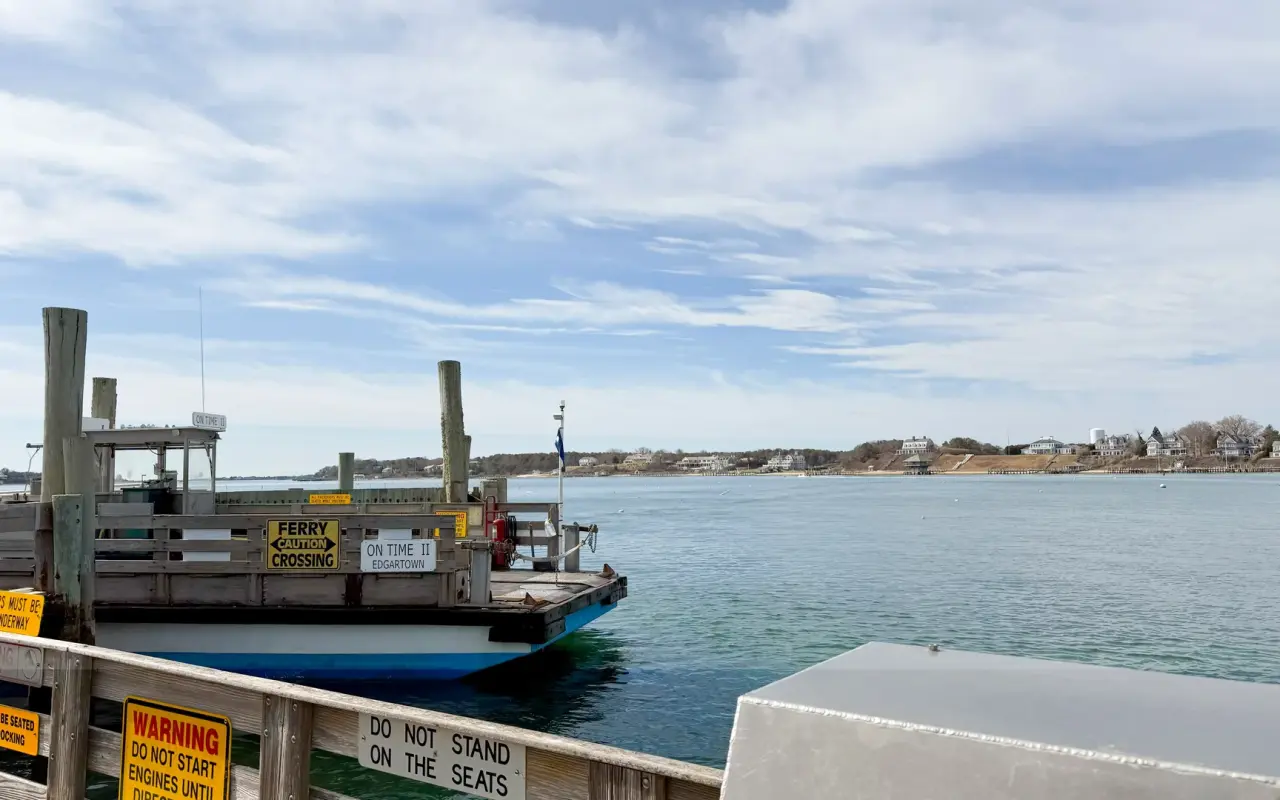
Chappaquiddick is once again a true island. A New Year's Day 2026 breach at Norton Point severed the sand barrier connecting it to Martha's Vineyard. The only way in or out is the On Time Ferry, a 527-foot, 90-second crossing from Edgartown Harbor. No gas stations, no real restaurants and famously spotty cell service, which is much of the appeal.
ChappaquiddickPhoto by MV Vacation
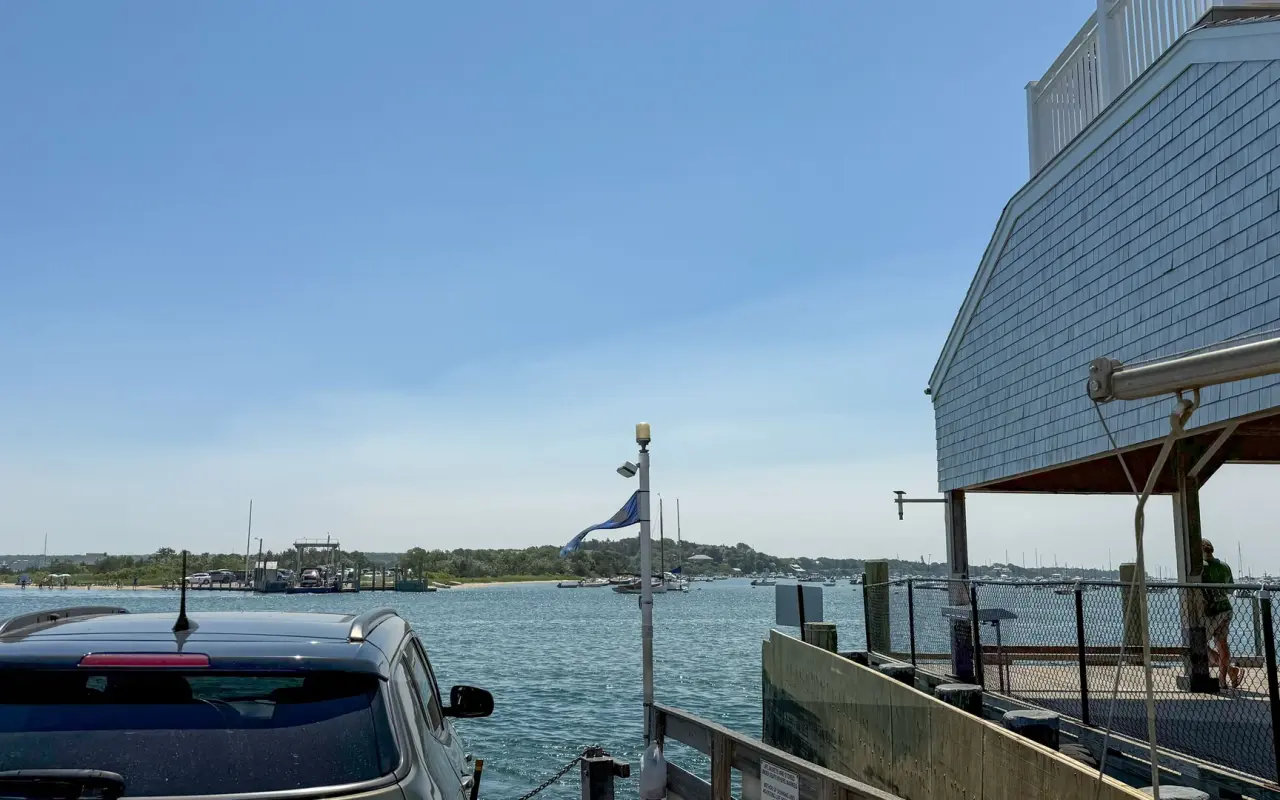
A car loaded on the Chappy Ferry at the Edgartown slip, ready for the short crossing to Chappaquiddick.
Edgartown · the Chappy Ferry lanePhoto by MV Vacation
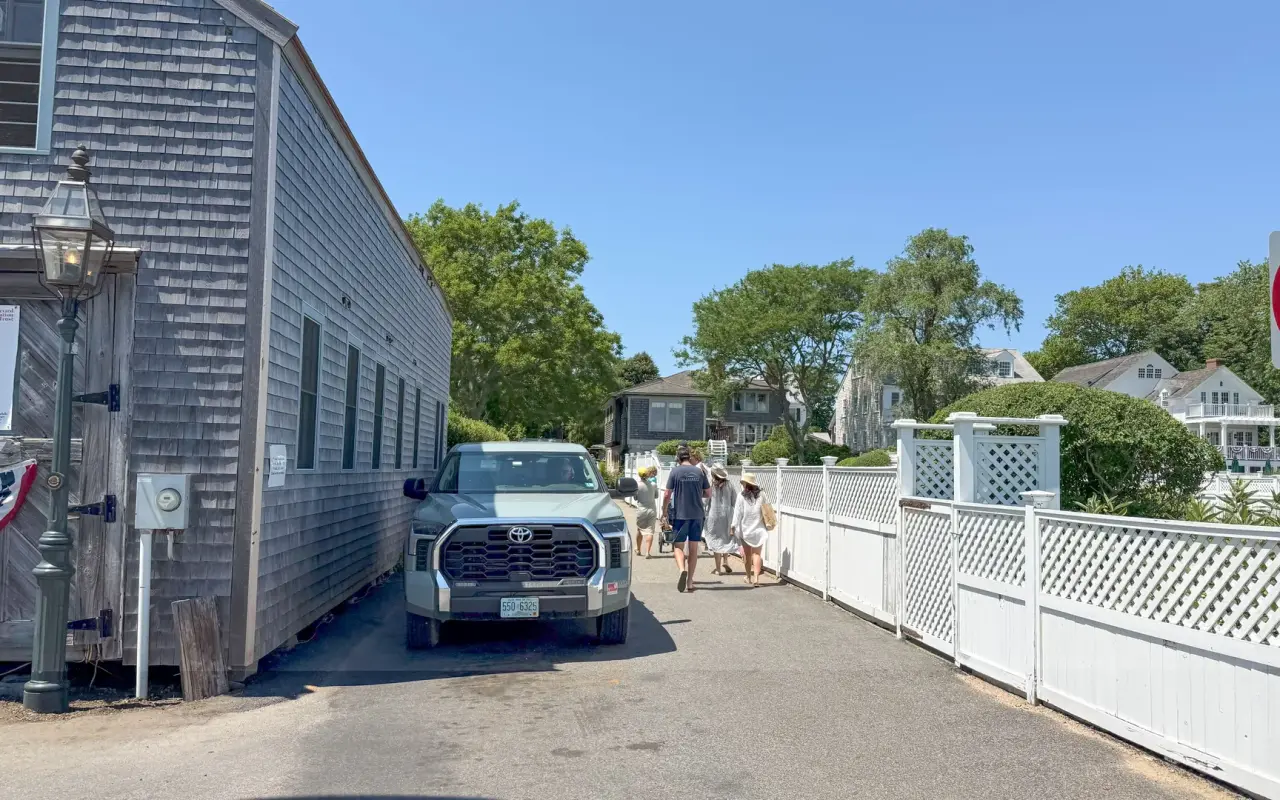
The Chappy Ferry landing on Dock Street in a quiet moment; in July the line runs up the street.
ChappaquiddickPhoto by MV Vacation
The Chappy Ferry mid-crossing with a full deck of cars and a van.
The ferry has been privately run for most of its long history. The name comes from a deadline: the original 1948 boat had to be built in 16 days, and it was. When operator Tony Bettencourt resigned in June 1948, replacement Foster B. Silva had just 16 days. Captain Samuel B. Norton organized a community barn-raising, the boat was built upside-down outdoors, and it was christened "On Time" because it hit its August 2 launch date. The service goes back to at least 1807, which makes it one of the island's oldest maritime businesses. Two boats run today, On Time II (1969) and On Time III (1975), and each carries about 3 cars plus passengers.
2026 fares (round-trip; cash or an island check, no cards): foot passenger $5, bike and rider $8, car and driver $17. In summer the boats run continuously from 6:30 AM to midnight. Peak car waits can top 1 hour; walking or biking on skips the line. On the Chappy side the schedule is painted on the shingled shed by the ramp, next to the mailbox: summer hours from the Thursday before Memorial Day to the last day of the Derby in mid-October, then winter hours of 6:30 AM to 10 PM with a last window from 11 to 11:15 PM. From October 18, 2026 only one boat is running while the other gets scheduled maintenance and its Coast Guard out-of-water inspection, so plan a little extra time at busy hours. The ferry posts delays and weather closures as email and text alerts; you can sign up on chappyferry.com. The loading sign spells out the local etiquette: two vehicles, then passengers, then a vehicle, and headlights off while you wait. Webcams at chappyferry.com show the line in real time. The ferry appeared in the original Jaws (1975). After decades under Peter Wells (skipper since 1974) and Sally Snipes, the ferry passed to Captain Brian Scall on June 25, 2026 (the town license is now held by his company, Chappy Ferry LLC), its first change of hands in about two decades.
Chappaquiddick · the ferry landingPhoto by MV Vacation
The Chappy side of the crossing: the schedule shed, the mailbox, the ramp and the sign that says headlights off.
Mytoi Japanese Garden on Dike Road
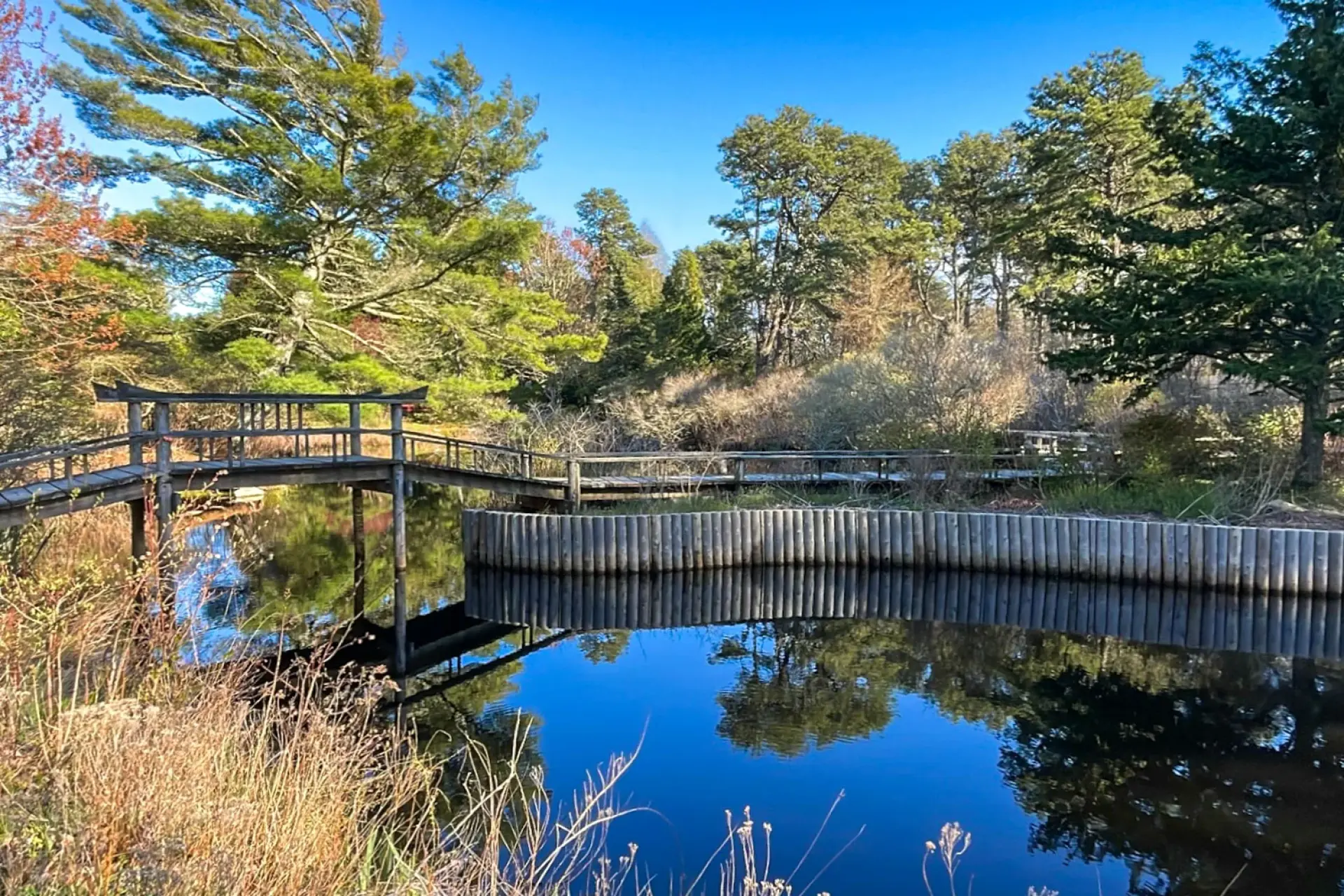
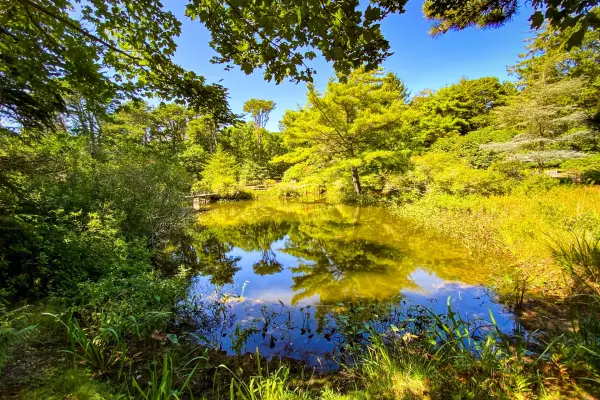
Mytoi is a 14-acre Japanese-inspired stroll garden made in 1958–1965 by architect Hugh Jones, who got the land for $1 as payment for designing a neighbor's house and died in 1965 while working in it. Hurricane Bob (1991) destroyed 70% of the plantings; landscape architect Julie Moir Messervy (the first Western woman to apprentice under a Japanese master) redesigned it.
We have a full Mytoi guide: hours, the seasonal fee, the fifteen-car lot and the garden's history.
The garden has a koi pond, zigzag bridge, camellia dell, stone garden and azumaya shelter. It is open daily, sunrise to sunset. May–Oct: $10 nonmembers, $5 basic Trustees members (free at Contributing level and up), children 12 and under free; free for everyone November–April. The 15-space lot fills fast, and dogs aren't allowed. Rhododendrons and azaleas peak in late May–June; most visits run 30–60 minutes, about 2.8 miles from the ferry.
For kids, the garden lends exploration backpacks with guided science activities and plein air art kits for free. The annual goldfish release (typically July) includes crafts and snacks. Illuminate Mytoi, a December luminary walk the Trustees have held in the garden (most recently reported on December 9, 2023), can be a nice reason to plan a winter visit; the Trustees' calendar has this year's date if it runs.
Before you book
What Martha’s Vineyard really costs, free
Ferry fares by the day of the week, the room tax every town charges and four whole trips added up. Free with the island letter, together with our Beach, Fall and Where to Stay guides.
One-click unsubscribe, and we never share your email.
Cape Poge Wildlife Refuge (516 acres)
Cape Poge Light · ChappaquiddickThe 1893 wooden tower at the refuge’s northern tip, reached only over sand. Drawn for our island landmark set; the lighthouse tour is the way to stand under it.
ChappaquiddickPhoto by MV Vacation
The Army Corps of Engineers sign at the old Cape Poge Little Neck Bomb Target Site. World War II practice ordnance has turned up here, and the sign asks you to leave anything you find alone and call 911.
Seven miles of barrier beach, managed by The Trustees since 1959, end at the Cape Poge Lighthouse (first built 1801, current tower 1893, on the National Register of Historic Places). Erosion forced moves in 1907, 1922 and 1960, and in 1987 the tower was moved 500 feet by helicopter, often described as the first lighthouse relocated that way. A solar-powered 300mm optic replaced the original fourth-order Fresnel lens; it flashes white every six seconds and shows 9 miles out to sea.
The Trustees run guided tours most summers: a Lighthouse Tour (a 4WD ride out plus the climb) and a Wildlife Discovery Kayak Tour through Poucha Pond and under Dike Bridge. Their ticketing system moved recently, so it's worth calling for the current season and prices (508-693-7662). Tours can arrange pickup at the Chappy Ferry landing.
Cape Poge Gut at the northern tip is one of the island's best-known fishing spots, where strong tidal currents bring in striped bass, bluefish, bonito and albacore. Walking or biking in has been free since 2025. Season OSV permits are sold through the Trustees ticketing system and now bundle a membership level; call for current pricing. Piping plover closures affect access June–July.
Piping plovers (federally threatened), least terns and American oystercatchers nest here. Monarch butterflies feed on Northern Blazing Star before they migrate south, and harbor and gray seals live in the surrounding water. A century-old Eastern red cedar grove ("The Cedars"), shaped by salt spray, is a rare bit of coastal forest. The refuge is on the Atlantic Flyway, and September is a good month for migrating birds.
A half-mile trail runs through rare sand barrens to a wide Atlantic beach. Surf fishermen know Wasque Point because the "Wasque Rip" runs right up against the beach. Strong tidal currents push baitfish (squid, sand eels, lady crabs) through Muskeget Channel between Martha's Vineyard and Nantucket, bigger fish wait for them, and anglers can cast straight into the rip from shore. Swimming here is dangerous: the currents are strong, and the growing seal population on nearby sand islands may draw feeding sharks. The Trustees' own advice is to "avoid swimming in areas where seals are present." For a swim on Chappy, East Beach/Leland Beach is the better choice. From Memorial Day weekend to Indigenous Peoples' Day weekend, parking a car costs $25 for nonmembers, walking or biking in is free, and libraries lend free passes. There's also a floating beach wheelchair and a short coconut-fiber mat at the west entrance.
The Norton Point breach
The breach opened January 1, 2026 and had grown to 502 feet a week later, severing Chappy from South Beach/Katama. It's expected to stay open through 2026 and possibly for years (the 2007 breach lasted 8 years). There's no OSV route from Norton Point to Wasque, so the Chappy Ferry is the only way across.
Biking Chappy
There's no bike rental on Chappaquiddick, so the bikes come from Edgartown: R.W. Cutler (1 Main St, ~$35/day) or Wheel Happy (~$25/day). Hybrid or wide-tire bikes handle the sandy stretches much better than skinny tires. Chappaquiddick Road is paved for ~4 miles (see our cycling guide); Dike Road and Wasque Road become dirt/sand.
Edgartown · the Chappy Ferry slipPhoto by MV Vacation
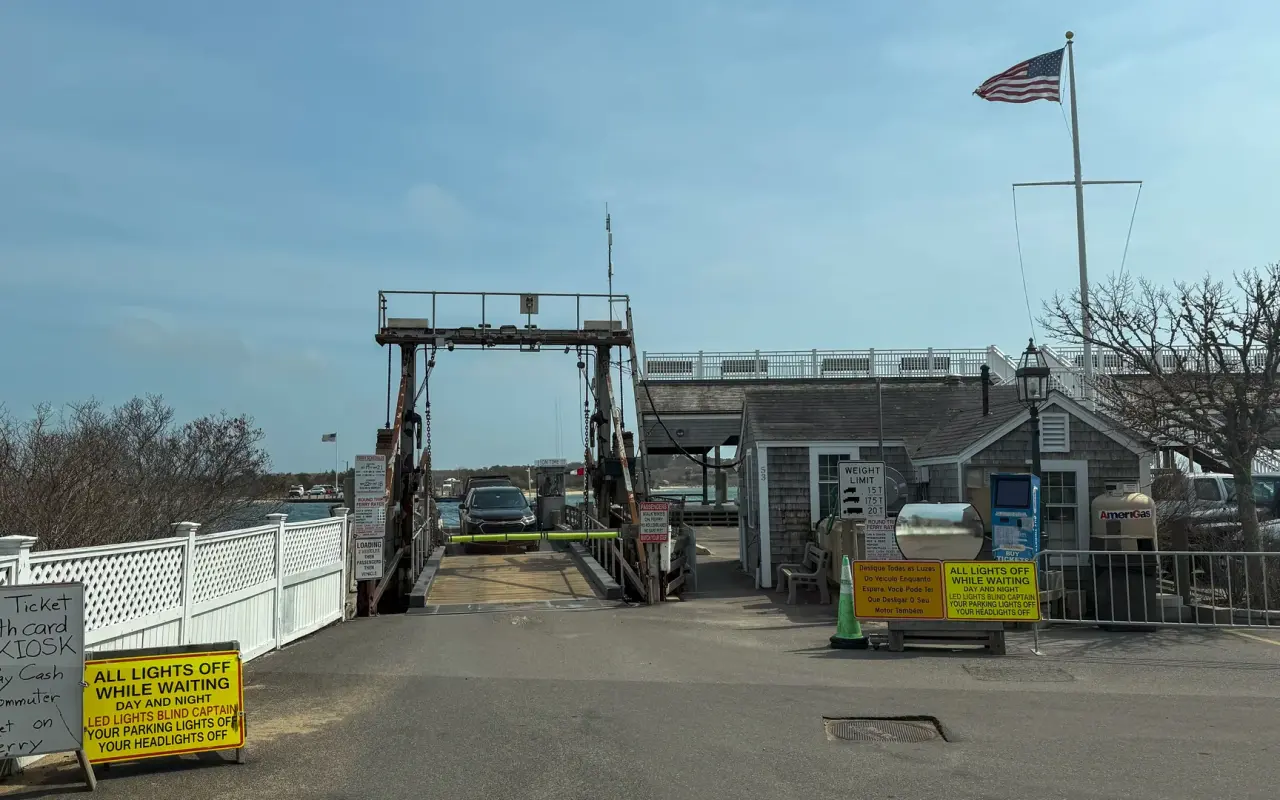
The Chappy Ferry slip on the Edgartown side, with the yellow All Lights Off While Waiting signs out front.
Distances from the ferry: Chappy Store ~2 mi, Mytoi ~2.8 mi, Dike Bridge ~3 mi, Wasque ~4.5 mi. The full loop is 10–12 miles.
The Chappy Store and food on Chappy
The store is at 219 Chappaquiddick Road and opens only in summer (check Blackbird Cafe for this year's dates and hours) for basic groceries, snacks, sunscreen and coffee. The store itself is run by Blackbird Cafe and opens in summer. Slip Away Farm sells its vegetables and flowers at a farm stand in the old Chappaquiddick Schoolhouse, open in season Wednesday to Saturday. Beyond these, there's no food on Chappaquiddick, and outside the season everything comes from Edgartown.
Dike Bridge and the Kennedy accident
ChappaquiddickPhoto by MV Vacation
Driving onto Dike Bridge, the way into the Cape Poge Wildlife Refuge.
On the evening of July 18, 1969, a car driven by Senator Ted Kennedy went off the narrow, then guardrail-less bridge into the tidal channel. His passenger, Mary Jo Kopechne, a 28-year-old political aide, drowned. Kennedy did not report the accident until the following morning, after the car had already been found, and he later pleaded guilty to leaving the scene of an accident. The incident shadowed the rest of his career and made "Chappaquiddick" a household name far beyond this quiet island.
Visitors come to see the bridge because of its place in American history. It is also where a young woman died. There's nothing at the bridge that tells the story, so it helps to know it before you go.
The bridge's last major repairs came in 1995, when the western part of its bulkhead was rebuilt. It has sturdy metal guardrails, and in 2023 the needed repairs were put at about $4.3 million, a bill the town and the Trustees have argued over. Thousands visit every year, though for locals it's still a sensitive subject.
Where the name comes from
"Chappaquiddick" comes from a Wampanoag word that roughly means "separated island", which it is again. Chappaquiddick is the ancestral and present-day homeland of the Chappaquiddick Wampanoag.
ChappaquiddickPhoto by MV Vacation
The On Time II tied up at the Edgartown slip, with Chappaquiddick across the channel.
Chappy has a small year-round population. In summer that grows to roughly 3,500. There are no hotels, only vacation rentals (VRBO/Airbnb), and many families rent the same house year after year, so the good weeks book early.
More to explore
Three Ponds Reservation: wild fields, Brine's Pond, part of the Cross-Chappaquiddick Trail (free)
Poucha Pond Reservation: hilltop views, salt marsh, excellent birding (free)
Chappy Five Corners: a granite rock inscribed "Blow Your Bugle" at the blind intersection
Cross-Chappaquiddick Trail: about 6 miles of connected trails (allow 2.5 hours)
Chappy Community Center (180 Chappaquiddick Rd): summer activities and WiFi, handy with the spotty cell coverage
Chappy Point to Point: a 5-mile road race (late June), one of the island's longest-running road races, limited to 340 runners
Royal and Ancient Golf Course: 9-hole links, with occasional full-moon night golf events
A day trip, hour by hour
8:00 AM: Pick up bikes in Edgartown, with lunch and water packed
8:45 AM: Ride onto the Chappy Ferry ($8 RT; cash or an island check)
9:15 AM: Coffee at the Chappy Store (if it's open)
9:45 AM: Mytoi Japanese Garden (30–45 min)
10:45 AM: Dike Bridge and East Beach (swim, 1–2 hours)
12:30 PM: Picnic at Five Corners, then the Three Ponds trails (1 hour)
2:00 PM: Wasque Point and a walk on the beach
3:30 PM: Ferry back to Edgartown, about 10–12 miles of biking in all
What to bring
A packed lunch, 2+ liters of water, sunscreen, tick repellent (this is high-risk Lyme disease country), cash or check for the ferry, a swimsuit, layers and a bike tire repair kit. Cell coverage is unreliable, so offline maps are worth downloading before you cross.
ChappaquiddickPhoto by MV Vacation
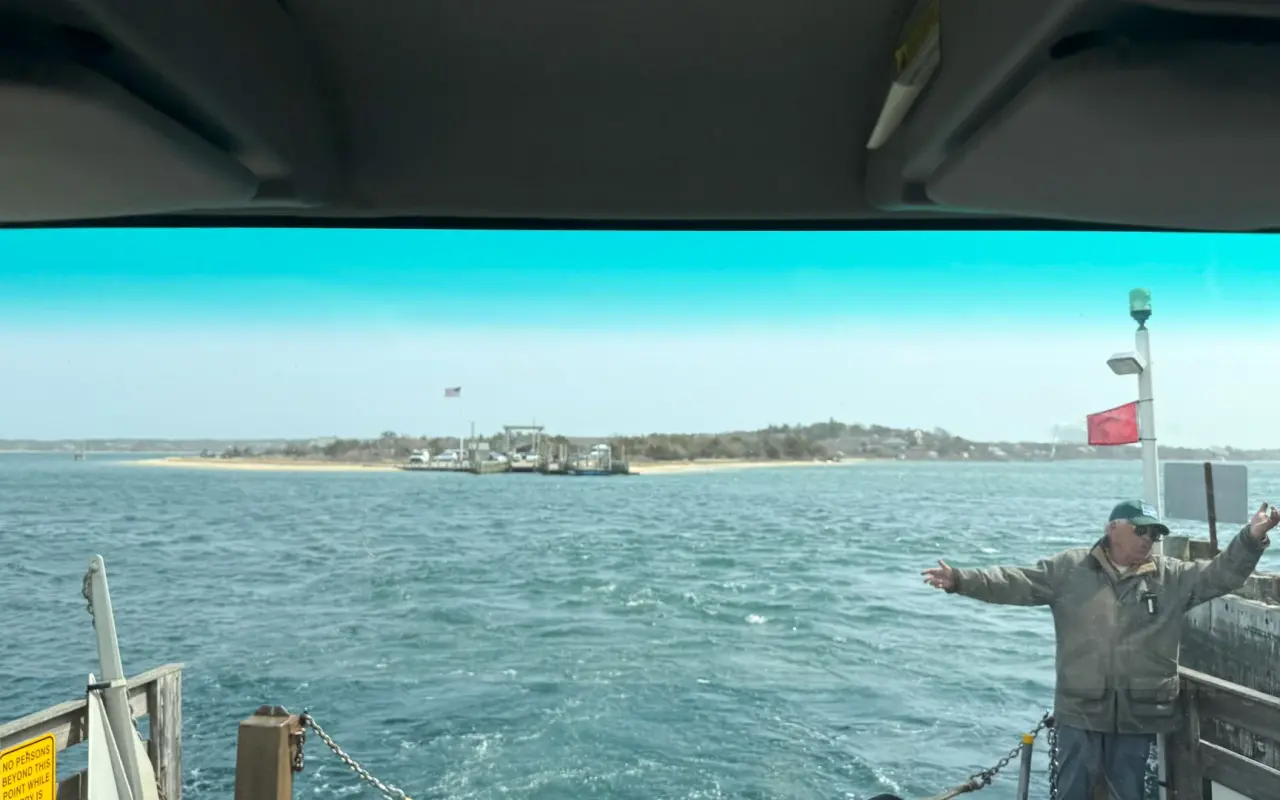
Mid-crossing, seen through the windshield: the deckhand at the front of the ferry and the other landing coming up across the channel.
Explore guided island tours, sunset cruises, and day trips. Browse all tours →
If you book through this link we may earn a small commission, at no extra cost to you. It helps keep our guides free.
Frequently Asked Questions
How do I get to Chappaquiddick?
Since the January 1, 2026 breach at Norton Point cut the sand link, the only way is the On Time ferry from Edgartown Harbor: a 527-foot, 90-second crossing that runs continuously, 6:30 AM to midnight in summer. Two boats carry about three cars each plus passengers.
What does the ferry cost?
2026 round trips: foot passenger $5, bike and rider $8, car and driver $17, cash or an island check on board, no cards. Peak car waits can top an hour, but walk-ons and bikes skip the line; webcams at chappyferry.com show it.
Why is it called On Time?
The original 1948 boat was built in a 16-day community effort and christened On Time because it hit its August 2 launch date. The service dates to at least 1807.
Is there anything to eat on Chappy?
Only the seasonal Chappy Store, run by Blackbird Cafe and open in summer. There are no real restaurants or gas stations, so most people bring lunch from Edgartown.
What is there to see?
Mytoi Japanese Garden on Dike Road, the Dike Bridge, and the Trustees’ Wasque and Cape Poge beaches.
Island tip of the dayTimingNo. 58 of 79New tip at midnight, island time
Oak Bluffs restaurants are packed 6–8 PM. Eat at 5 PM or after 8:30 PM: same food, half the wait, easier parking.
Useful?
More on
Four free downloads · 2026 editions
Four island guides, in your inbox
The Beach Guide (all 20 beaches decoded), The Vineyard in the Fall, the season date by date, Where to Stay, every town and price band, and What It Really Costs, the 2026 budget line by line. All four PDFs free, plus a short island letter when there is something worth telling. No schedule, no spam.
No spam, unsubscribe in one click. Want a look first? See what you get.
First email ever from us? Give it a minute, and peek in spam once.
Disclaimer: The information in this article is provided for general guidance only and was accurate at the time of writing. Beach conditions, hours, prices, lifeguard schedules, ferry fares, and business operations change frequently and without notice. Ocean swimming carries inherent risks including rip currents, undertow, and cold water shock. Always verify current conditions with official local sources before your visit. MV Vacation assumes no responsibility for any loss, injury, or inconvenience resulting from the use of this information. Swim only where lifeguards are on duty, supervise children at all times near water, and follow all posted safety signs.
A guide to Martha's Vineyard, written on the island: beaches, dining, events and island living. We write down what we know about the island so your trip goes the way you hoped.
A bachelorette or bachelor weekend on Martha's Vineyard, done right: the $500 BYOB sunset charter, the sloop, the $100 party-boat fishing morning, the Circuit Avenue bars with last call at 12:30, the biergarten with a free shuttle, the house rules (quiet after ten, no drinking outside, occupancy by bedroom), and why September is the month.
A girls' weekend on Martha's Vineyard, planned: the boutique inns for four to six, a private sunset sail with an all-female crew, the garden brunch in Edgartown, the shops where the jewelry is made on the spot, the 1962 thrift shop, the spa with the only indoor pool, the dinners to book a week ahead, the one late night, and the house rules.
How many days you need on Martha's Vineyard, by trip: one day for Oak Bluffs and Edgartown on an early summer boat, a weekend under $350 a person on foot, three days to see both ends of the island, a Saturday-to-Saturday week in a rental, with the ferry times and the cost of each.
Mytoi, the Japanese garden on Chappaquiddick: how to get there on the Chappy ferry, the 15-car lot, hours and admission by season, the pond and bridge, birch walk and camellia dell, the story of Hugh Jones, Mary Wakeman and the rebuild after Hurricane Bob, rules, accessibility and when to go.
Which Martha's Vineyard tour is worth it, by the trip you are on: the Edgartown walking and Jaws tours, the three-hour island bus tour, private charters, the MV Skipper party boat, Felix Neck kayak tours and the all-in day trip from Boston, with 2026 prices from the operators.
The Hallmark Martha's Vineyard Mysteries are not filmed on Martha's Vineyard: Victoria, British Columbia plays the island on screen. But the books behind the movies are pure Vineyard, and the real places are better than the set.
Subscribe
The free island library · 2026
One short island letter, and all four guides to start
Beach reports, events worth a day, ferry heads-ups. Sent when there is something worth telling. The Beach Guide, The Vineyard in the Fall, Where to Stay and What It Really Costs arrive with your welcome email.
The Beach Guide, The Vineyard in the Fall, Where to Stay and What It Really Costs. No spam, one-click unsubscribe.
We use cookies for trip planning, site stats and ads, including ads based on your browsing. To opt out, turn on Global Privacy Control in your browser. Cookie policy
These cookies are essential for the website to function properly.
These cookies help us understand how visitors interact with the website.
These cookies are used to deliver personalized advertisements.