By MV VacationUpdated 07 Oct, 202610 mins read 240 views
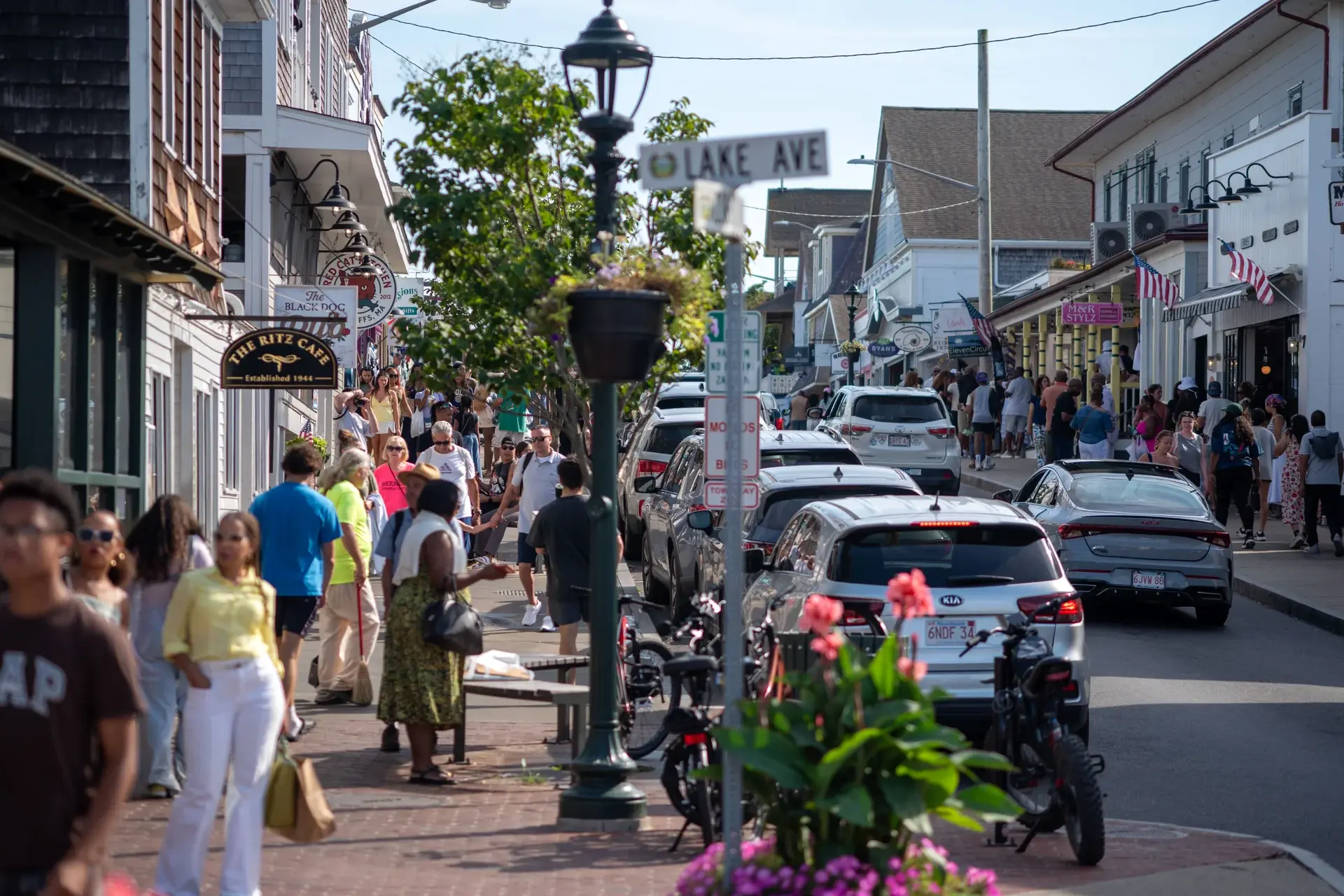
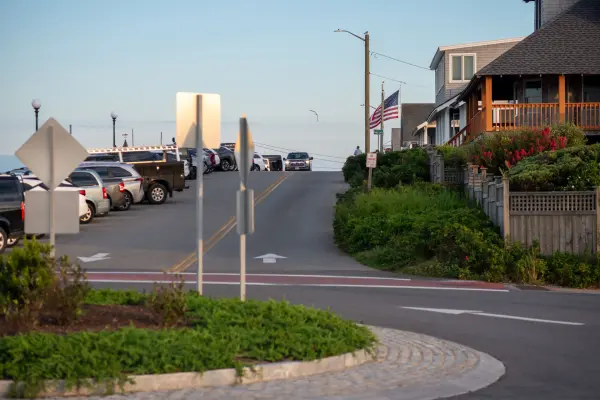
Oak Bluffs · Circuit Avenue, AugustPhoto by MV Vacation
Circuit Avenue in August. Every business on this street is staffed for a town five times its winter size, for ten weeks.
Why so many international students and seasonal workers staff Martha's Vineyard every summer: the J-1 Summer Work Travel rules, the H-2B program, where the workers come from, the 650 students of 2025, the housing squeeze behind it, the island's year-round Brazilian community, and what it means for your trip and your tips.
Order a coffee in Oak Bluffs in July and the person who makes it may be a university student from Zagreb or Belgrade. The person at the inn's front desk may be from Kingston, and the woman running the register at the market may have lived here twenty years after growing up in Minas Gerais. Visitors notice, and they ask us, sometimes carefully: why are there so many people from somewhere else working on an island in Massachusetts? The answer is mostly arithmetic.
About 20,000 people live on Martha's Vineyard all year. In summer the population swells several times over; the Martha's Vineyard Times puts the visitor count at 100,000, and other estimates run higher. Every one of those visitors eats out, sleeps in a bed somebody made, buys ice cream and rents a bike, and the island's year-round workforce cannot stretch that far. Thousands of seasonal jobs open in May and close in September, and there is nowhere near enough local labor, or local housing, to fill them. So the island hires its summer staff from far away, and has for decades. In 2025 that meant about 650 international students on J-1 visas, according to the Times, plus several hundred seasonal workers on H-2B visas, plus American college students, plus the year-round immigrant community that keeps the island running in every season.
Who the J-1 students are
The J-1 Summer Work Travel program is run by the US State Department as a cultural exchange. Participants must be full-time university students in their home country, they can work in the United States for at most four months during their summer break, and they must go home before their own term starts. Sponsoring agencies arrange the job in advance, are required to make sure the pay meets federal and state minimum wage, must arrange suitable housing and transport, and must check in with each student every month. The rules ban the worst jobs: no overnight shifts between 10 pm and 6 am, no commission-only work, no domestic help, nothing in factories or construction. What remains is the work the island needs: restaurants, hotels, shops, ice cream counters, kitchens.
On the Vineyard they come mostly from Eastern Europe, and increasingly from the Balkans: the local papers list Croatia, Serbia, Bulgaria, Kazakhstan and Ghana among the home countries, alongside Jamaica. Most are 19 to 28. Several island businesses have relied on them for years; a fudge shop, a harborside restaurant and a clothing chain all told the Vineyard Gazette that foreign students make up as much as half of their summer staff, and that some workers come back season after season. For a student from Croatia, where an average annual salary is around $17,000, a Vineyard summer at Massachusetts minimum wage plus tips can earn well over $10,000, which is why the program has a waiting list.
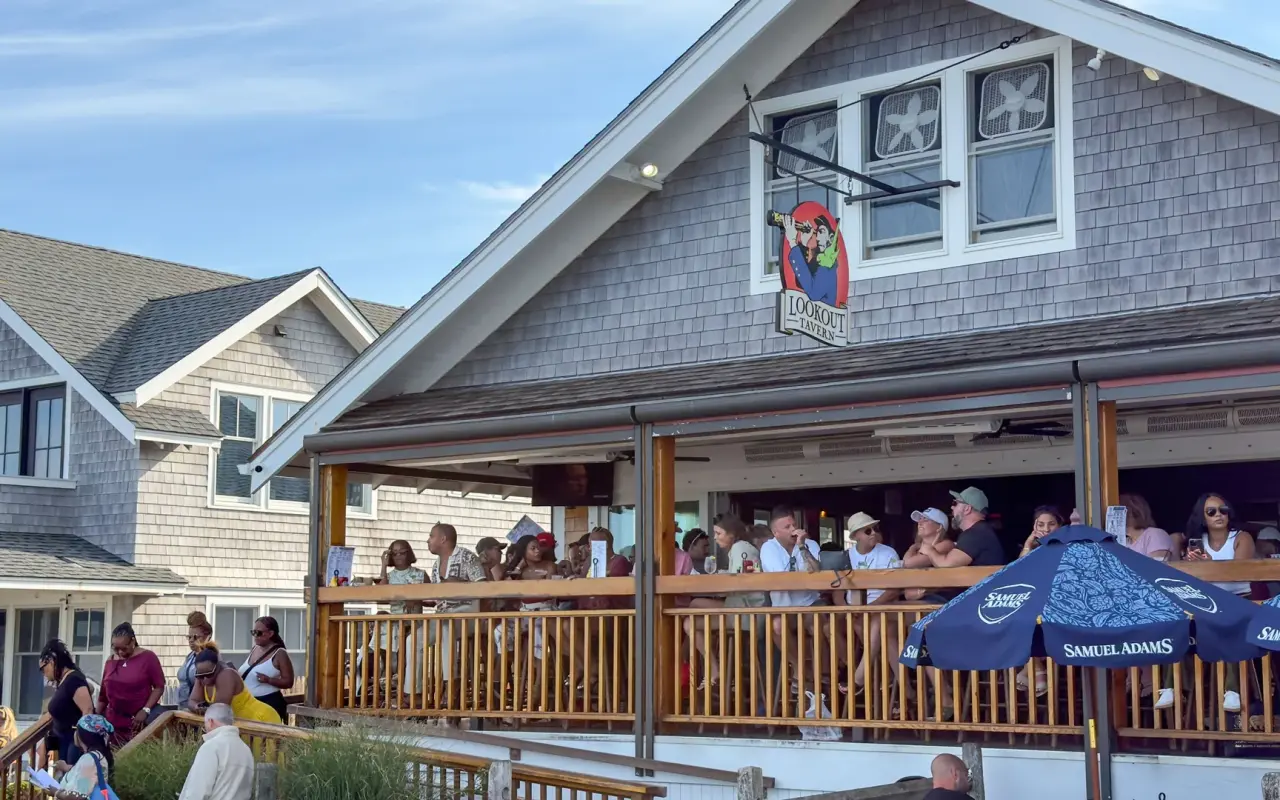
Oak Bluffs · a harbor restaurant in AugustPhoto by MV Vacation
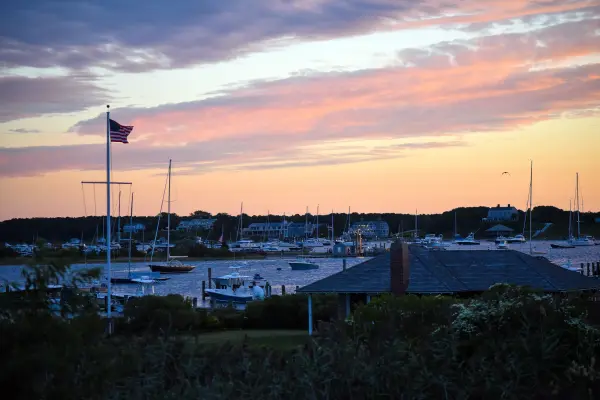
A harbor restaurant in full August swing. The kitchen and the floor are a mix of islanders, American college students and J-1 workers, and it does not run without all three.
Before you book a bed
Where to Stay on Martha’s Vineyard, free
Every town and price band, with the booking rules nobody publishes. Free with the island letter, together with our Beach, Fall and What It Really Costs guides.
One-click unsubscribe, and we never share your email.
Who the H-2B workers are
The second program is H-2B, the seasonal non-agricultural work visa. It is not for students and it is not a cultural exchange: it brings adults, many of whom return to the same employer for years, for a season of work in hotels, restaurants, landscaping and housekeeping. On the Vineyard the H-2B workforce is heavily Jamaican, and the island received at least 138 H-2B workers in 2022 according to the Gazette, nearly all in hospitality. The program has a national cap that Congress and the Department of Homeland Security adjust most years, which is why every spring the island papers carry a story about whether the summer's workers will be allowed in on time. When the cap is tight, restaurants open with shorter hours and hotels close floors; when it is loosened, as it was for 2023, the season runs smoother.
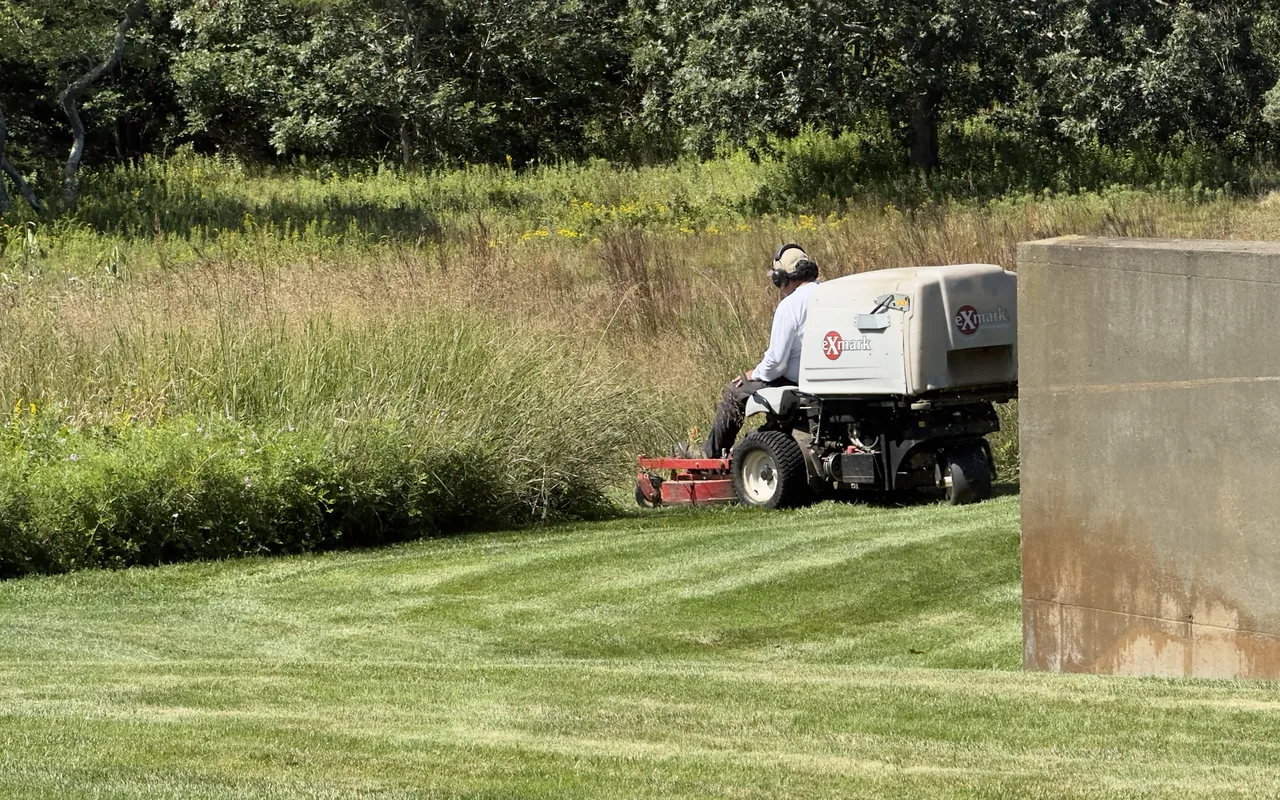
The island · a meadow edgePhoto by MV Vacation
Mowing the line between lawn and meadow. Landscaping was the first trade the island's Brazilian community built in the 1980s, and it still runs on seasonal crews.
Where they live, and why it is the hard part
For island businesses the limit is beds, not customers. About 60 percent of the island's housing sits empty or is used less than two months a year, a one-bedroom rents for around $3,000 a month in season, and the Commission calculated in 2025 that a household earning $168,000 could not afford to buy a home here. Seasonal workers land in the middle of that. Employers rent dormitory-style houses, some hotels keep staff quarters, and a few large seasonal lodgings have housed eighty to a hundred students at a time in bunk rooms at more than $200 a week per person, arrangements that the town health inspectors and the Times have looked at closely and that have improved under pressure. A student's summer is often four to a room, a bike to work, and two jobs. The owner of a Vineyard Haven cafe told the Times that housing is the single biggest problem her business faces; the president of the Oak Bluffs business association put it as plainly: the island needs the staff and has insanely limited housing.
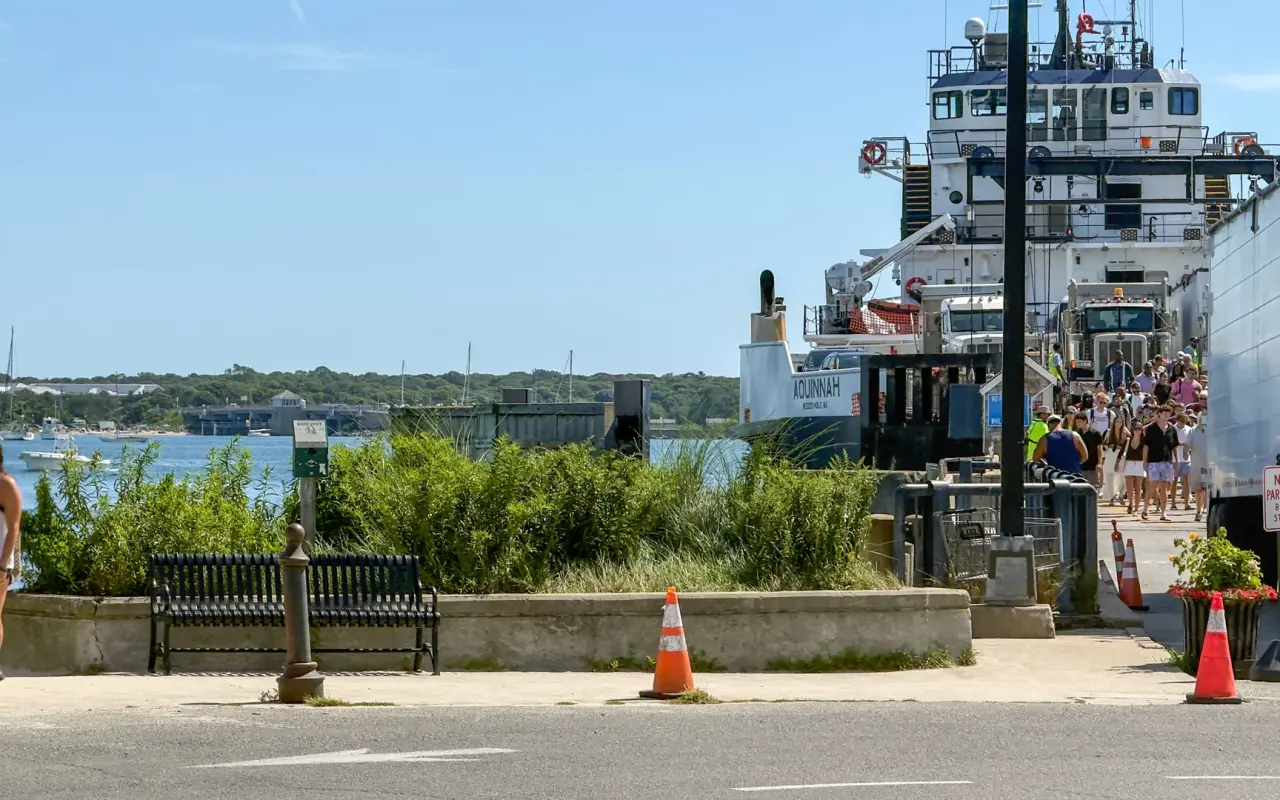
Vineyard Haven · the ferry, summerPhoto by MV Vacation
The boat unloading in Vineyard Haven. In May the same gangway brings the summer workforce; in late August it takes the students home, a week before the visitors leave.
The year-round community you are also meeting
Not everyone with an accent is here for the summer. Brazilians make up roughly a fifth of the island's year-round population, Portuguese is the island's second language, and about 40 percent of children in the public schools speak Portuguese at home, according to the county's health assessment and the Boston Globe. That community started arriving in the 1980s, first in landscaping and construction and housekeeping, and now owns restaurants, markets, bakeries and building firms across the island; both island newspapers translate their websites into Portuguese. The Brazilian bakery on Beach Road, the Caribbean grocer around the corner, the landscaping crew at the rental house: those are your neighbors for the week, not summer help, and our Vineyard Haven guide and grocery guide point to several of their businesses by name. The island's older Portuguese story is told every July at the Feast of the Holy Ghost.
Getting to work without a car: the free bus and the live map
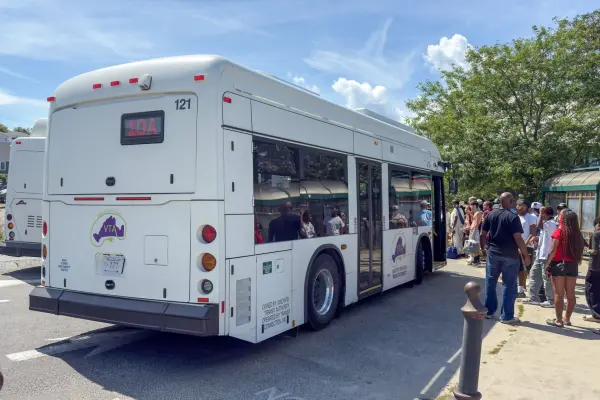
Almost no seasonal worker has a car here, and for once that is fine. The Vineyard Transit Authority runs buses to all six towns, the buses meet the ferries, every ride is fare-free through June 30, 2027, and most buses carry two or three bikes on the front rack (if it is full, your bike waits for the next bus, since bikes never ride inside). The thing to know on day one is the VTA’s live map at vta.mytransitride.com: it shows every bus on the island in real time and the predicted arrival at your stop, so a shift that ends at 10:40 does not become an hour on a bench. It is a website rather than an app, so it works on any phone in any language; it is worth bookmarking or adding to your home screen the first evening. Two warnings for 2026: the latest evening trips on Routes 3, 4, 5, 7, 8 and 11 were canceled for the season because of a driver shortage, and the printed brochures still show them, so trust the live map and the individual route timetables, and check the last bus home before you accept a closing shift up-island. Our VTA bus guide has every route, the How to Get There by Bus page gives step-by-step trips from each town, the taxi guide covers the nights the bus has stopped, and the bike guide is the other half of most workers’ commute. If you are one of them, our practical guide for seasonal staff has the Social Security sessions, the laundromats, the cheap bikes and the free days off.
What it means for your trip
Mid-August is the turn. The J-1 students must be home before their universities start, so from about the second week of August the workforce thins while the visitors are still here. Slower service and shorter hours in late August are not rudeness; many of the staff have gone home for the start of their term. Our after Labor Day guide explains what closes when.
Tips matter, and cash is best where you can. Massachusetts lets restaurants pay servers a base of $6.75 an hour with tips making up the rest. For a student working two jobs to bank a year's salary in twelve weeks, the tip is the wage. Twenty percent at a table, a dollar or two at a counter.
Most students are glad to be asked where they are from; that is the cultural exchange half of the program. You will learn more about Croatia in five minutes at a fudge counter than in a guidebook.
July takes patience. A restaurant with a line and an empty section is not being difficult; it is out of staff, or out of housing for staff. The rules and etiquette guide covers the rest of island manners.
Takeout and delivery take longer. From late June to Labor Day the island's kitchens run at capacity every night, and in our experience a takeout or delivery order that would take fifteen minutes in a mainland town routinely takes thirty to forty-five here, sometimes longer on a Friday or Saturday. It is a small staff cooking for a town five times its size. It helps to order before you are hungry, leave room between a pickup and a ferry departure, and tip the runner who brings it to the door.
For anyone thinking of working here: American students find summer jobs through the island's businesses directly, usually with housing as the deciding question; the seasonal-housing scramble is real, so winter is the time to start. International students go through a State Department sponsor, never through a business directly.
At a glance
Year-round population
About 20,000
Summer visitors
100,000 and up, depending on the estimate
J-1 students on the island
About 650 in 2025 (Martha's Vineyard Times)
J-1 rules
Full-time university students; up to 4 months; minimum wage; no 10 pm to 6 am shifts; sponsor arranges job and housing
H-2B workers
Adults, seasonal, many returning yearly; at least 138 in 2022, mostly hospitality, largely from Jamaica
Where from
Croatia, Serbia, Bulgaria, Kazakhstan, Ghana, Jamaica, and elsewhere
Year-round immigrant community
Brazilians about 20 percent of residents; Portuguese the second language
When they leave
Students from mid-August; H-2B workers with the season
How we checked this
Program rules are from the State Department's Summer Work Travel pages. The 2025 J-1 count, the housing figures, the wage figures and the business owners' comments are from the Martha's Vineyard Times' reporting on the seasonal economy in May 2026; the H-2B numbers and the employers' hiring from the Vineyard Gazette; the Brazilian community figures from the Boston Globe and the Dukes County health assessment. Visa policy changes year to year at the federal level, so the counts will move.
Frequently Asked Questions
Why are there so many international students working here?
Arithmetic. About 20,000 people live on the island year-round and the summer population multiplies; thousands of seasonal jobs open in May and there is nowhere near enough local labor or housing to fill them. In 2025 that meant about 650 J-1 students plus several hundred H-2B workers, American college students and the year-round immigrant community.
What is a J-1 student?
A full-time university student in their home country on the State Department’s Summer Work Travel cultural exchange, allowed to work in the United States for at most four months during their summer break before going home for their own term.
Are they protected?
Sponsoring agencies must arrange the job in advance, make sure pay meets federal and state minimum wage, arrange suitable housing and transport and check in every month. The rules ban overnight shifts between 10 pm and 6 am, commission-only work, domestic help, factories and construction.
Where do they come from?
Serbia, Croatia, Bulgaria, Kazakhstan, Jamaica and Ghana among others for the J-1 program, and the Caribbean for many H-2B workers, alongside a year-round community with roots in Brazil.
Island tip of the dayShoppingNo. 31 of 86New tip at midnight, island time
The Chappy Ferry costs $5/person round-trip and $17 for a car with driver. Cards work at the Edgartown-side kiosk; bring cash for the boat itself.
Useful?
More on
Four free downloads · 2026 editions
Four island guides, in your inbox
The Beach Guide (all 20 beaches decoded), The Vineyard in the Fall, the season date by date, Where to Stay, every town and price band, and What It Really Costs, the 2026 budget line by line. All four PDFs free, plus a short island letter when there is something worth telling. No schedule, no spam.
No spam, unsubscribe in one click. Want a look first? See what you get.
First email ever from us? Give it a minute, and peek in spam once.
Disclaimer: The information in this article is provided for general guidance only and was accurate at the time of writing. Beach conditions, hours, prices, lifeguard schedules, ferry fares, and business operations change frequently and without notice. Ocean swimming carries inherent risks including rip currents, undertow, and cold water shock. Always verify current conditions with official local sources before your visit. MV Vacation assumes no responsibility for any loss, injury, or inconvenience resulting from the use of this information. Swim only where lifeguards are on duty, supervise children at all times near water, and follow all posted safety signs.
A guide to Martha's Vineyard, written on the island: beaches, dining, events and island living. We write down what we know about the island so your trip goes the way you hoped.
Martha's Vineyard with teenagers: the free buses and 35 miles of bike path that let them roam, surf lessons, the night glow kayak, jet ski tours, the arcade and mini golf open late, the Jaws locations, Chappaquiddick by bike, the Derby's junior division, the free outdoor music, and the honest notes on ticks, surf, mopeds, the last bus and the rules a rental house lives by.
Martha's Vineyard with a baby or toddler: rent the crib, stroller and car seat from the island service instead of packing them, the three calm beaches with somewhere to change (Owen Park first), the alpacas, the free farm, the platform carousel, a nap-proof day, the town to sleep in, and the honest cautions on ticks, surf and the hospital.
A family reunion on Martha's Vineyard: what a whole-family house costs with the 11.7 percent tax and cleaning fee, why bedrooms decide how many it sleeps, the cheaper alternatives, walking twenty people onto the ferry instead of bringing cars, feeding the group, the one restaurant night to book a year out, and the free week.
Martha's Vineyard for seniors and slower travelers: the level towns (Oak Bluffs and Vineyard Haven, not Edgartown's brick), the free kneeling buses and the Lift, the ferry's elevators, the beaches with mats and beach wheelchairs, the hotels with lifts, the museum, Felix Neck and Mytoi, the island bus tour, and what we would not pretend is easy.
The practical guide for J-1 students, H-2B workers and summer staff on Martha's Vineyard: Social Security sessions at the Oak Bluffs Library, the free bus and its live map, the two laundromats (yes, one is by the airport), cheap bikes, groceries, Wi-Fi, pay rules, health, food help if money runs short, and free days off. Checked September 2026.
The Martha's Vineyard honeymoon guide from a local: the best month to come (September), the eight inns that are actually romantic with 2026 rates, a five-day plan from Edgartown to the Aquinnah cliffs, the dinners worth a Resy reservation, the catboat and tall-ship sails, the dry-town bottle rule, and a worked budget for five nights.
Subscribe
The free island library · 2026
One short island letter, and all four guides to start
Beach reports, events worth a day, ferry heads-ups. Sent when there is something worth telling. The Beach Guide, The Vineyard in the Fall, Where to Stay and What It Really Costs arrive with your welcome email.
The Beach Guide, The Vineyard in the Fall, Where to Stay and What It Really Costs. No spam, one-click unsubscribe.
We use cookies for trip planning, site stats and ads, including ads based on your browsing. To opt out, turn on Global Privacy Control in your browser. Cookie policy
These cookies are essential for the website to function properly.
These cookies help us understand how visitors interact with the website.
These cookies are used to deliver personalized advertisements.