Travel advisoryStorm Warning on the ferry waters from Fri 2 AM to Sat 8 PM · Steamship Authority travel advisory · High Wind Warning for Martha's Vineyard from Fri 8 AM to Sun 2 AMThe Steamship Authority is continuing to monitor the forecast for the upcoming nor'easter that is expected to have significant effects for Cape Cod and the Islands through Sunday, September 27. On the Woods Hole-Martha's Vineyard route, diversions from Oak Bluffs to Vineyard Haven are extremely likely. We are expanding the waiver of change and cancellation fees for travel, which are now available for travel scheduled for Thursday, September 24, through Sunday, September 27.Steamship Authority · checked 7:00 PM ET
By MV VacationUpdated 22 Sep, 2026Facts checked Aug 28, 202610 mins read 1,465 views
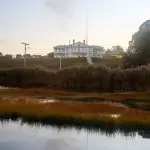
Cedar Tree Neck · the north shorePhoto by MV Vacation
The trails come out at a stony beach on Vineyard Sound, looking straight across to the Elizabeth Islands. Swimming is discouraged, but the view earns the walk.
Cedar Tree Neck Sanctuary: about 400 acres of bluffs, forest trails, and rocky shoreline in West Tisbury. Free admission, open year-round.
Cedar Tree Neck is Martha's Vineyard's most ecologically diverse sanctuary: about 400 acres of glacial bluffs, freshwater ponds, wind-sculpted forests, and rocky Vineyard Sound shoreline, all free and open to the public year-round. This north-shore preserve in West Tisbury owes its existence to Henry Beetle Hough, the longtime editor of the Vineyard Gazette, who as a boy explored these woods and later spent decades fighting to protect them. Today, managed by Sheriff's Meadow Foundation, it has one of the island's best short hikes: a 1.4-mile loop through oak-beech forest, cranberry bogs, a turtle pond, wind-sheared coastal heath, and bluffs overlooking the Elizabeth Islands.
Filmed April 2024The island moves on: shops, signs and prices may differ from what you see here. The text of this guide was checked September 2026.
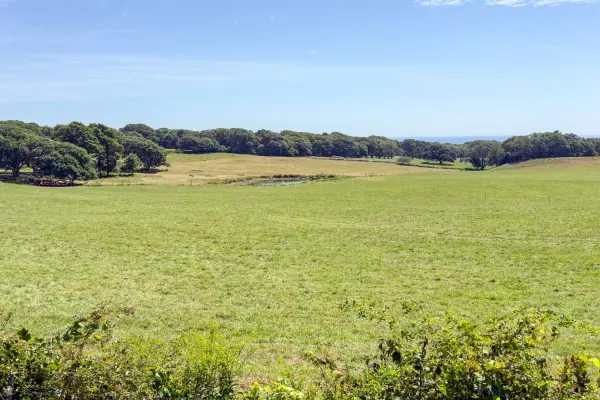
Cedar Tree Neck is, true to its name, an actual "neck," a narrow peninsula of elevated land jutting north into Vineyard Sound. The promontory was created roughly 23,000 years ago when the Buzzards Bay Lobe of the Laurentide ice sheet deposited its terminal moraine, leaving behind the hilly terrain and massive glacial erratic boulders that define the landscape today. Henry Beetle Hough described it as "almost islanded itself by a large pond just to the west and a smaller pond and marsh in front and the deep bend of the sound on both sides."
The sanctuary spans about 400 acres, the figure on Sheriff's Meadow Foundation's own property page. The Wampanoag name for this place is Squemmechchue, derived from a word for cranberries, not cedars. The English name "Cedar Tree Neck" dates to at least 1718. The cedars in question are Eastern red cedars (Juniperus virginiana), technically junipers, which colonized former pastureland and remain prominent throughout the property.
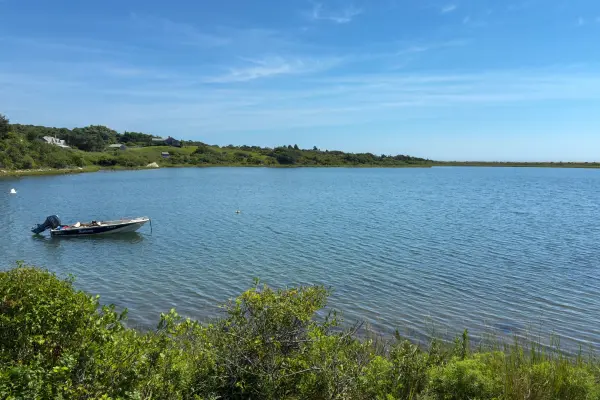
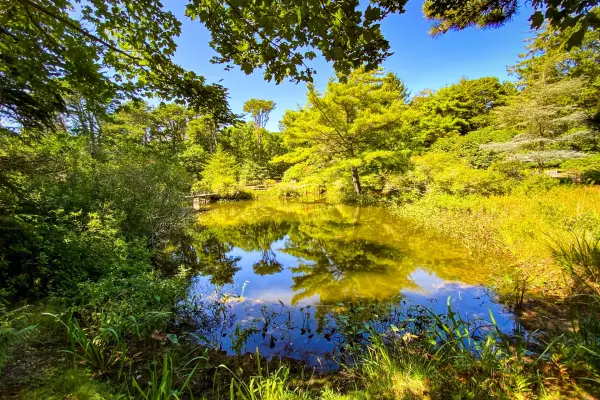
Three bodies of water define the sanctuary's character. Vineyard Sound crashes against the rocky northern shoreline. Cedar Tree Neck Pond (also called Daggett Pond) sits behind the beach. And Ames Pond, a smaller woodland pond deeper in the property, is where visitors find painted turtles sunning on logs. Several streams, a small waterfall, cranberry bogs, and a vernal pool named Lake Elizabeth (by Hough, in honor of his wife) add to the freshwater network.
What the Trails Are Actually Like
Cedar Tree Neck · the trailsPhoto by MV Vacation
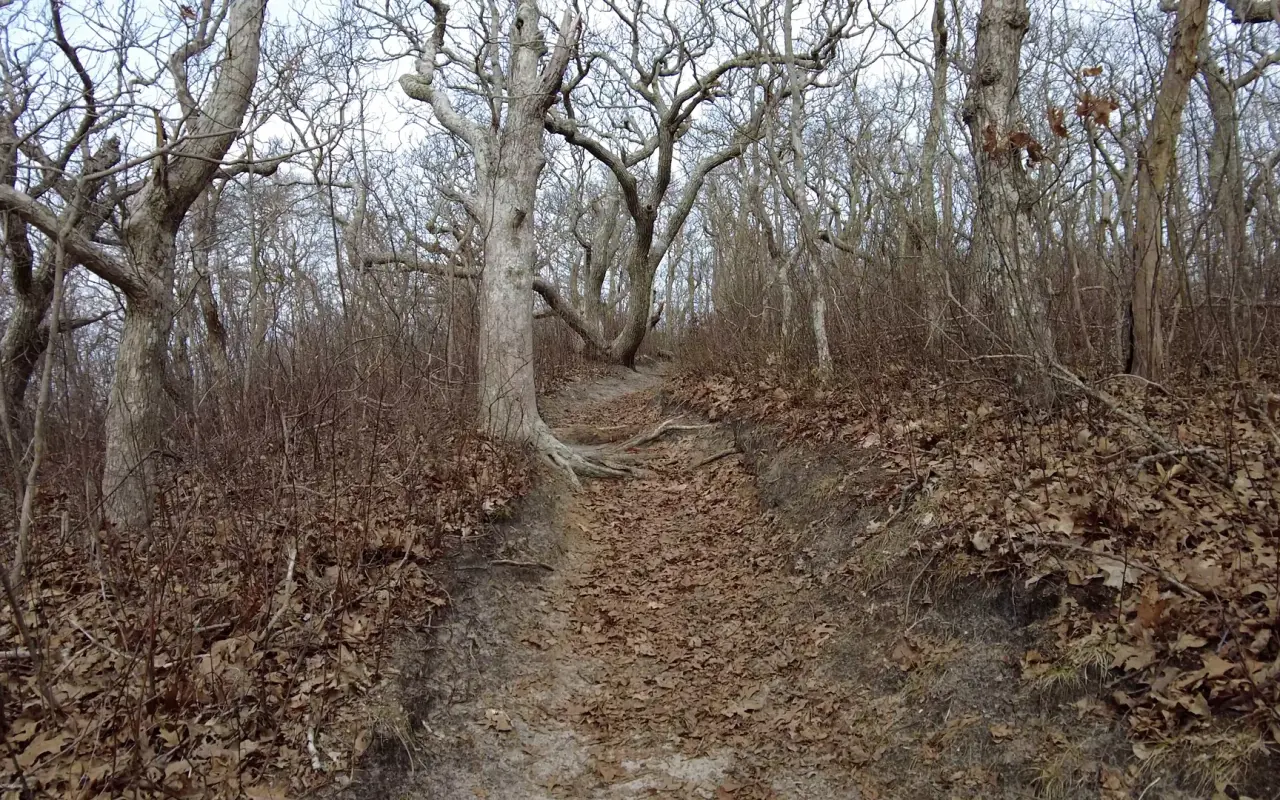
The wooded trails at Cedar Tree Neck, soft underfoot and rarely crowded.
The sanctuary's trail system is color-coded and well-marked, with several trails carrying memorial names honoring the families and conservationists who donated the land. The most popular route (confirmed at 1.4 miles as a true loop on AllTrails, with 121 feet of elevation gain, rated "Easy," averaging 30–60 minutes) combines the White, Yellow-Blue, Neighborhood, Blue, and Maria Daggett Trails from the main Daggett Trailhead.
The actual named trails are:
Bruce Irons Trail: an educational trail from the main parking area with a downloadable habitat commentary guide
Obed Sherman Daggett Trail: loops around the elevated neck, with Vineyard Sound on one side and Cedar Tree Neck Pond on the other
Maria Daggett Trail: follows the shores of Cedar Tree Neck Pond
Bill Bridwell Trail: traverses the bluff area with water views through the trees
Elinor Moore Irvin Trail (Green Trail): a 2-mile connector from Indian Hill Road through undulating woodlands
Orange Trail: from the Taylor Gate trailhead, descending past old cranberry bogs, stone walls, and a small waterfall (~1.5 miles to the beach)
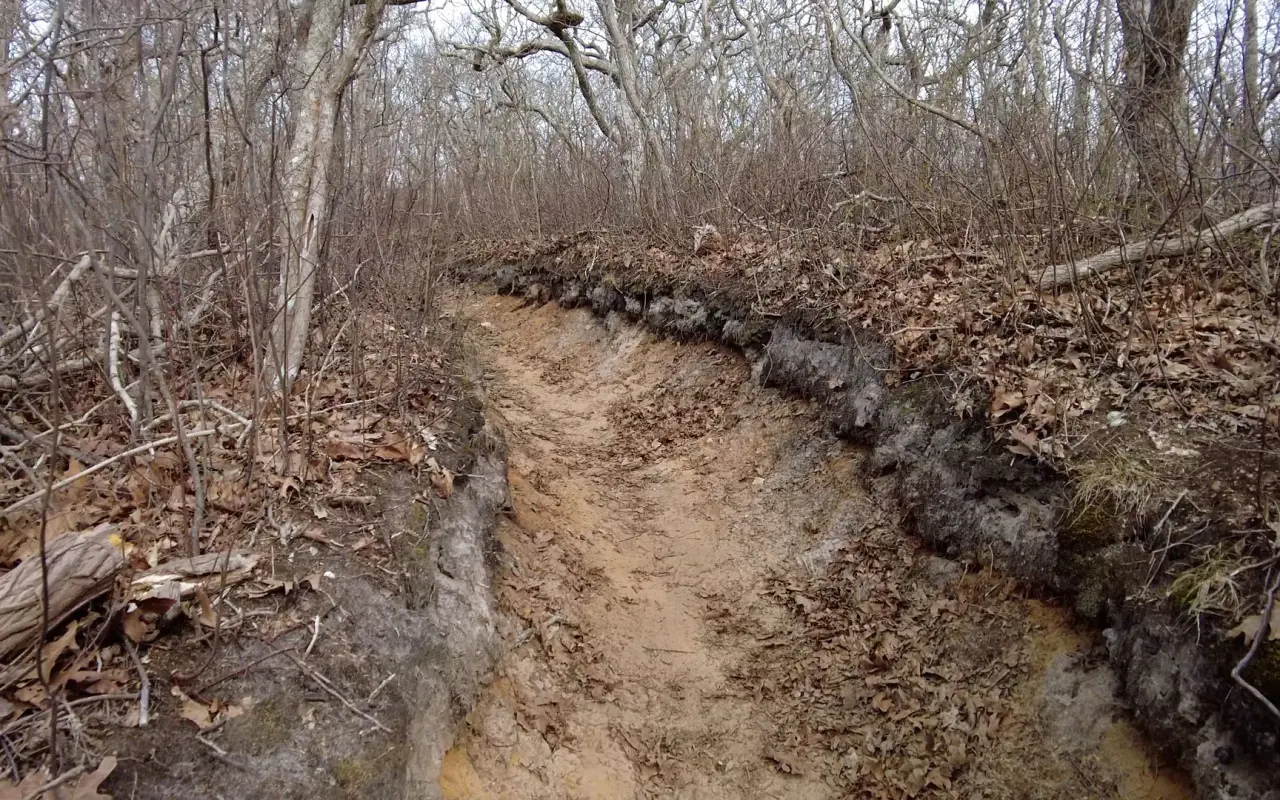
Underfoot conditions vary considerably. Expect packed dirt with exposed tree roots and rocks through the forest; boardwalks over wetland sections; heavy sand near the beach; and tumbled boulders along the shoreline. The route is broadly family-friendly (AllTrails reviewers describe it as "good for kids"), but it is not stroller-accessible, and anyone unsteady on roots and rocks should expect uneven footing.
GPS coordinates for the Daggett Trailhead parking lot: 41.4327°N, 70.6962°W.
The island letter
Three island guides, free on arrival
The Beach Guide, The Vineyard in the Fall and Where to Stay, plus a short letter from the island when there is something worth telling.
One-click unsubscribe, and we never share your email.
Bluffs, Beach, and the Elizabeth Islands View
West Tisbury · Cedar Tree NeckPhoto by MV Vacation
Cedar Tree Neck is a tangle of glacial hills and ponds on the north shore, threaded with trails that the Sheriff’s Meadow Foundation keeps wild and free to walk.
The heart of Cedar Tree Neck is the neck itself, a wind-battered glacial bluff with strikingly different characters on each side. The inland flank features what MV Times writer Jonathan Burke called "a magical canopy of bent and crooked trees," dense and sheltered. The seaward face is exposed, with grasses and stunted American beeches sculpted by relentless wind. The trail gains about 120 feet over the loop.
West Tisbury · the north shorePhoto by MV Vacation
What the Sound leaves under the bluffs: a whole tree, a paddleboard that lost its owner somewhere up the coast, and the stones that make this a beach for walking rather than swimming.
From the bluff, Vineyard Sound stretches north with the low-lying Elizabeth Islands, particularly Naushon Island, clearly visible across the water. Cedar Tree Neck Pond gleams below to the west.
A rocky beach is accessible at the base of the bluffs, often empty. However, swimming, sunbathing, picnicking, and fishing are all prohibited. The beach hosts nesting terns and piping plover (a federally threatened species), and the rocky coastline with strong Vineyard Sound currents presents safety concerns. This is a sanctuary first: a place to observe, not recreate.
Henry Beetle Hough: The Editor Who Saved the Land
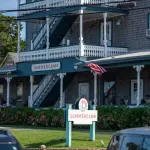
Cedar Tree Neck · the donorsPhoto by MV Vacation
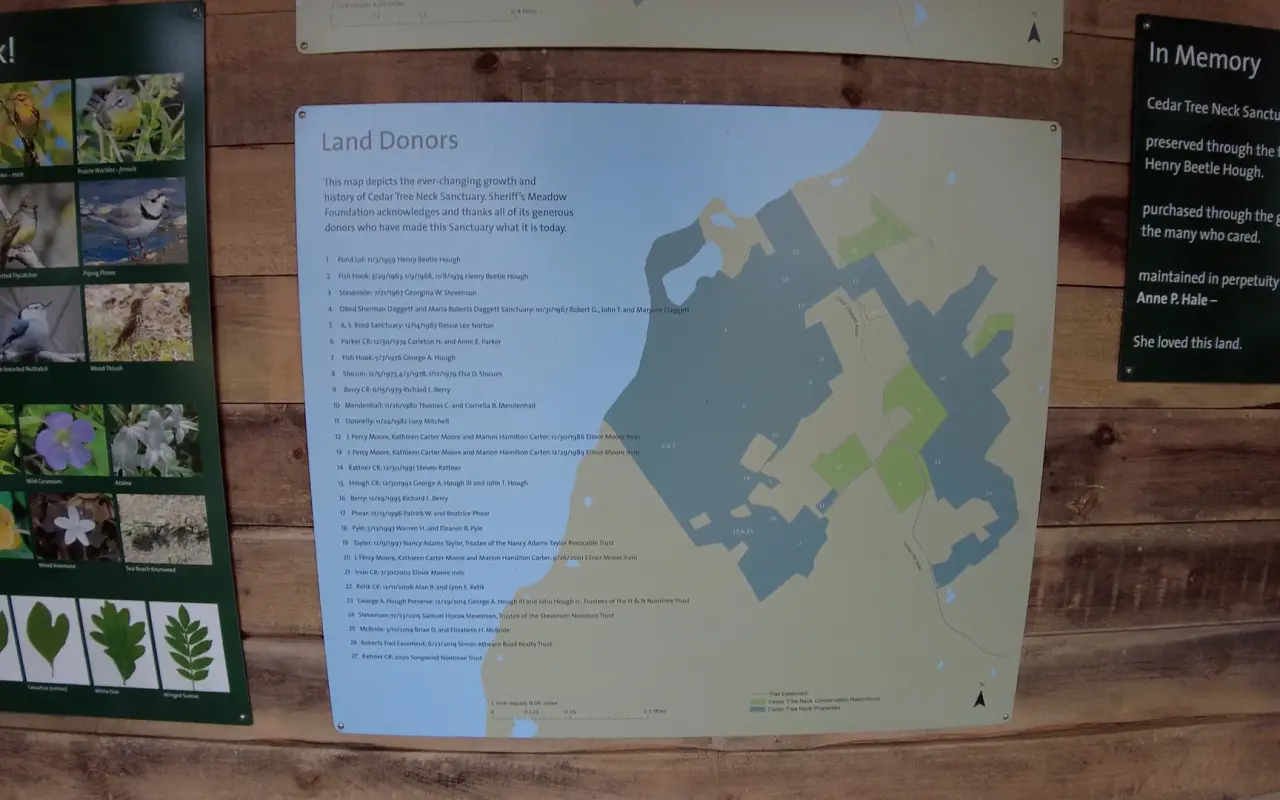
The land donors remembered at the sanctuary entrance. This preserve exists because people gave it away.
Henry Beetle Hough (1896–1985) is the single most important figure in Cedar Tree Neck's history. Born in New Bedford, he grew up visiting the Vineyard, where his family owned a property called "Fish Hook" on the north shore near Cedar Tree Neck. He graduated from Columbia University's Graduate School of Journalism in 1918, winning the Pulitzer Prize for Newspaper History at age 21.
At Columbia he met Elizabeth Bowie, and their 1920 marriage came with an extraordinary wedding gift: Hough's father purchased the Vineyard Gazette for them. Henry and Betty ran the paper together for 48 years (1920–1968), growing circulation from 600 to 13,000 subscribers and transforming it into one of America's most respected community newspapers.
In the mid-1960s, Hough partnered with Allen H. Morgan of Massachusetts Audubon to orchestrate a public campaign to buy 100 acres from the Daggett family. The Hough family donated 60 acres of their adjacent Fish Hook property. Total Hough family donations now exceed 93 acres. His founding of Sheriff's Meadow Foundation, which now protects over 3,500 acres across 75 preserves on the island, remains one of the most consequential conservation legacies in New England.
Wildlife Worth Watching For
The mix of habitats draws a long list of species. Osprey nest at the sanctuary and can be seen soaring above the grassy dunes. Piping plover, a federally threatened species, have been spotted along the beach. The forest harbors downy woodpeckers, chestnut-sided warblers, cedar waxwings, and potentially the worm-eating warbler, which doesn't nest anywhere else on the Vineyard.
Ames Pond is the place to see painted turtles. Visitors in spring and summer will find them sunning on floating logs, alongside snapping turtles and peeping tree frogs. The forest canopy includes oak, American beech, maple, sassafras, and black gum (locally called "Beetlebung" trees). Wildflowers include the brilliant blue starflower (state-notable), wild sarsaparilla, and jack-in-the-pulpit.
Be aware: ticks are a serious concern on Martha's Vineyard. Three species are present, including the Lone Star tick which has reached epidemic proportions: from 2 positive Alpha-Gal Syndrome cases in 2020 to 523 in 2024. Treat clothing with permethrin and conduct thorough tick checks after every visit. Poison ivy is also widespread along trails.
Everything You Need to Know Before Visiting
Hours: 8:30 AM to 5:30 PM daily. Admission: Free. Dogs: Allowed, must be leashed. Restrooms: Portable toilet at the Daggett Trailhead. Swimming, picnicking, sunbathing, and fishing are prohibited.
Parking at the main Daggett Trailhead is a medium-sized unpaved lot with approximately 11 spaces. On peak summer days, spaces can fill.
West Tisbury · Daggett trailheadPhoto by MV Vacation
The trail map at the trailhead, posted by Sheriff’s Meadow Foundation.
Driving from the Vineyard Havenferry terminal takes about 10–15 minutes over roughly 5 miles. Take State Road west, veer right onto Indian Hill Road for 1.75 miles, then turn right onto Obed Daggett Road and follow "Sanctuary" signs for 1 mile to the parking area. Indian Hill Road is paved. Obed Daggett Road is unpaved, narrow, and bumpy, wide enough for only one car, with turnouts.
Public transit does not reach the sanctuary directly. VTA Route #3 runs from the Vineyard Haven terminal to West Tisbury, but the closest stop leaves you roughly 2.75 miles from the trailhead. The VTA is currently fare-free through June 30, 2027.
Best Time to Visit
Spring (May–June) brings migratory warblers, wildflowers, and active painted turtles at Ames Pond. Summer has the most going on (osprey, nesting shorebirds, full canopy), though the sanctuary remains notably less crowded than the island's popular beaches. Fall offers excellent foliage from the oak, maple, beech, and cedar mix. Winter means empty trails, woodpecker calls, and a bare, wind-scoured shore.
Seasonal beach closures for nesting terns and piping plover typically run April through August, with fenced-off nesting areas. The trails themselves remain open year-round.
Nearby Destinations
Lake Tashmoo Town Beach is roughly 3–4 miles east (~10 minutes driving), offering swimming in both Vineyard Sound and the sheltered lake, a natural companion for a half-day itinerary. West Tisbury village center, home to Alley's General Store (operating since 1858), is about 3 miles south. Long Point Wildlife Refuge, The Trustees' 600-acre south-shore preserve with a swimmable beach, is roughly 8–10 miles away. Menemsha, the fishing village, is a similar distance west.
Cronig's Market (Up-Island location) sits right at the State Road/Indian Hill Road junction, right at the turnoff to the sanctuary. Polly Hill Arboretum, a 72-acre public garden on the National Register of Historic Places, is just 2–3 miles from the Cedar Tree Neck turnoff.
Cedar Tree Neck is not Martha's Vineyard's biggest preserve or its most famous, but it may be its most complete: a single 1.4-mile loop that moves through more habitat types than most visitors see in a full week on the island. About 400 acres, free, open year-round (8:30 AM–5:30 PM), dogs on leash, no swimming, 5 miles from the Vineyard Haven ferry.
Frequently Asked Questions
How do I get to Cedar Tree Neck?
Drive about 5 miles from the Vineyard Haven ferry, 10 to 15 minutes: State Road west, right onto Indian Hill Road for 1.75 miles, then right onto Obed Daggett Road and follow the Sanctuary signs for a mile. The last stretch is unpaved and one car wide. No bus reaches the trailhead; the nearest VTA stop in West Tisbury is about 2.75 miles away.
Is there parking, and does it cost anything?
Admission is free. The Daggett Trailhead lot is unpaved with roughly 11 spaces, and it can fill on peak summer days, so come early or late. The sanctuary is open 8:30 AM to 5:30 PM daily, year-round, with a portable toilet at the trailhead.
Are dogs allowed?
Yes, on a leash. Keep them leashed on the beach especially, because terns and piping plover nest there and parts of the shore are fenced off from April through August. More dog-friendly spots are in our pet-friendly guide.
Can I swim at the beach?
No. Swimming, sunbathing, picnicking and fishing are all prohibited on the rocky Vineyard Sound shore, both for the nesting birds and because the currents are strong. For a swim afterward, Lake Tashmoo Town Beach is about 10 minutes east; see our Lake Tashmoo guide.
How long is the hike, and is it OK for kids?
The main loop is 1.4 miles with about 120 feet of climbing, rated easy and taking 30 to 60 minutes. Kids do fine on it, but it is not stroller-friendly: expect roots, rocks, boardwalks and deep sand, so wear real shoes.
What should I bring?
Closed shoes, water and bug protection. Ticks are a serious problem on the island, so treat clothing with permethrin, stay on the trail, and do a full tick check afterward; poison ivy lines the paths too. Read our tick safety guide first.
AUDIOIsland soundscapesEight field recordings: summer nights, crickets and birdsong, about ninety minutes. It keeps playing while you read on.→
Island tip of the dayTransportNo. 9 of 86New tip at midnight, island time
For real-time bus tracking, use vta.mytransitride.com or download the Transit App. Set these up before arriving. They show live bus locations and estimated arrivals.
Useful?
More on
Four free downloads · 2026 editions
Four island guides, in your inbox
The Beach Guide (all 20 beaches decoded), The Vineyard in the Fall, the season date by date, Where to Stay, every town and price band, and What It Really Costs, the 2026 budget line by line. All four PDFs free, plus a short island letter when there is something worth telling. No schedule, no spam.
No spam, unsubscribe in one click. Want a look first? See what you get.
First email ever from us? Give it a minute, and peek in spam once.
Disclaimer: The information in this article is provided for general guidance only and was accurate at the time of writing. Beach conditions, hours, prices, lifeguard schedules, ferry fares, and business operations change frequently and without notice. Ocean swimming carries inherent risks including rip currents, undertow, and cold water shock. Always verify current conditions with official local sources before your visit. MV Vacation assumes no responsibility for any loss, injury, or inconvenience resulting from the use of this information. Swim only where lifeguards are on duty, supervise children at all times near water, and follow all posted safety signs.
Your insider guide to Martha's Vineyard: beaches, dining, events, and island living. We write down what we know about the island so your trip goes the way you hoped.
Joshua Slocum, first to sail alone around the world, spent his last years farming in West Tisbury and vanished from Vineyard Haven harbor in November 1909. The voyage, the farm called Fag End, the last departure, and what a visitor can actually see: the harbor, a marker stone by a country road, the museum's Slocum papers, and the book itself.
Martha's Vineyard's ponds explained: the great ponds sealed behind the south-shore beach and cut open to the sea by hand, the salt ponds with tides and scallops, the freshwater kettle ponds, why cyanobacteria blooms turn some of them green in August and what MV Cyano's colors mean, the nitrogen under the houses, and where a visitor can swim, paddle and watch the cut.
Where Martha's Vineyard's oysters, bay scallops and quahogs come from: the public solar hatchery on Lagoon Pond that turned fifty in 2026, the dozen oyster farms in Katama Bay, Menemsha Pond and Vineyard Sound, the wild beds in the great ponds, the autumn scallop season and its limits, visitor shellfish permits by town, why rain closes a pond, and where to eat them.
Mytoi, the Japanese garden on Chappaquiddick: how to get there on the Chappy ferry, the 15-car lot, hours and admission by season, the pond and bridge, birch walk and camellia dell, the story of Hugh Jones, Mary Wakeman and the rebuild after Hurricane Bob, rules, accessibility and when to go.
Felix Neck Wildlife Sanctuary in Edgartown: the four easy trails and what each passes, the ospreys, the butterfly garden, hours and admission, Mass Audubon's kayak tours and prices, accessibility, the Wampanoag and Smith-farm history, and when to go.
Flying to Martha's Vineyard in 2026: which airlines serve MVY and from where (Cape Air year-round; JetBlue, Delta and American in season; Tradewind from private terminals), what parking costs, and how to get from the terminal to any town by free bus, taxi or rental car.
Subscribe
The free island library · 2026
One short island letter, and all three guides to start
Beach reports, events worth a day, ferry heads-ups. Sent when there is something worth telling. The Beach Guide, The Vineyard in the Fall and Where to Stay arrive with your welcome email.