MV packing list: tick protection (Lyme at 11x state avg), cash for Chappy Ferry, light jacket for July evenings, and what to rent not bring.
It is easy to pack for Martha's Vineyard as if it were a simple beach trip. A few things catch people off guard: Lyme disease here runs about 11 times the statewide rate, cell service gets patchy up-island, the Chappy Ferry takes cash or an island check, no cards, and even July evenings cool into the low 60s. A little planning means less of your trip spent hunting for a pharmacy. Coming in fall, winter or spring? The season-by-season lists below cover those months too.
Warm afternoons, but the evenings can fool you: the sea breeze drops the temperature the moment the sun goes, so a layer comes in handy.
June: highs 74°F, lows 58°F. July and August: highs about 80°F, lows about 64°F (NOAA normals for Edgartown). The breeze off the water makes evenings feel cooler than the numbers. A light jacket earns its place even in July; by 9 PM you'll probably want it, especially at a Menemsha sunset.
By day it's shorts, sundresses and swimwear in breathable fabrics, and white jeans are the island's unofficial uniform. By 7 PM you'll want long sleeves, by 9 PM a windbreaker or fleece. Rain falls on about one summer day in four (NOAA counts about 8 days with rain in July and 9 in August). Summer showers are often brief, though not always, so a packable rain jacket covers it and heavy rain gear can stay home.
In other seasons, May needs a medium jacket (highs 65°F). September packs like summer plus a fleece. October needs a warm layer (highs 64°F). Winter calls for a real coat (January highs 40°F). The full lists are just below.
Packing by season
The island's weather swings more than its beach-town reputation suggests, so it pays to pack for the month. Air temperatures below are NOAA's 1991 to 2020 normals for Edgartown; water temperatures are NOAA's averages for the Sound-side water. For the whole year in one place, see our weather by month guide or best time to visit.
Summer (late June to August)
Highs about 80°F, lows about 64°F, and Sound-side water that passes 65°F in late June and keeps warming through July. Long days, strong midday sun, and nymph ticks active in the grass through July.
Swimsuits, a rashguard, a hat and a water-resistant sunscreen of SPF 30 or higher
A light jacket or fleece for the evenings, and a packable rain shell
The tick kit: permethrin-treated shoes and socks, an EPA-registered repellent, fine-tipped tweezers
Sandals plus one pair of closed shoes for trails
A refillable water bottle and reusable shopping bags
Fall (September to November)
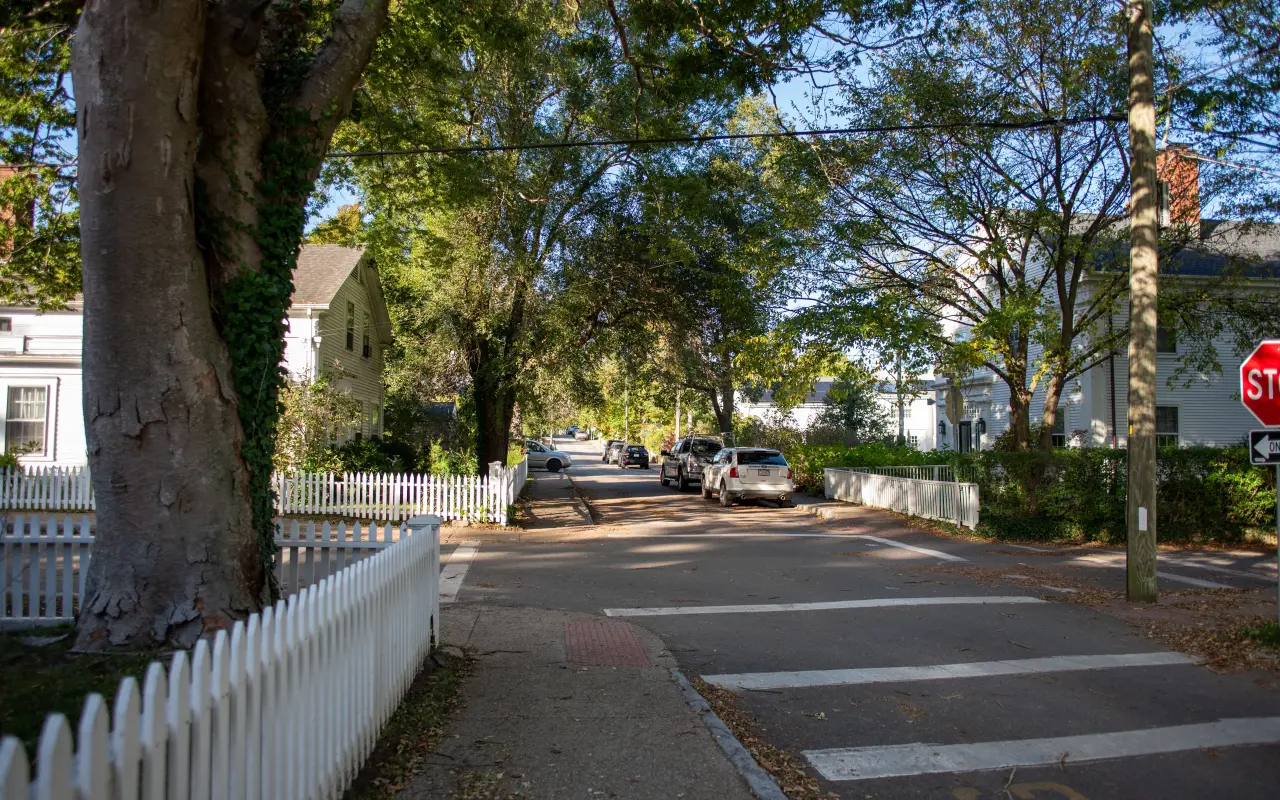
Vineyard Haven · OctoberPhoto by MV Vacation
A sunny October 2025 day on a Vineyard Haven side street, the leaves still mostly green. Fall here is a layers season: warm in the sun, cool in the shade and after dark.
September averages 74°F and 58°F with the water still near 70°F; October 64°F and 48°F; November 54°F and 40°F, with about 11 rainy days and sunsets sliding from about 4:40 to 4:15 PM once the clocks go back on November 1 (2026). The CDC notes adult deer ticks are most active in the fall and early spring, so fall is not a tick-free season, and deer hunting seasons run in the island woods through the fall and into winter.
Layers: a fleece or sweater and a wind- and water-resistant jacket; a warm hat and light gloves by November
Closed, waterproof shoes or boots for wet trails and leaf litter
Tick protection all fall: permethrin on shoes, socks and pants, plus a repellent
Something blaze orange (a hat or a vest) for woods walks in hunting season, which Massachusetts recommends for everyone outdoors, and an orange vest for the dog
A small flashlight or headlamp for the early dark
A swimsuit for September, or for the brave
Winter (December to March)
Edgartown · winter 2026Photo by MV Vacation
An Edgartown street at dusk after a snowfall in winter 2026: plowed snowbanks, white fences half buried and the lamps already lit. Winter here means boots and a real coat.
January averages 40°F and 26°F, and Edgartown's normals put about 9 inches of snow in January and 8 in February, though much of the winter's weather arrives as rain or a mix. Storms sometimes cancel ferry trips, so a little slack in the plan helps.
A warm, windproof coat, hat, gloves and a scarf
Waterproof, insulated boots; traction cleats help on icy mornings
A few extra days of any prescription in case a storm holds the boats (there is no 24-hour pharmacy on the island)
A headlamp: sunset is around 4:15 PM in December
Our seasonal winter guide on the free guides page lists what stays open
Spring (April to mid-June)
April averages 55°F and 40°F, May 65°F and 49°F, and the water is still cold (about 46°F in April and 54 to 55°F in May). From April through July the poppy-seed-size nymph ticks are out looking for a host (CDC), adult ticks are active in early spring too, and fog is most common from May into July.
A medium jacket, a sweater and a rain shell
Waterproof shoes for muddy trails
The full tick kit from the first warm days
A wetsuit if you really mean to swim
For beach days
The Beach Guide, free
All 20 beaches with parking, stickers, lifeguards and dog rules, plus a one-page card for the beach bag. Free with the island letter, together with three more island guides.
One-click unsubscribe, and we never share your email.
Beach gear worth bringing
A proper beach dayPhoto by MV Vacation
A beach day here does not take much: a good towel, water and some shade. The giant cooler can stay home, since most of the rest you can buy or rent on the island.
Don't count on renting a chair or umbrella at the beach itself. It's easier to bring your own or pick up inexpensive gear at Trader Fred's at the Triangle in Edgartown, a value store since 1980 with a beach-gear section. On the Steamship Authority, personal baggage like an umbrella or chairs rides free; bikes and surfboards pay a fare.
A beach wagon is a big help at Moshup Beach (10-min walk from parking) and South Beach (soft sand dunes), and optional at State Beach (roadside parking, short path).
Water shoes make sense at Moshup Beach (rocks) and Menemsha Beach (rocky waterline), and you won't need them at State Beach or South Beach (soft sand).
A boogie board is for South Beach, which faces the open Atlantic and is the island's main body-surfing beach; island shops sell them. The Sound-side beaches (State Beach, Owen Park) have gentle waves, so regular swim gear is all you need there.
Ticks and what to pack for them
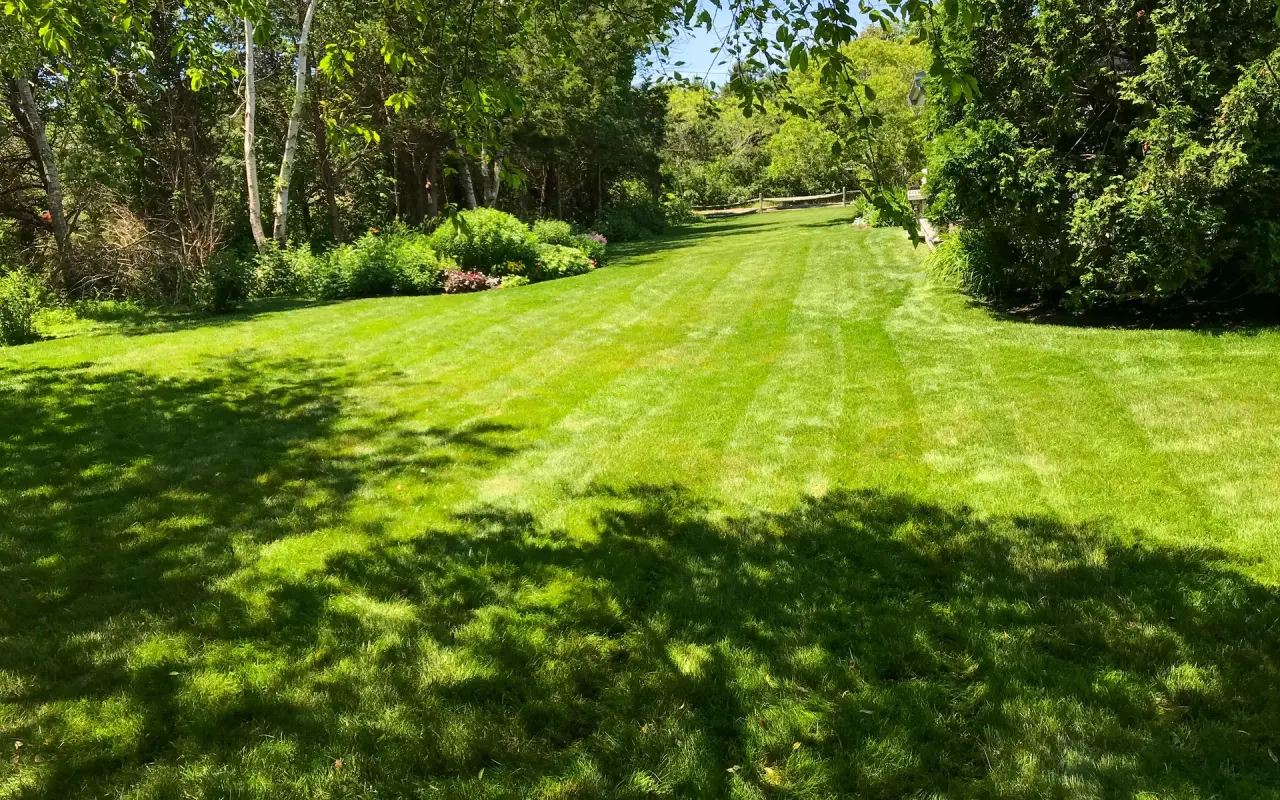
A mown lawn · the safe groundPhoto by MV Vacation
Ticks are the hazard worth planning for here. A mown lawn like this one is low risk; the tall grass and brush along its edges are where they wait. Light colors and a nightly tick check do most of the work.
Dukes County has the highest rate of tick-borne disease in Massachusetts. Using 2020 to 2024 state data, the hospital's 2025 health needs assessment puts Lyme disease on the island at about 11 times the statewide rate, and positive alpha-gal tests at Martha's Vineyard Hospital (the red-meat allergy linked to lone star tick bites) climbed from 2 in 2020 to 742 in 2025.
The tick kit
Permethrin for shoes, socks and pants: in a University of Rhode Island study, people in permethrin-treated sneakers and socks were 73.6 times less likely to get a tick bite than people in untreated footwear. It goes on clothing and gear, never on skin. A spray treatment such as Sawyer's lasts about 6 weeks or 6 washes by the maker's label; factory-treated clothing lasts longer
An EPA-registered repellent for skin: the CDC lists DEET, picaridin, IR3535, oil of lemon eucalyptus (OLE), PMD and 2-undecanone; the EPA's online repellent finder shows how many hours each registered product protects against ticks, and OLE and PMD are not for children under three
Fine-tipped tweezers: the CDC's recommended removal tool
A small zip bag or some tape: to keep a removed tick so it can be identified later (testing options are in our tick guide)
Lint roller: lifts crawling ticks off clothes
Light-colored clothing: makes ticks visible
Unregistered natural sprays fade fast. In a 2024 study in Parasites & Vectors, eleven "minimum risk" tick repellents, mostly plant-based, worked for the first half hour or so, but none still repelled deer tick nymphs from 2.5 hours after application, while the DEET products held at 97 percent or better the whole time. The EPA does not review those products before sale; oil of lemon eucalyptus is the plant-based ingredient on the CDC's list. Ticks are active in every season here: the poppy-seed-size nymphs quest from April through July, adult deer ticks are most active in fall and early spring (CDC), and they can move on mild winter days. They wait in tall grass, brush and leaf litter island-wide, and the lone star tick has spread from Chappaquiddick and Aquinnah to all six towns. Our complete tick safety guide has the rest.
Sun protection
Summer sun here is strong and most beaches have little natural shade. Dry beach sand reflects about 15 percent of UV and sea foam about 25 percent (World Health Organization), so it reaches you from below as well. The American Academy of Dermatology recommends a broad-spectrum, water-resistant sunscreen of SPF 30 or higher, reapplied about every two hours and after swimming, and the CDC notes UV is strongest from 10 AM to 4 PM in daylight saving time. Ears, the tops of feet and the hair part are the spots people miss.
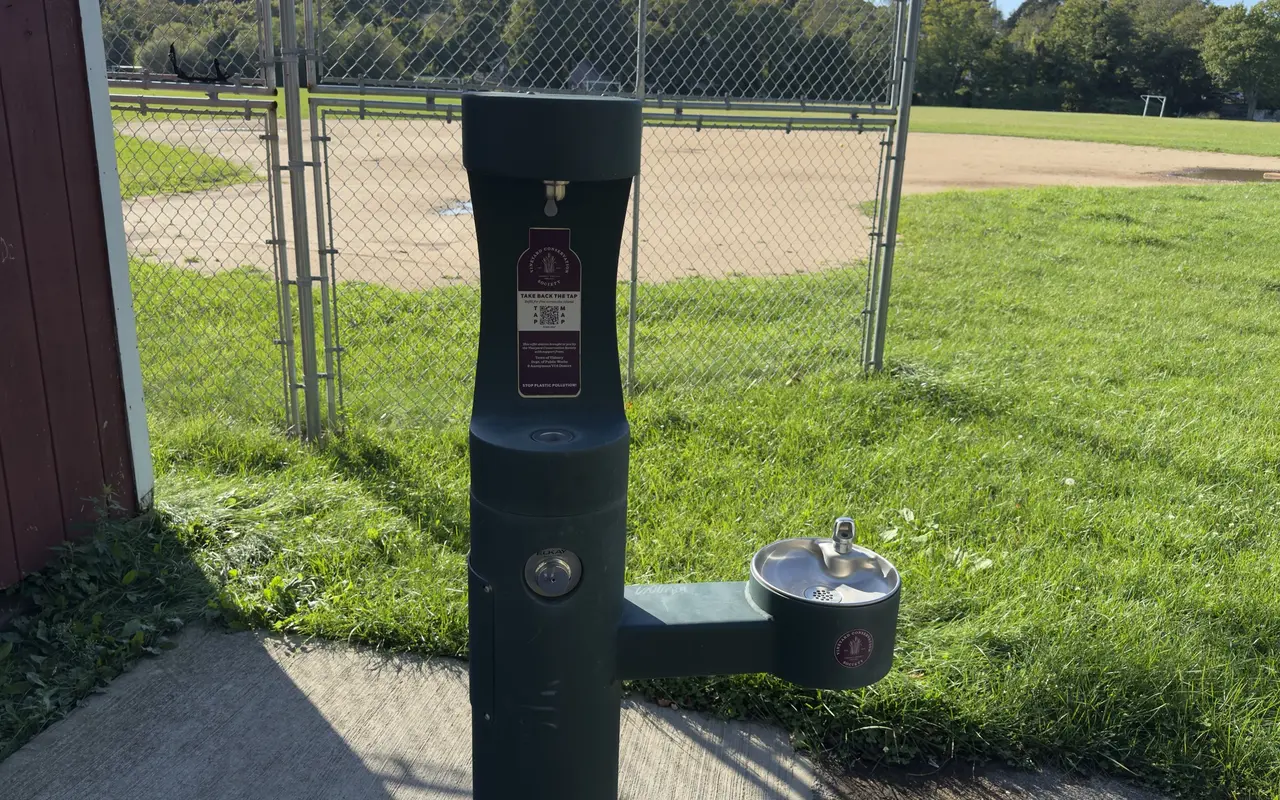
A reusable water bottle saves buying cases here: all six towns have passed a version of a bylaw banning the sale of most single-use plastic bottles (in Oak Bluffs, those under 34 ounces). The Vineyard Conservation Society’s Take Back the Tap stations, the dark green pillars with a bottle filler and a fountain, are at parks, libraries and town landings across the island, and the VCS Tap Map shows all of them plus the shops that refill for free.
Vineyard Haven · Take Back the TapPhoto by MV Vacation
A Take Back the Tap station at Veterans Memorial Park in Vineyard Haven: this one was put in by the Vineyard Conservation Society with the Tisbury DPW. The code on the sticker leads to the island-wide map.
Cash: $200–300 covers it
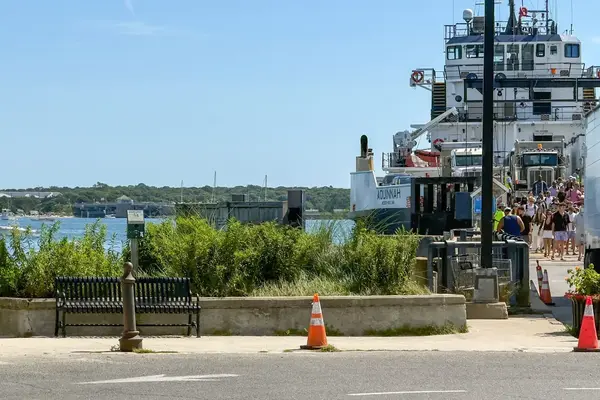
Chappy Ferry: cash or an island check only, no cards, $5/person, $17/car, $8/bike RT
Small bills for farm stands, many of which run on an honor box
A cash tip for the mate, which is customary on a fishing charter
Nothing for parking: there are no parking meters on the island, and the cost of parking here is time-limit tickets, so the signs matter (our parking guide has the rules)
A stop before Aquinnah: the closest bank ATM we know of is at Martha's Vineyard Bank, 517 South Road in Chilmark, so bring cash for a day at the cliffs
Cell service up-island
Down-island coverage is generally fine, though summer crowds can slow it, and up-island it gets patchy on every carrier: Chilmark's police chief told the MV Times in 2025 that there are "big dead spots" even along North Road and State Road. Help is coming slowly. In August 2026 Chilmark settled the federal lawsuit Verizon had filed in March, and on September 1 it approved 14 small cell antennas on existing utility poles, mostly along North and Middle Roads. Until they are up, plan on gaps in Chilmark and Aquinnah.
Free Wi-Fi: the town libraries, the Steamship terminals and every Steamship boat. Where phones work and where they don't is in our cell service and Wi-Fi guide.
What to rent instead of bringing
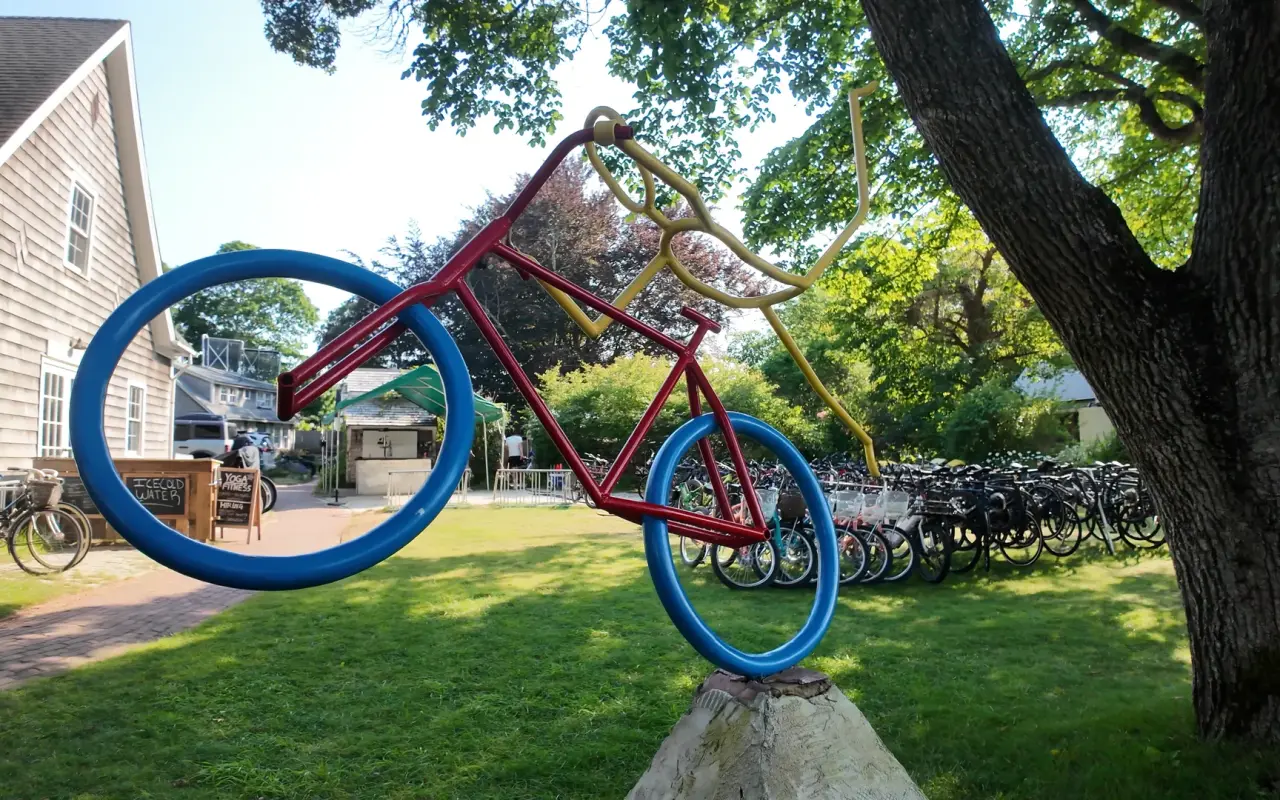
The rental shop · rent it herePhoto by MV Vacation
The big bike sculpture outside a rental shop, with rows of rental bikes lined up behind it. A bike is the easiest thing here to rent rather than bring.
These are easy to rent instead of hauling over: bicycles (rentals run about $25 to $45 a day for a standard bike, more for an e-bike), fishing rods (Coop's Bait and Tackle in Edgartown rents rods and reels by the day), golf clubs (ask the pro shop about rentals), and kayaks or paddleboards (outfitters rent by the hour or the day; a two-hour kayak ran about $35 to $50 in our cost check).
Worth bringing: a tennis racket or pickleball paddle if you play, and your own bike if you prefer it ($10.50 round trip on the Steamship Authority in 2026).
The island's one dress code
The Charlotte Inn Terrace (Edgartown): no beachwear, so no shorts, flip-flops or t-shirts; jackets are preferred but not required, and they keep a few to lend. It is the one island dining room we know of with a real dress code.
Everywhere else is island casual. A nice sundress, or khakis and a button-up, works for upscale dining, and flip-flops are fine almost anywhere. Heels are a struggle on Edgartown's brick sidewalks. Menemsha sunset dining is totally casual: whatever you wore that day.
Pharmacies (changed in 2024)
Leslie's Drug Store closed in September 2024 after 76 years. Three pharmacies remain: Vineyard Scripts (VH), Conroy Apothecary (WT) and Stop and Shop Pharmacy (Edgartown). None is open 24 hours and there is no CVS or Walgreens on the island, so it helps to bring all your prescriptions plus several extra days' worth. MV Hospital (OB) has a year-round emergency department. Our medical guide explains which island pharmacies can refill one and when they close.
The packing checklist
Essentials
Permethrin (or treated shoes and socks), an EPA-registered repellent, fine-tipped tweezers and a lint roller
Water-resistant SPF 30+ sunscreen, lip balm, a hat and sunglasses
Light jacket/fleece (even July)
Packable rain jacket
$200–300 cash
TrailsMV app + offline Google Maps (download before departure)
Reusable shopping bags (all six towns have banned thin plastic checkout bags) and a refillable water bottle
Power bank
Beach day
2+ swimsuits, rashguard for sun protection
Beach towels (or buy at Trader Fred's)
Water shoes (for Moshup + Menemsha beaches)
Cooler + snacks (no vendors at most beaches)
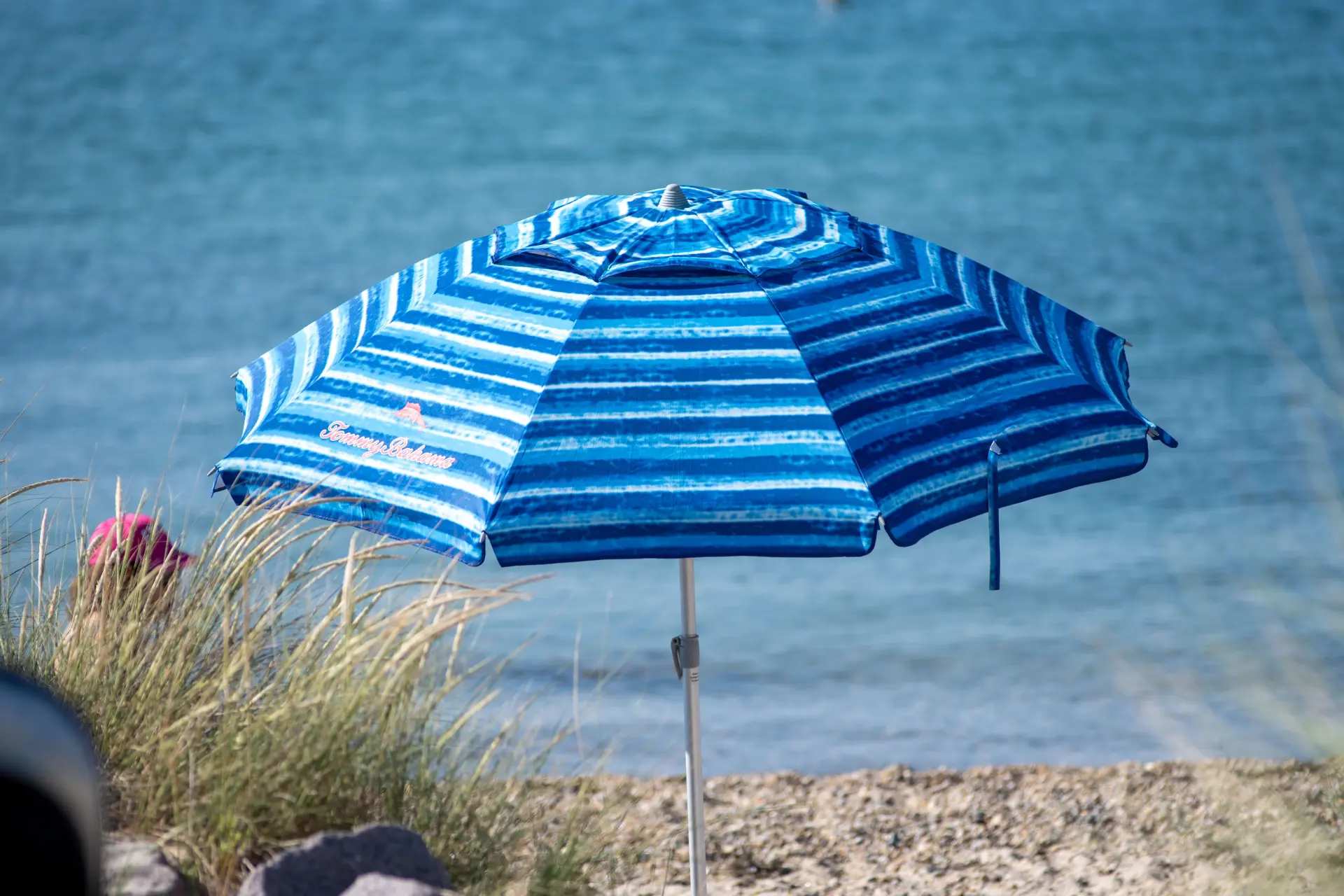
Beach umbrella or tent (little natural shade on most beaches)
Leave at home
In summer: heavy rain gear, hiking boots, formal shoes and heels
A light jacket, even in July. Summer highs run about 80°F, but evenings drop into the low 60s and the breeze off the water makes it feel cooler; by 9 PM at a Menemsha sunset you will probably want a windbreaker or fleece.
Can I rent a beach chair or umbrella on the beach?
Don’t count on it; plan on bringing your own or buying inexpensive gear at Trader Fred’s in Edgartown, which has a beach-gear section. On the Steamship Authority, personal baggage like an umbrella or chairs rides free; bikes and surfboards pay a fare.
Do I need water shoes?
At Moshup Beach and Menemsha Beach, yes: both have rocky waterlines. State Beach and South Beach are soft sand. A beach wagon earns its space at Moshup (a ten-minute walk from the lot) and at South Beach’s dunes.
How serious is the tick risk?
Serious. Dukes County has the highest rate of tick-borne disease in Massachusetts, with Lyme disease at about eleven times the statewide rate. Pack permethrin-treated shoes, socks and pants, an EPA-registered repellent, fine-tipped tweezers and light-colored clothing. Unregistered natural sprays wear off within a couple of hours in testing, and ticks are active in fall and on mild winter days too, not only in summer. Our tick guide has the full protocol.
Should I bring cash?
Some. The Chappy Ferry takes cash or an island check, no cards, and many farm stands run on honor boxes. $200–300 covers a week of the cash-only moments.
What should I pack for a fall trip?
Layers. Normal highs fall from 74°F in September to 64°F in October and 54°F in November, so pack a fleece or sweater, a wind- and water-resistant jacket, waterproof shoes for wet trails, a headlamp for the early dark after the clocks change on November 1, and the full tick kit, since the CDC notes adult deer ticks are most active in the fall. Something blaze orange is a good idea for woods walks during hunting season.
What should I pack for a winter visit?
A warm, windproof coat, hat and gloves, waterproof insulated boots and a few extra days of any medicine in case a storm cancels ferry trips. January averages 40°F by day and 26°F at night, and sunset comes around 4:15 PM in December. Our winter guide covers what stays open.
The Beach Guide (all 20 beaches decoded), The Vineyard in the Fall, the season date by date, Where to Stay, every town and price band, and What It Really Costs, the 2026 budget line by line. All four PDFs free, plus a short island letter when there is something worth telling. No schedule, no spam.
No spam, unsubscribe in one click. Want a look first? See what you get.
First email ever from us? Give it a minute, and peek in spam once.
Disclaimer: The information in this article is provided for general guidance only and was accurate at the time of writing. Beach conditions, hours, prices, lifeguard schedules, ferry fares, and business operations change frequently and without notice. Ocean swimming carries inherent risks including rip currents, undertow, and cold water shock. Always verify current conditions with official local sources before your visit. MV Vacation assumes no responsibility for any loss, injury, or inconvenience resulting from the use of this information. Swim only where lifeguards are on duty, supervise children at all times near water, and follow all posted safety signs.
A guide to Martha's Vineyard, written on the island: beaches, dining, events and island living. We write down what we know about the island so your trip goes the way you hoped.
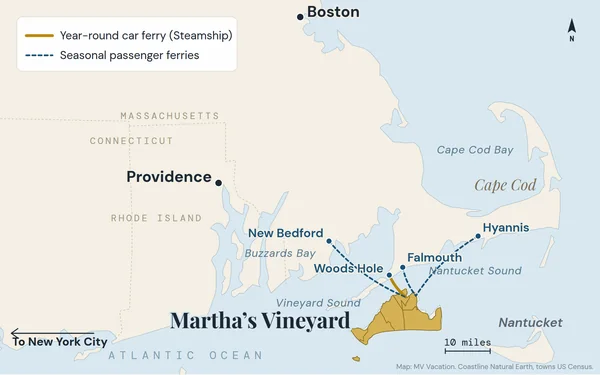
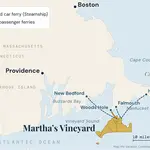
Where Martha's Vineyard is, with our own maps: an island in Dukes County, Massachusetts, under four miles across Vineyard Sound from Woods Hole on Cape Cod, 75 miles from Boston and 70 from Providence by road. How big it is, the six towns, up-island and down-island, every way to get there and where the name comes from.
Martha's Vineyard in December 2026: First Friday on December 4, Light Up Oak Bluffs on December 5, Christmas in Edgartown December 10 to 13, 4:15 sunsets, one ferry into Vineyard Haven, and what stays open through Christmas.
All six town libraries on Martha's Vineyard, checked October 2026: hours and addresses, how visitors get a library card, free Wi-Fi, the concerts, art shows and programs, the Libraries of Things with beach chairs and stargazing kits, museum and beach parking passes, and a short history of each building.
Cell service on Martha's Vineyard town by town: towers down-island, no tower in Chilmark or Aquinnah and the named dead spots, what each carrier reports to the FCC, free Wi-Fi at all six libraries and on the ferry, the $10 xfinitywifi pass, prepaid plans and 911 when you have no bars.
The twelve things that catch first-timers on Martha's Vineyard, from car reservations and the two ferry terminals to resident-only beaches, the last bus from Aquinnah and cash for the Chappy Ferry, each with an easy fix, plus the fall and winter dates.
EV charging on Martha's Vineyard: about 34 public stations, nearly all Level 2, listed town by town with ports and prices (the Edgartown Park and Ride, town halls, libraries, the airport, the Aquinnah cliffs), two fast-charging ports at the VTA, the Chilmark plans, no Supercharger, the ferry's EV rules, and how to run an electric week on a 20-mile island.
Island tip of the dayTimingNo. 61 of 79New tip at midnight, island time
Visit Edgartown on a Tuesday or Wednesday. Same beautiful town, maybe 30% of the weekend crowds. Most restaurants have availability without reservations.
Useful?
More on
Subscribe
The free island library · 2026
One short island letter, and all four guides to start
Beach reports, events worth a day, ferry heads-ups. Sent when there is something worth telling. The Beach Guide, The Vineyard in the Fall, Where to Stay and What It Really Costs arrive with your welcome email.
The Beach Guide, The Vineyard in the Fall, Where to Stay and What It Really Costs. No spam, one-click unsubscribe.
We use cookies for trip planning, site stats and ads, including ads based on your browsing. To opt out, turn on Global Privacy Control in your browser. Cookie policy
These cookies are essential for the website to function properly.
These cookies help us understand how visitors interact with the website.
These cookies are used to deliver personalized advertisements.