Both are good trips, and which one suits you depends on what you want from it.
Category
Cape Cod
Martha's Vineyard
Winner
Category
Cape Cod
Martha's Vineyard
Winner
Getting There
Drive from Boston (1.5 hrs)
Ferry required · plan ahead
Cape Cod
Cost (3-night trip)
~$1,280
~$1,690
Cape Cod
Beaches
40 mi National Seashore
South Beach, Menemsha, Aquinnah
CC (volume) / MV (exclusivity)
Food and Dining
Far more restaurants, spread across 15 towns
Almost no chains, farm-to-table
Tie
Nightlife
Provincetown · big
Oak Bluffs · modest
Cape Cod
Activities
Whale watching, Rail Trail
Striped Bass Derby, Chappaquiddick
Cape Cod (volume)
Family-Friendly
More kid attractions
Carousel, free VTA buses
Cape Cod (slight edge)
Couples / Romance
Chatham, Provincetown
Island isolation, Menemsha sunset
Martha's Vineyard
Authenticity
Chain restaurants exist
No chain restaurants apart from a lone Dairy Queen in Edgartown
Martha's Vineyard
Island Escape Feel
Peninsula · bridge traffic
Ferry crossing, no traffic lights (though narrow roads and limited parking create significant summer congestion in Edgartown, Oak Bluffs, and Vineyard Haven)
Martha's Vineyard
Geography
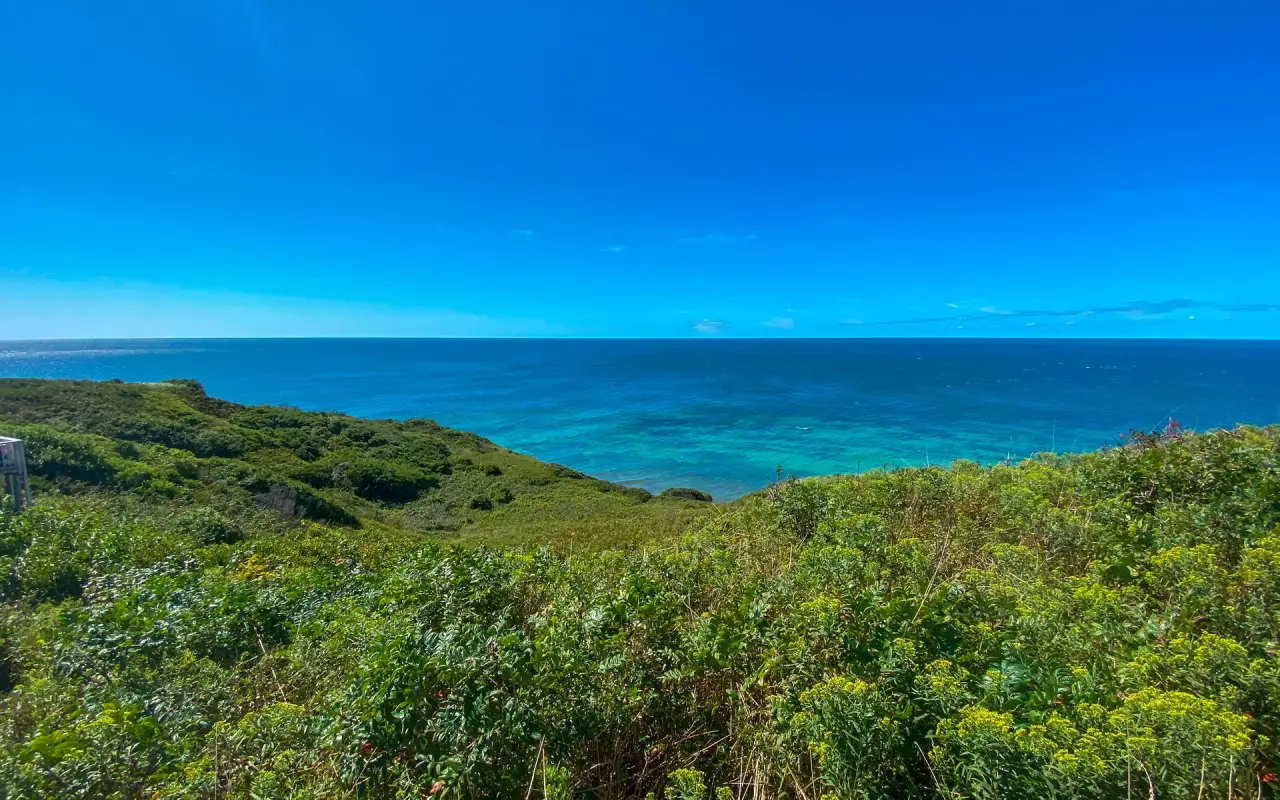
Martha’s Vineyard · an island apartPhoto by MV Vacation
Looking out over the water from a green bluff in Aquinnah on a clear day. The island ends here in open water; the Cape is a long arm of the mainland you can drive onto.
Cape Cod is a 394-square-mile peninsula with 15 towns and roughly 234,000 year-round residents. You drive on and drive off, which is convenient, but the Sagamore and Bourne bridges funnel more than 120,000 vehicles daily in peak summer, turning a 90-minute drive from Boston into a 3-hour crawl on a Friday in July.
Martha's Vineyard has about 90 square miles of land split into six distinct towns, with a year-round population of about 21,000. More than 40 percent of the island's land is permanently conserved. There is not a single traffic light on the island.
Before you book
What Martha’s Vineyard really costs, free
Ferry fares by the day of the week, the room tax every town charges and four whole trips added up. Free with the island letter, together with our Beach, Fall and Where to Stay guides.
One-click unsubscribe, and we never share your email.
Getting there: drive or ferry
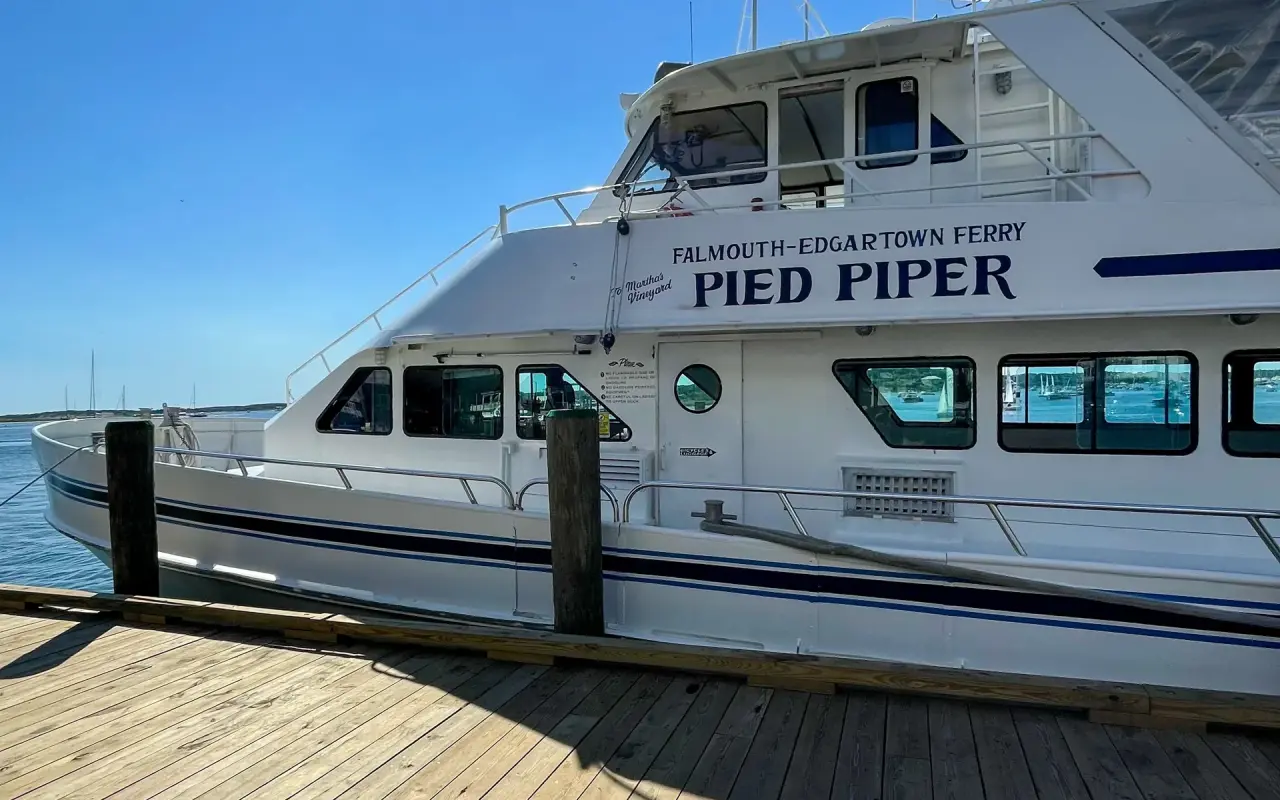
The ferry · the island’s moatPhoto by MV Vacation
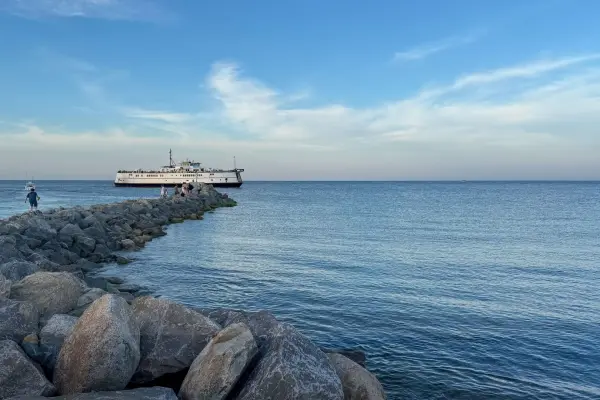
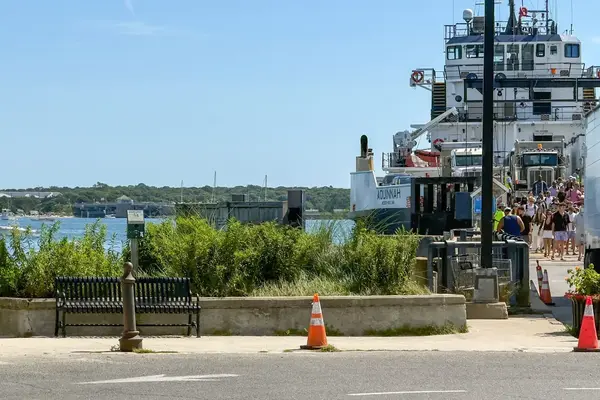
The Pied Piper, the Falmouth to Edgartown passenger ferry. You drive to the Cape and sail to the Vineyard, and the crossing keeps the number of cars down once you land.
Cape Cod is a 90-minute drive from Boston, with no reservations or schedule to catch.
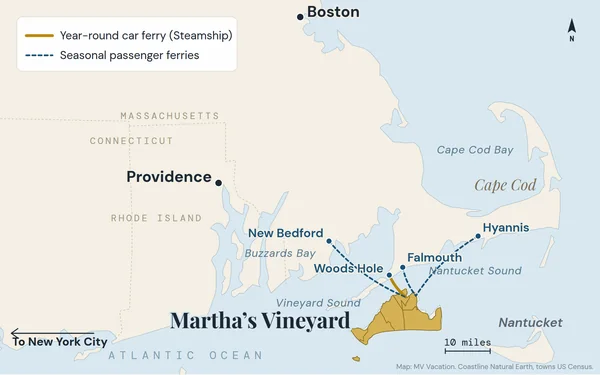
For Martha's Vineyard, the Steamship Authority runs year-round service from Woods Hole. Walk-on passengers pay about $11 each way. Bringing your car costs $254 to $336 round-trip in summer (Monday to Thursday is the cheaper half of the week), and car reservations sell out weeks in advance for peak weekends. Read our full Martha's Vineyard ferry guide before you book.
Martha's Vineyard is harder to reach but often easier to get around without a car. The Vineyard Transit Authority runs free buses connecting all six towns, and the island is compact enough that a rental bike covers most of what you need. Many visitors find they stress less about parking on MV than they do fighting Cape Cod traffic. See our guide to visiting Martha's Vineyard without a car.
Beaches
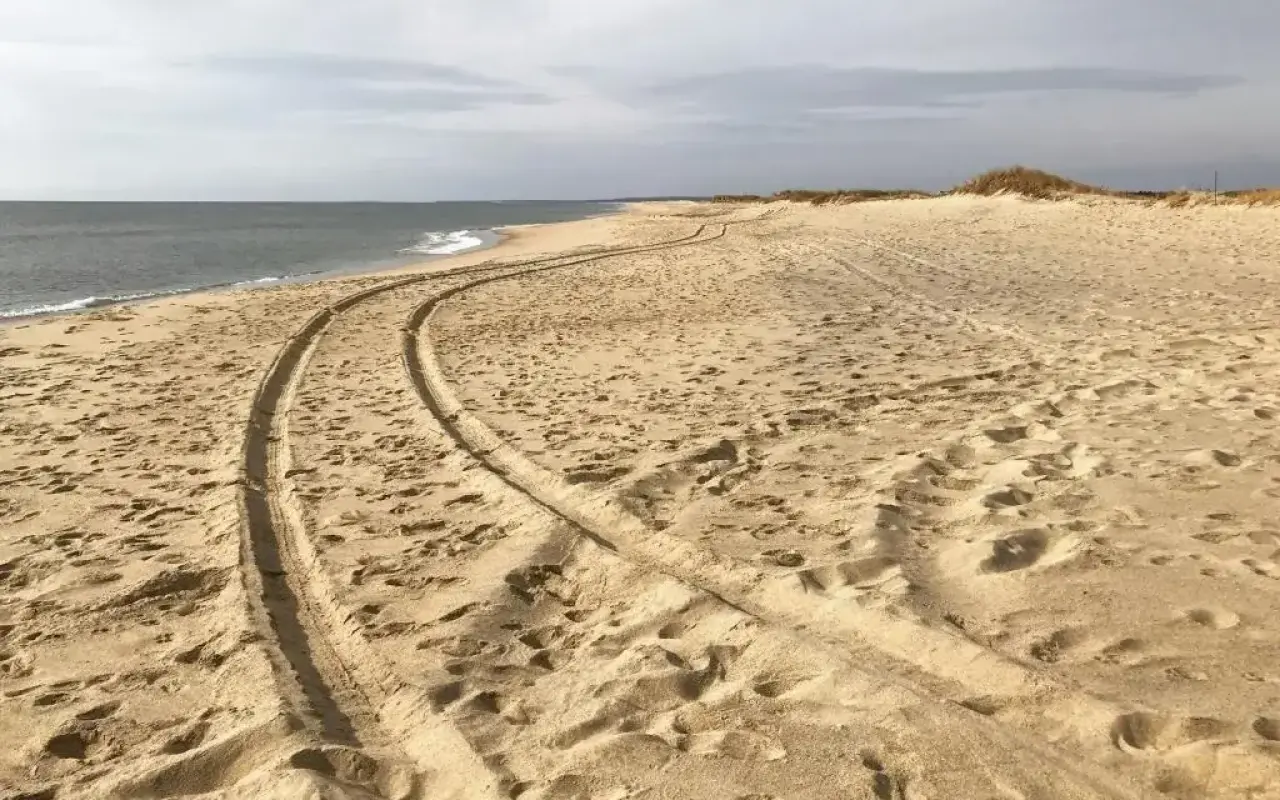
The Vineyard · beaches with rangePhoto by MV Vacation
Tire tracks curving down the sand on an Edgartown beach. The Vineyard has Atlantic surf on the south shore and calm Sound water on the north shore.
Cape Cod National Seashore covers about 44,600 acres of protected coastline stretching 40 miles along the outer Cape. Race Point Beach in Provincetown, Coast Guard Beach in Eastham, and Nauset Light Beach are the best known. The water on the bay side is calm and warm; the Atlantic-facing outer beaches are dramatic. Great white shark activity has also increased on the outer Cape beaches in recent years, with seasonal closures at several spots.
Martha's Vineyard has South Beach (a long Atlantic beach with real surf), Menemsha Beach (a sunset beach, with lobster rolls steps away), and the clay cliffs of Aquinnah.
The Cape has more beaches. The Vineyard's vary more in feel, and several are residents-only in summer.
Towns and atmosphere
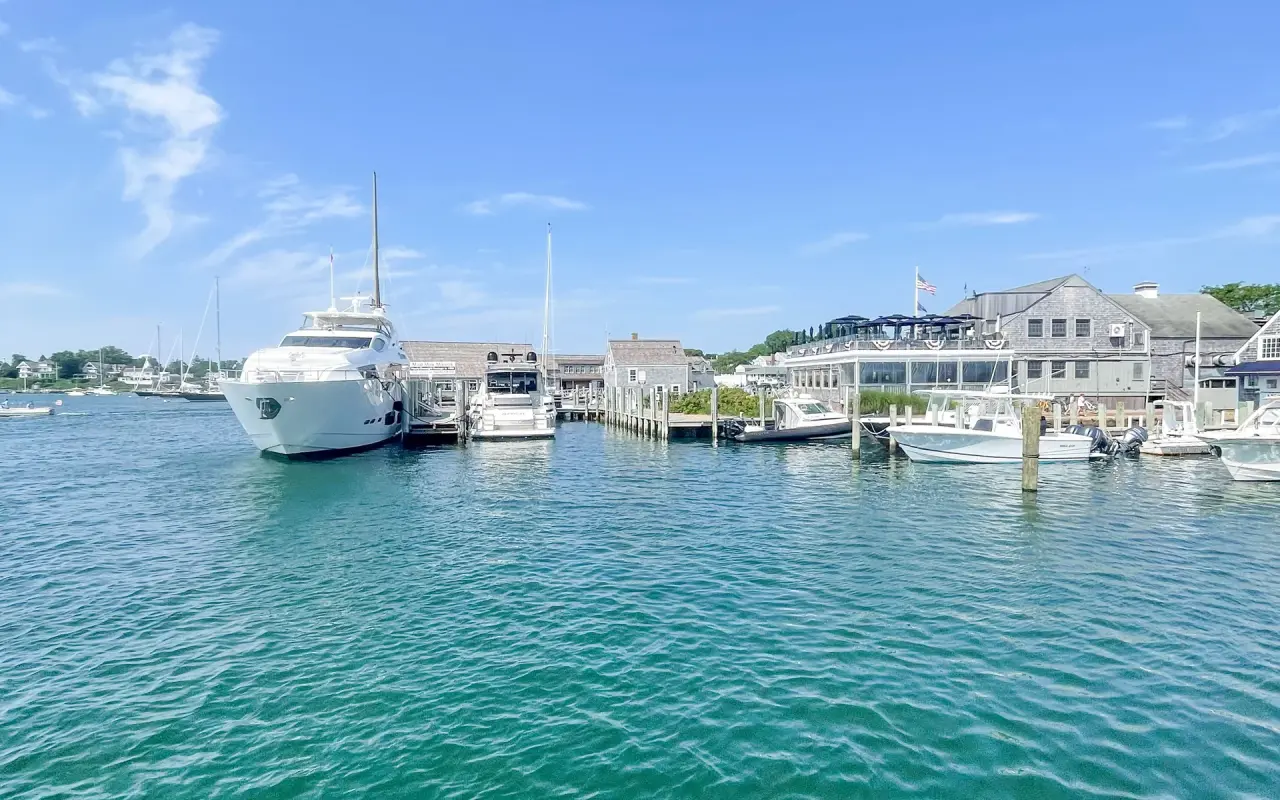
Edgartown · character per square milePhoto by MV Vacation
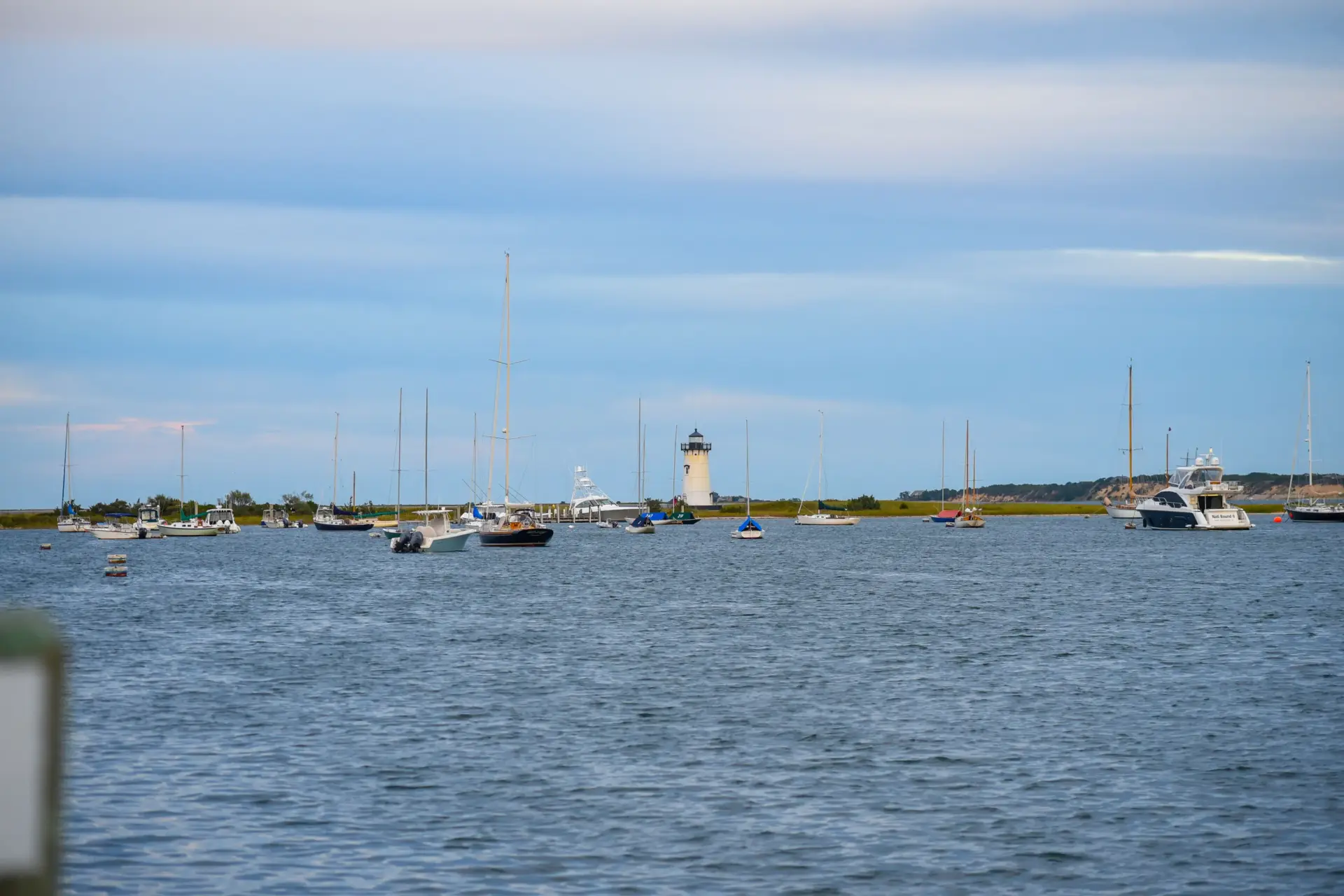
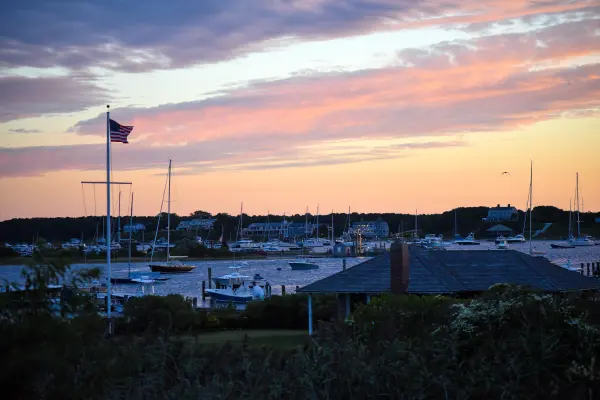
Edgartown Harbor in summer: boats at the docks and the shingled waterfront buildings behind them.
Cape Cod ranges from bohemian, LGBTQ+ Provincetown to the commercial strip in Hyannis. Chatham is pretty and wealthy. Wellfleet is artistic and low-key. The towns are connected by road, and each has its own character.
Martha's Vineyard has no chain restaurants (with the sole exception of a Dairy Queen in Edgartown), almost no chain hotels (the Edgar in Edgartown belongs to Choice Hotels' Ascend Collection), and virtually no chain stores, though three Stop and Shop supermarkets (one in Vineyard Haven, two in Edgartown) and a licensed Starbucks counter inside Edgartown Meat and Fish Market are the notable exceptions (our grocery guide lists every store with hours). That's deliberate: in 1978 islanders organized what became known as the "No Mac" campaign to keep fast-food chains off the Vineyard, and it stuck. Almost every business you walk into is locally owned.
Oak Bluffs has a long African American heritage: Black professionals and families have summered here since the early 1900s, and the town is still shaped by it. The gingerbread Campground cottages surrounding the Trinity Park Tabernacle are unlike anything else in New England. Edgartown is the island's most formal and moneyed town: white-clapboard captain's houses, upscale boutiques, and Chappaquiddick accessible by a tiny three-car ferry. Chilmark and Aquinnah occupy the quieter, wilder western end.
Food and dining
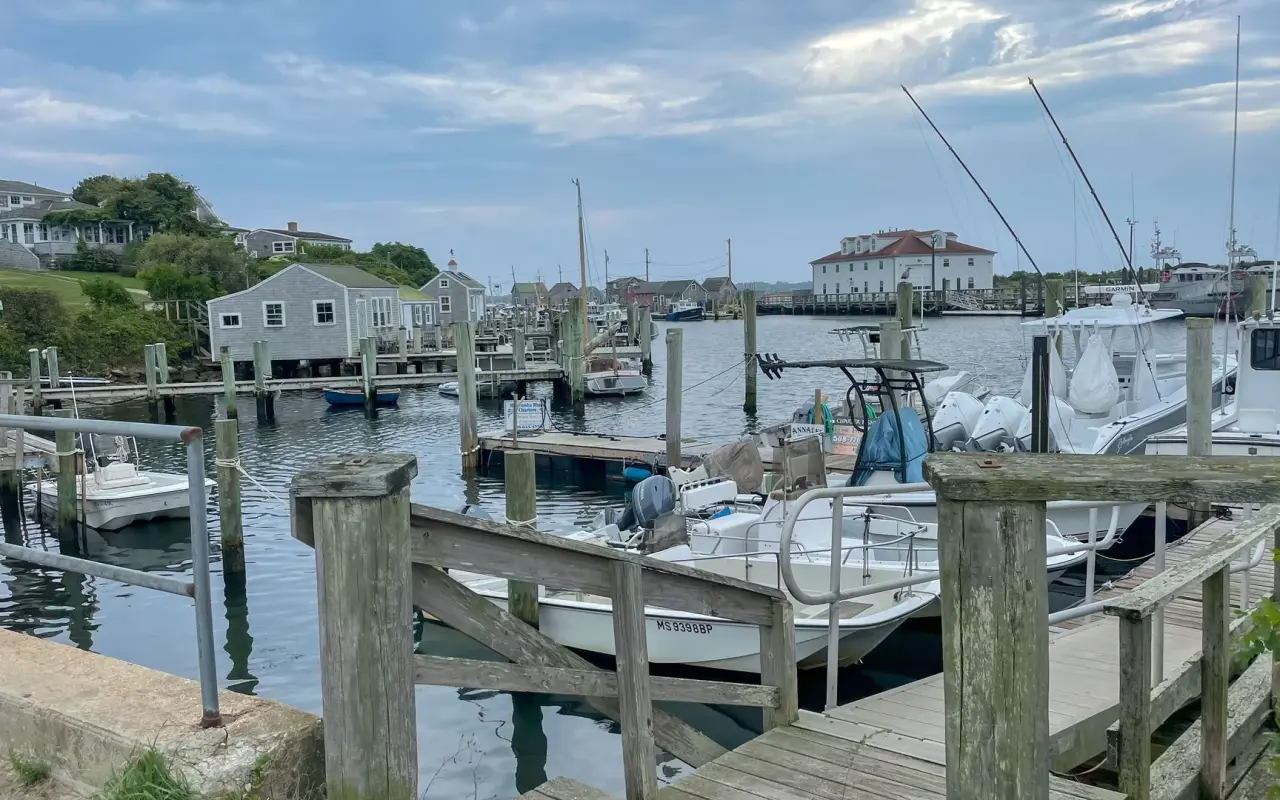
Menemsha · straight off the boatPhoto by MV Vacation
Menemsha harbor, where the fishing boats tie up and the markets sell what came in.
The Cape has more restaurants. Provincetown alone has more than 170 restaurants concentrated in a walkable area. Wellfleet oysters have a national reputation: the shallow bay waters produce a distinctive brininess. The Cape covers every price point, from casual clam shacks to mid-range taverns and fine dining.
The Vineyard has fewer places but a lot of good food for its size. Morning Glory Farm in Edgartown is a working farm with a farm stand people plan the day around. Chilmark’s small farms sell raw milk, yogurt and cheese from honor-system stands. Katama Bay oysters rival anything on the Cape. The Black Dog Tavern has become a national brand, but it started here, on the Vineyard waterfront in Vineyard Haven, in 1971. Dining on MV runs 10–20% more expensive than comparable Cape Cod meals.
Provincetown is the Cape's nightlife town. The Crown and Anchor complex, the Atlantic House (A-House), and the Tea Dance at the Boatslip Resort have made P-town one of the best-known nightlife destinations on the East Coast, especially for the LGBTQ+ community, and nothing else on the Cape or the Vineyard compares.
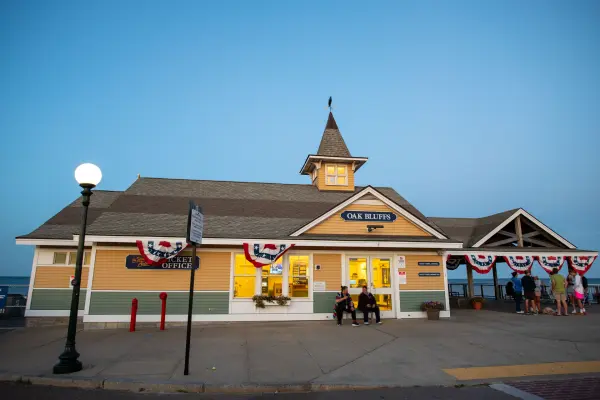
Oak Bluffs on Martha's Vineyard has Circuit Avenue with a handful of bars and live music venues. It is lively by island standards but modest compared to Provincetown. If nightlife is the priority, the Cape is the better pick.
Oak Bluffs · Midnight TacoPhoto by MV Vacation
Paper lanterns strung over the Midnight Taco sign in Oak Bluffs, the town with the island’s late-night street.
Things to do
On Cape Cod:
Whale watching out of Provincetown (April–October): humpbacks, finbacks, and minkes feed in Stellwagen Bank. Martha's Vineyard has no equivalent.
The Cape Cod Rail Trail: 25 miles of paved cycling through pitch pine and scrub oak from Dennis to Wellfleet.
Plenty of public and private golf courses across the peninsula.
12+ lighthouses including Highland Light, the first lighthouse on Cape Cod.
The John F. Kennedy Museum in Hyannis and the Kennedy family compound in Hyannis Port.
On Martha's Vineyard:
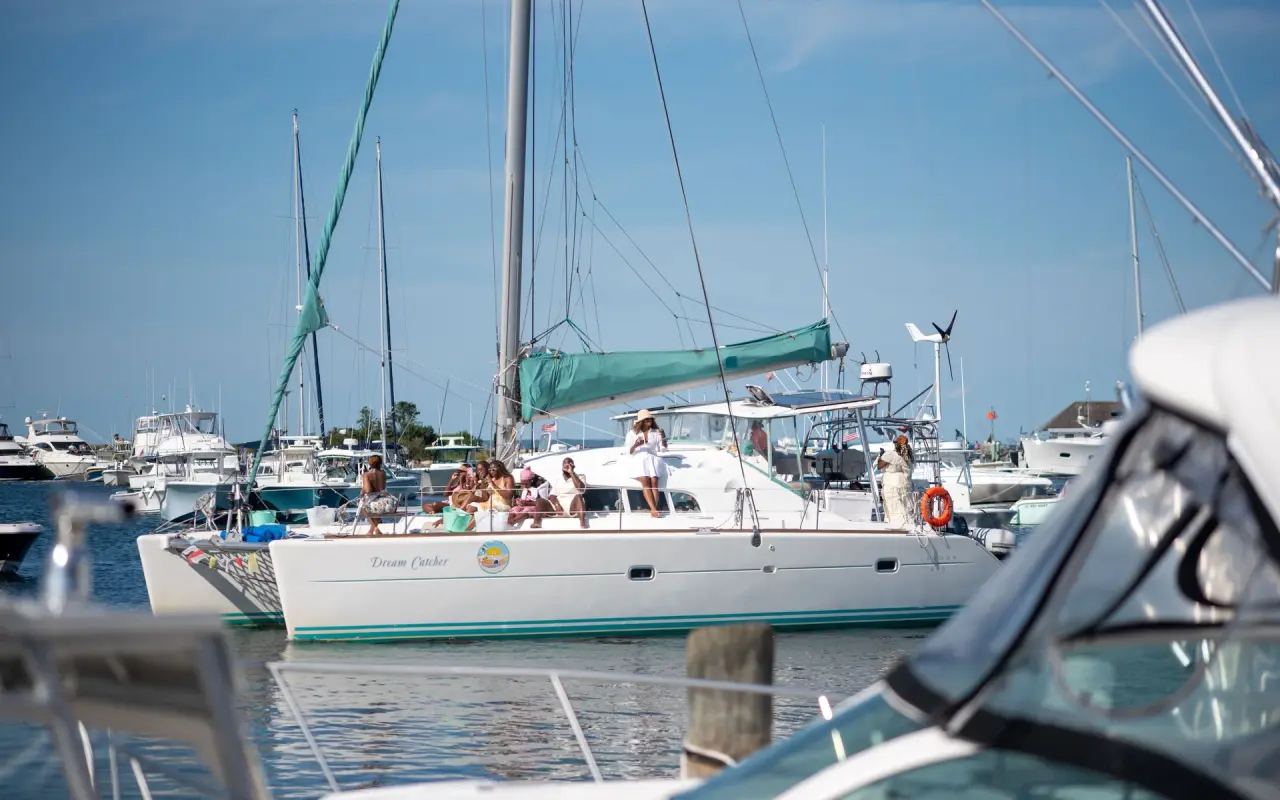
On the water · a summer dayPhoto by MV Vacation
The Dream Catcher catamaran with a group aboard among moored boats on a summer day.
The Martha's Vineyard Striped Bass and Bluefish Derby: now in its 81st year, one of the best-known fishing tournaments in the Northeast.
Chappaquiddick Island: reached only by the tiny Chappy Ferry, a quiet corner with Mytoi Japanese garden and Wasque Reservation.
Farm Neck Golf Club, one of the top public courses in New England (Presidents Clinton and Obama both played it on their island vacations).
5 historic lighthouses including Gay Head Light at the clay cliffs of Aquinnah.
The Flying Horses Carousel in Oak Bluffs: the oldest operating platform carousel in America, built in 1876 and spinning in Oak Bluffs since 1884.
The Grand Illumination Night in Oak Bluffs: a tradition since 1869 where the gingerbread cottages are lit with Japanese lanterns.
What a 3-night trip costs
Expense
Cape Cod (est.)
Martha's Vineyard (est.)
Expense
Cape Cod (est.)
Martha's Vineyard (est.)
Accommodation (3 nights)
$600–$900
$750–$1,200
Ferry (round-trip, walk-on, 2 people)
N/A
~$44
Car ferry (round-trip, if bringing car)
N/A
$254–336
Food and dining (3 days, 2 people)
$250–$400
$300–$480
Activities and admissions
$80–$150
$80–$150
Estimated Total
~$1,280
~$1,690
Martha's Vineyard runs 25–35% more expensive overall. Many visitors bring their car on the ferry (adding $254 to $336 round-trip) and then find parking on the Vineyard scarce. Going car-free narrows the gap a lot. Our Martha's Vineyard budget guide breaks down where the money goes and where to save.
Which one suits you
Choose Cape Cod if you are…
Traveling with kids who need structured attractions
On a tighter budget
A first-time New England visitor
Part of the LGBTQ+ community wanting Provincetown
Set on whale watching
Staying a week or more and want variety
Driving from New York or Boston without advance planning
Choose Martha's Vineyard if you are…
A couple looking for a quiet, romantic trip
A serious angler (especially during the Derby)
A repeat New England visitor ready to go deeper
Someone who prefers local shops to chains
Going for a long weekend (3–4 nights)
Interested in African American or Wampanoag heritage
Cape Cod National Seashore: 40 miles of federally protected beach with zero development
Kennedy family history in Hyannis Port
No ferry, reservation or schedule to plan around
Only on Martha's Vineyard:
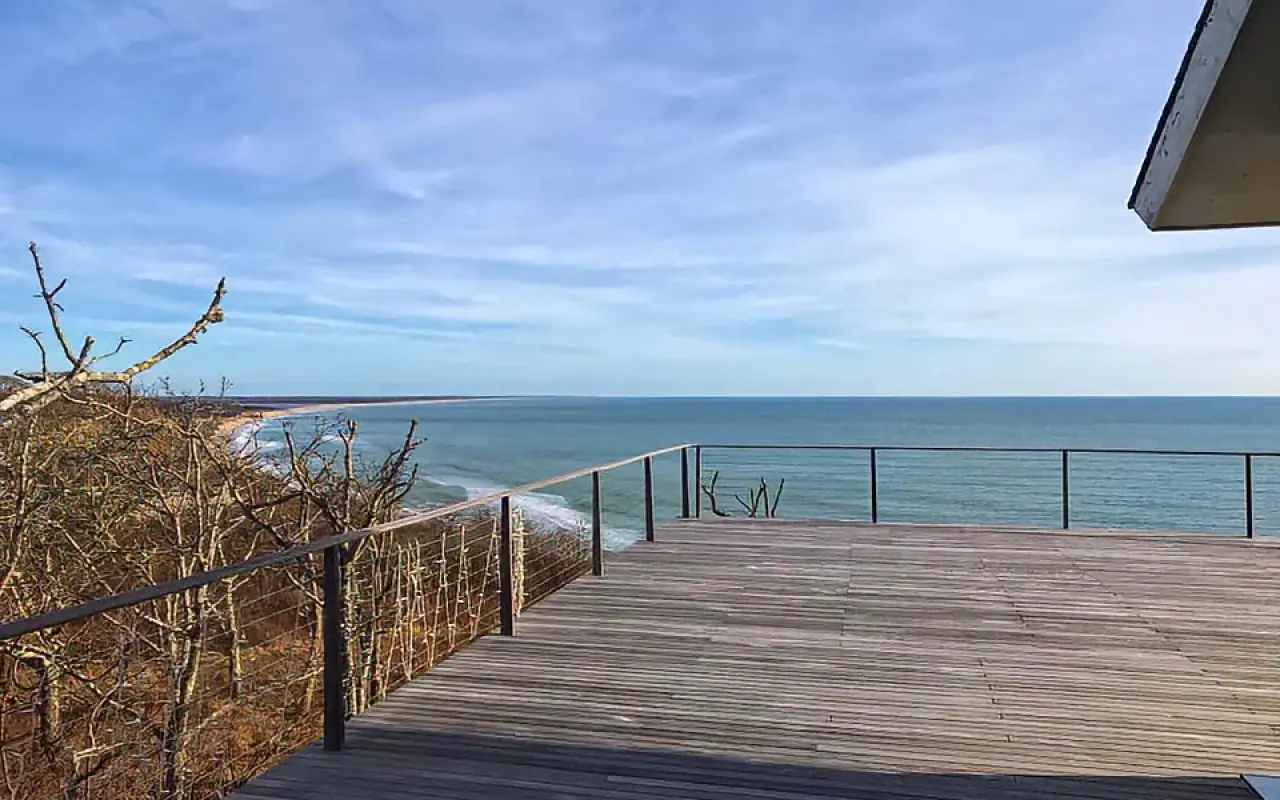
Chilmark · above the south shorePhoto by MV Vacation
A deck above the south shore in Chilmark, open Atlantic to the horizon: there is nothing like this on the Cape’s bay side.
The ferry crossing, which slows the trip down from the start
The Menemsha sunset applause: strangers gathering on the beach to clap as the sun drops into the water
Grand Illumination Night: the gingerbread cottages lit with hand-hung Japanese lanterns, a tradition since 1869
Almost no chain restaurants or hotels (the exceptions include three Stop and Shop supermarkets, one Dairy Queen, one licensed Starbucks counter and the Edgar hotel, part of Choice Hotels' Ascend Collection), most of the money stays local
Wampanoag culture and history, home of the Wampanoag Tribe of Gay Head (Aquinnah)
The African American heritage of Oak Bluffs, a summer community since the early 1900s
Flying Horses Carousel: the oldest operating platform carousel in America
Chappaquiddick, a quieter island off the island, reachable only by a three-car ferry
Cape Cod has more of everything: beaches, restaurants, nightlife and things to do. Martha's Vineyard is smaller and quieter, and the boat ride is part of the trip.
If you want the most options, a lower budget, or a first New England trip with kids, the Cape is the easier choice, and a good trip.
If you have done the Cape before and don't mind paying more for island life and a ferry crossing, the Vineyard is worth the extra planning.
Run your own numbers
Our free trip cost calculator prices ferries, stays, food and activities with verified 2026 rates, so you know the budget before you book.
Book Martha's Vineyard Experiences
Explore guided island tours, sunset cruises, and day trips. Browse all tours →
If you book through this link we may earn a small commission, at no extra cost to you. It helps keep our guides free.
Cape Cod. It is a 90-minute drive from Boston with no reservations, though the two bridges carry more than 120,000 vehicles a day in peak summer and a Friday in July can turn that into a three-hour crawl. The Vineyard needs a ferry: about $11 each way on foot, $254 to $336 round trip with a car in summer, and car reservations sell out weeks ahead.
Which is cheaper?
Cape Cod, on the whole: a three-night trip runs about $1,280 against about $1,690 on the Vineyard, mostly because of the ferry and the higher room rates.
Which has better beaches?
Cape Cod for volume, with 40 miles of National Seashore. The Vineyard for character: South Beach, Menemsha and the Aquinnah cliffs, several of them exclusive to residents in summer.
Do I need a car on the Vineyard?
Often not. The island is harder to reach but easier to get around without a car: the VTA buses connect all six towns fare-free, and a rental bike covers most of what a visitor wants. Many people stress less about parking here than they do fighting Cape traffic.
What does the Vineyard have that the Cape does not?
Almost no chain restaurants (one Dairy Queen), not a single traffic light, more than 40 percent of the land permanently conserved, and the feeling of a ferry crossing rather than a bridge. The Cape has whale watching, the Rail Trail and Provincetown’s nightlife.
The Beach Guide (all 20 beaches decoded), The Vineyard in the Fall, the season date by date, Where to Stay, every town and price band, and What It Really Costs, the 2026 budget line by line. All four PDFs free, plus a short island letter when there is something worth telling. No schedule, no spam.
No spam, unsubscribe in one click. Want a look first? See what you get.
First email ever from us? Give it a minute, and peek in spam once.
Disclaimer: The information in this article is provided for general guidance only and was accurate at the time of writing. Beach conditions, hours, prices, lifeguard schedules, ferry fares, and business operations change frequently and without notice. Ocean swimming carries inherent risks including rip currents, undertow, and cold water shock. Always verify current conditions with official local sources before your visit. MV Vacation assumes no responsibility for any loss, injury, or inconvenience resulting from the use of this information. Swim only where lifeguards are on duty, supervise children at all times near water, and follow all posted safety signs.
A guide to Martha's Vineyard, written on the island: beaches, dining, events and island living. We write down what we know about the island so your trip goes the way you hoped.
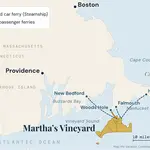
Where Martha's Vineyard is, with our own maps: an island in Dukes County, Massachusetts, under four miles across Vineyard Sound from Woods Hole on Cape Cod, 75 miles from Boston and 70 from Providence by road. How big it is, the six towns, up-island and down-island, every way to get there and where the name comes from.
Martha's Vineyard in December 2026: First Friday on December 4, Light Up Oak Bluffs on December 5, Christmas in Edgartown December 10 to 13, 4:15 sunsets, one ferry into Vineyard Haven, and what stays open through Christmas.
All six town libraries on Martha's Vineyard, checked October 2026: hours and addresses, how visitors get a library card, free Wi-Fi, the concerts, art shows and programs, the Libraries of Things with beach chairs and stargazing kits, museum and beach parking passes, and a short history of each building.
Cell service on Martha's Vineyard town by town: towers down-island, no tower in Chilmark or Aquinnah and the named dead spots, what each carrier reports to the FCC, free Wi-Fi at all six libraries and on the ferry, the $10 xfinitywifi pass, prepaid plans and 911 when you have no bars.
The twelve things that catch first-timers on Martha's Vineyard, from car reservations and the two ferry terminals to resident-only beaches, the last bus from Aquinnah and cash for the Chappy Ferry, each with an easy fix, plus the fall and winter dates.
EV charging on Martha's Vineyard: about 34 public stations, nearly all Level 2, listed town by town with ports and prices (the Edgartown Park and Ride, town halls, libraries, the airport, the Aquinnah cliffs), two fast-charging ports at the VTA, the Chilmark plans, no Supercharger, the ferry's EV rules, and how to run an electric week on a 20-mile island.
Island tip of the dayTimingNo. 61 of 79New tip at midnight, island time
Visit Edgartown on a Tuesday or Wednesday. Same beautiful town, maybe 30% of the weekend crowds. Most restaurants have availability without reservations.
Useful?
More on
Subscribe
The free island library · 2026
One short island letter, and all four guides to start
Beach reports, events worth a day, ferry heads-ups. Sent when there is something worth telling. The Beach Guide, The Vineyard in the Fall, Where to Stay and What It Really Costs arrive with your welcome email.
The Beach Guide, The Vineyard in the Fall, Where to Stay and What It Really Costs. No spam, one-click unsubscribe.
We use cookies for trip planning, site stats and ads, including ads based on your browsing. To opt out, turn on Global Privacy Control in your browser. Cookie policy
These cookies are essential for the website to function properly.
These cookies help us understand how visitors interact with the website.
These cookies are used to deliver personalized advertisements.